Laat Een Bericht Achter
Als u geïnteresseerd bent in onze producten en meer details wilt weten, laat dan hier een bericht achter. We nemen zo snel mogelijk contact met u op.

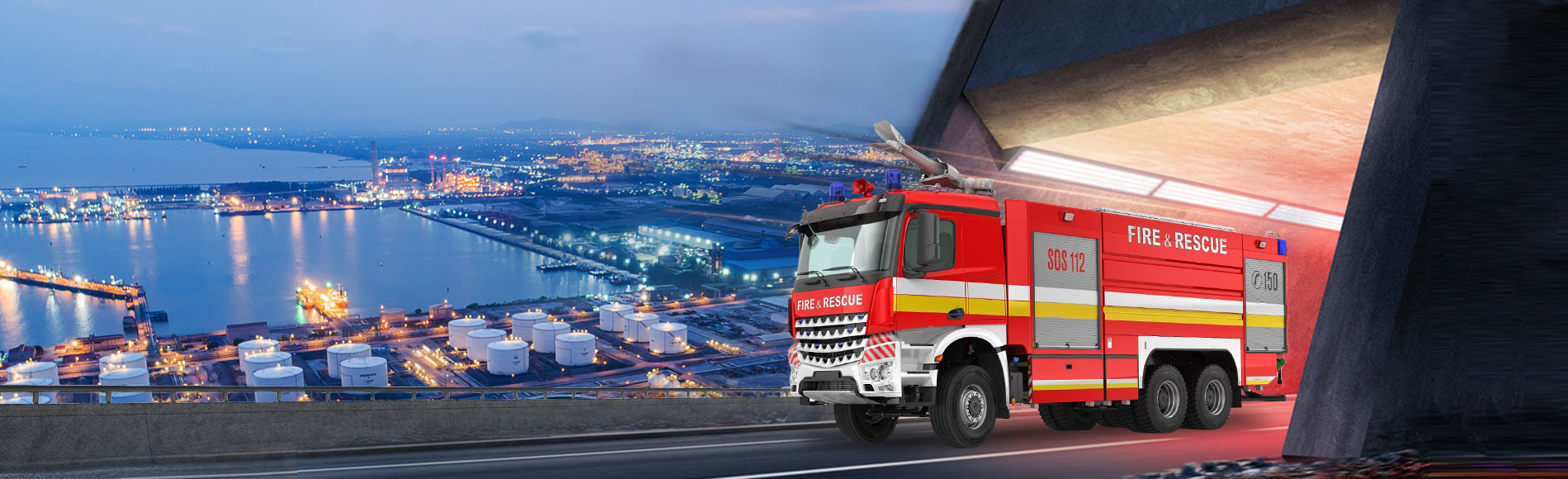
Het pomp- en sproeisysteem van een brandweerwagen is de kern van brandbestrijdingsoperaties. Het fungeert als de "krachtige arm" van de brandweerwagen. Door motorvermogen om te zetten in druk (variërend van 0,8 tot 1,4 MPa), levert het blusmiddelen tot hoogtes van maximaal 85 meter — of het nu gaat om een brand in een hoog gebouw in een dicht stadscentrum of een brand in een petrochemische opslagtank in een industriegebied, de brandweerwagen vertrouwt op dit systeem om een effectieve brandbestrijding te bereiken.
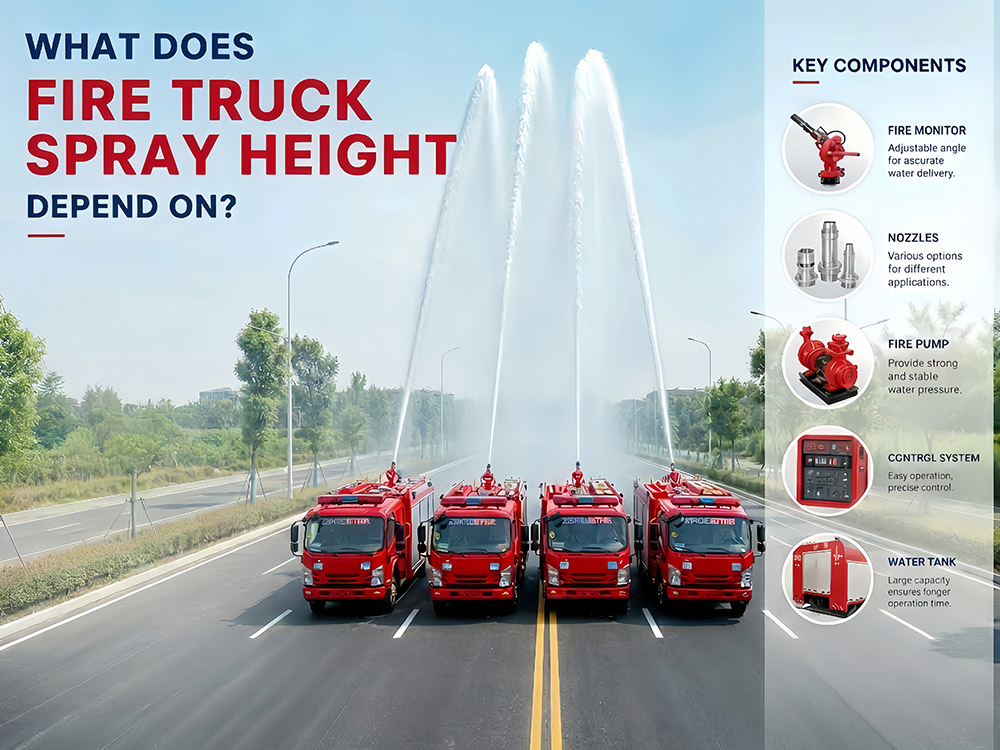
Welke factoren beïnvloeden de sproeihoogte van een brandweerwagen, en hoe werken pompdruk, debiet en waterkanon samen? Dit zijn de aandachtspunten van veel klanten. Laten we er vandaag meer over leren.
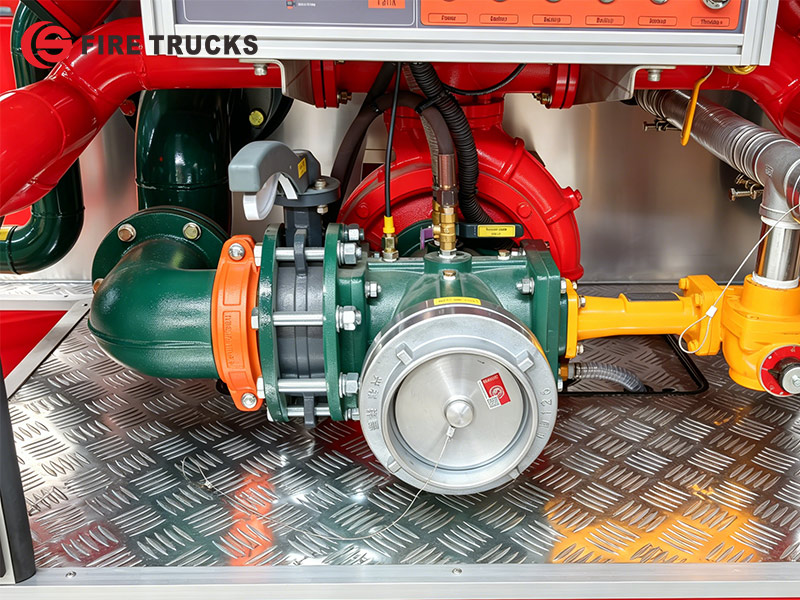
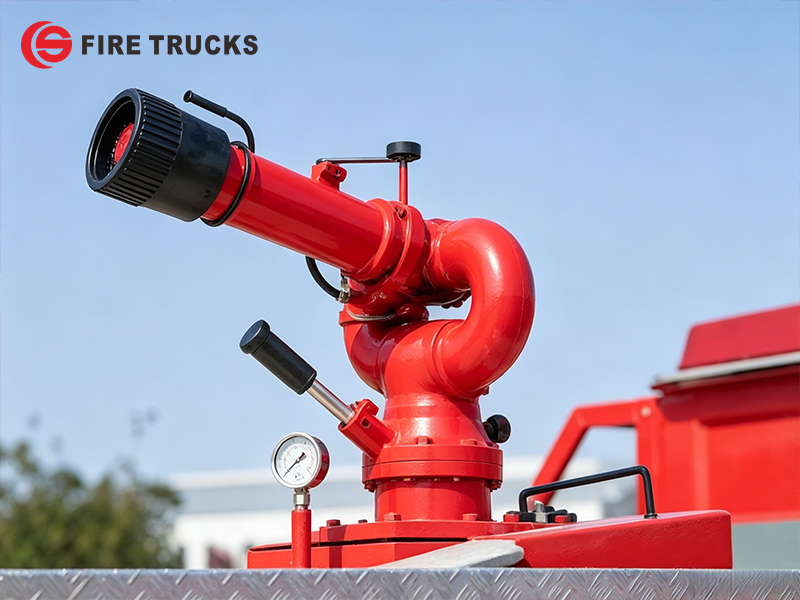
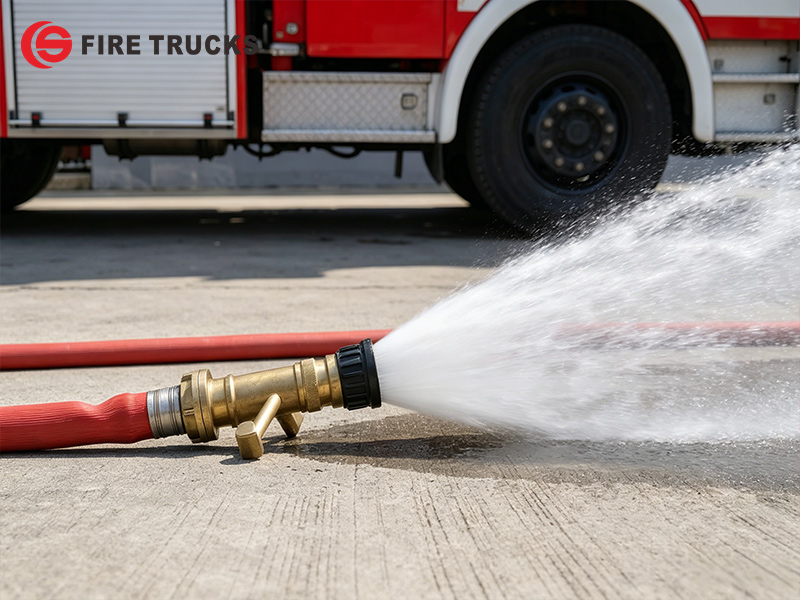
De pompdruk van een brandweerwagen is de kracht die door de brandpomp wordt opgewekt om het blusmiddel door slangen te duwen en via straalpijpen of kanonnen uit te stoten. Het is de belangrijkste factor voor zowel debiet als sproeiafstand. Een hogere druk zorgt voor een hogere snelheid bij de uitlaat van het kanon, waardoor de sproeihoogte direct toeneemt. De relatie wordt bepaald door de formule H ≈ P/(ρg), waarbij elke verhoging van 0,1 MPa ongeveer 10 meter theoretische hoogte toevoegt — maar verliezen in de praktijk verminderen dit.
Bij praktische brandbestrijdingsoperaties gelden de volgende bereiken:
| Pompdruk | Typische sproeihoogte |
| 0,8 MPa | 35–45 meter |
| 1,0 MPa | 45–55 meter |
| 1,2 MPa | 55–70 meter |
| 1,4 MPa | 70–85 meter |
De pomp is meestal een centrifugaalpomp die door de motor van de wagen wordt aangedreven via een aftakas (PTO). Terwijl de waaier draait, zuigt deze het blusmiddel aan en werpt het door centrifugale kracht naar buiten, waardoor druk ontstaat die het middel door het uitlaatsysteem stuwt.
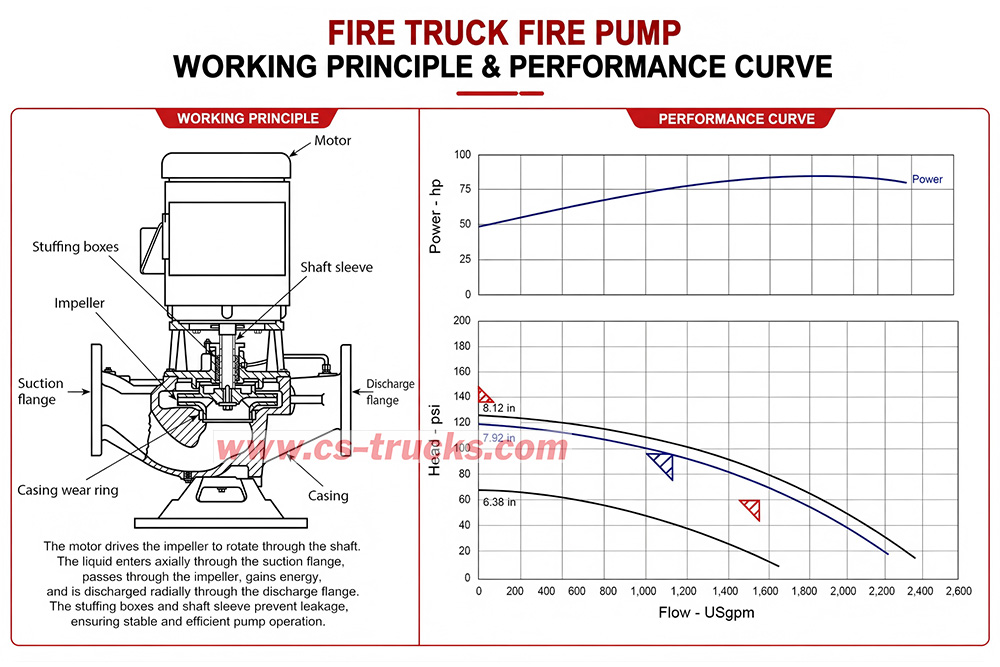 Nominale druk versus bedrijfsdruk:
| Term | Definitie |
| Nominale druk | De maximale druk die de pomp onder ontwerpomstandigheden continu kan handhaven |
| Bedrijfsdruk | De werkelijke druk die tijdens brandbestrijding wordt gebruikt, doorgaans lager dan de nominale druk om een veiligheidsmarge te behouden |
Voldoende debiet is net zo belangrijk als druk. Hoge druk met een laag debiet kan niet genoeg blusmiddel leveren om een brand te onderdrukken. Het pompsysteem moet tegelijkertijd zowel druk als debiet handhaven.
Debiet versus sproeihoogte:
2.000 L/min → effectief voor gemeentelijke branden
3.000 L/min → geschikt voor industrieterreinen
4.000 L/min → vereist voor petrochemische installaties
5.000+ L/min → noodzakelijk voor reddingswerk bij luchthavenbranden
Het interne stroompad, de uitlaatdiameter en het type van de monitor hebben rechtstreeks invloed op de spuithoogte.
Vergelijking van monitortypes:
Watermonitor: hoogste hoogte, recht stroompad
Schuimmonitor: iets lager (5–10% minder) door turbulentie bij de luchtinlaat
Monitor voor twee doeleinden: gemiddeld (compromis tussen water en schuim)
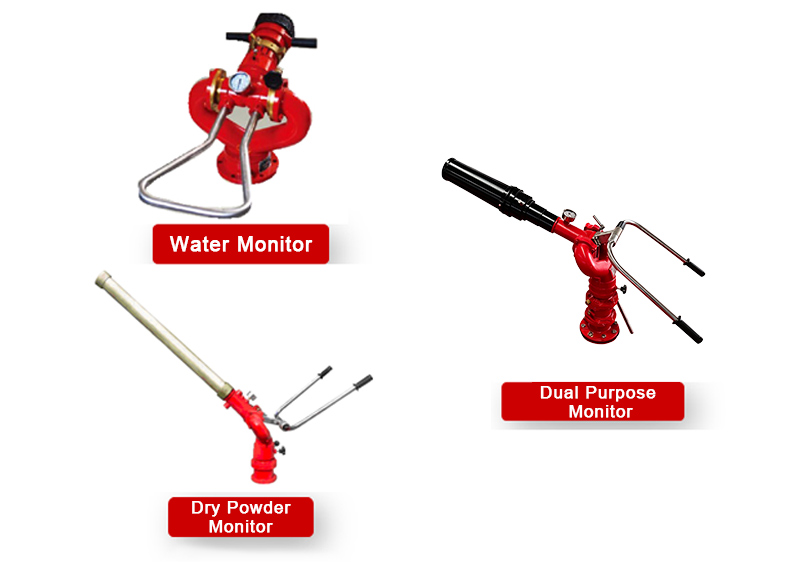
Water en schuim hebben verschillende dichtheden. Schuimoplossing is ongeveer 5-10% dichter dan water, waardoor de spuithoogte bij dezelfde druk iets afneemt. Hiermee moet rekening worden gehouden bij het selecteren van apparatuur voor schuimtoepassingen.
Wanneer het blusmiddel door slangen en leidingen stroomt, vermindert wrijving de druk bij de monitor. Langere slangen en kleinere diameters verhogen de verliezen.
Factoren voor wrijvingsverlies:
Slanglengte: langer = meer verlies
Slangdiameter: kleiner = meer verlies
Koppelingen en bochten: elk voegt weerstand toe
Om klanten de beste brandbestrijdingsoplossingen te bieden, selecteert FIRE TRUCKS het meest geschikte systeem op basis van toepassingsvereisten
vereisten: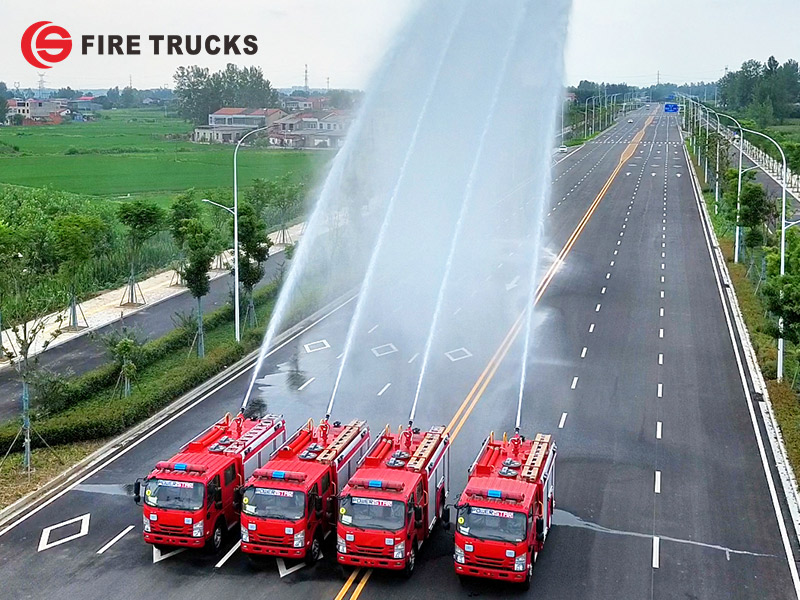
| Pompdruk | Debiet | Spuithoogte | Aanbevolen toepassing |
| 0,8 MPa | 2.000 L/min | 35–45 m | Gemeentelijke brandbestrijding |
| 1,0 MPa | 3.000 L/min | 45–55 m | Industrieterreinen |
| 1,2 MPa | 4.000 L/min | 55–70 m | Petrochemische installaties |
| 1,4 MPa | 5.000+ L/min | 70–85 m | Brandbestrijding op luchthavens |
| Toepassing | Aanbevolen monitortype | Reden |
| Gemeentelijke brandbestrijding | Watermonitor | Hoogste sproeihoogte, eenvoudige bediening |
| Olieraffinaderij/chemische fabriek | Schuimmonitor of multifunctionele monitor | Geschikt voor branden met ontvlambare vloeistoffen |
| Reddingsoperaties bij vliegtuigcrashes op luchthavens | Schuimmonitor (hoge capaciteit) | Grote hoeveelheid schuim vereist |
| Gemengde brandrisico's | Multifunctionele monitor | Flexibiliteit voor zowel water als schuim |
| Factor | Impact | Hoe optimaliseren |
| Pompdruk | Recht evenredig | Selecteer de juiste druk voor de toepassing |
| Debiet | Handhaaft brandonderdrukking | Breng druk en debiet in balans |
| Monitorontwerp | Tot 10% variatie | Stem het monitortype af op de toepassing |
| Blustof type | Schuim vermindert de hoogte enigszins | Houd rekening met het dichtheidsverschil |
| Wrijvingsverlies | Vermindert de effectieve druk | Gebruik kortere/grotere slangen |
| Hoogteverschil | Verbruikt druk | Voeg druk toe voor hoogte |
| Windsnelheid | Vermindert de effectieve hoogte | Plaats de vrachtwagen tegen de wind in |
Achtergrond van de casus:
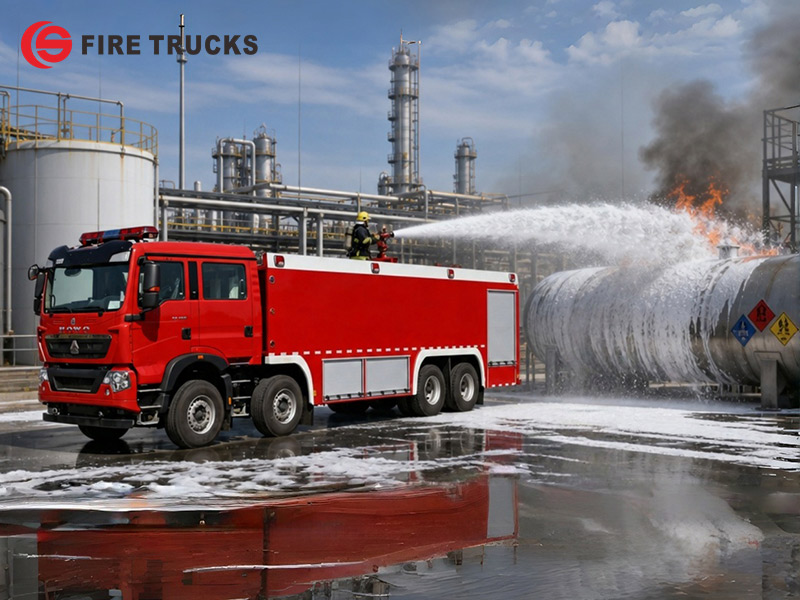
Er brak een grootschalige brand uit bij een petrochemische opslagfaciliteit in een industriegebied. De brand betrof een drijvend daktank met een diameter van 50 meter waarin ruwe olie was opgeslagen. Slangen vanaf de grond konden de brand niet bereiken vanwege de hoogte van de tank en de zone met stralingswarmte.
Configuratie van de brandweerwagen:
8×4-schuimbluswagen
Pompsysteem met een vermogen van 1,2 MPa / 4.000 L/min
PL48-schuim/water-monitor voor dubbel gebruik
Werkelijke prestaties:
Gemeten spuithoogte: ongeveer 62 meter
Effectief bereik: tankgebied met een diameter van ongeveer 80 meter
Het schuimdeken onderdrukte de brand succesvol binnen 8 minuten
Belangrijkste les:
Bij branden in grote opslagtanks zijn drukken onder 1,0 MPa vaak onvoldoende om schuim over de vereiste afstand te leveren. De combinatie van voldoende druk, hoog debiet en een correct geselecteerde monitor is essentieel voor effectieve brandbestrijding.
Misvatting 1: Hogere druk is altijd beter
Werkelijkheid:Hogere druk verhoogt het energieverbruik, de kosten van apparatuur en de complexiteit van het onderhoud. Overmatige druk kan ook slangen en straalpijpen beschadigen. Het doel is voldoende druk voor de taak, niet maximale druk.
Misvatting 2: Spuithoogte is gelijk aan bluscapaciteit
Werkelijkheid:Debiet is vaak belangrijker dan hoogte. Een hoge straal met een laag debiet levert mogelijk niet genoeg blusmiddel om een brand te onderdrukken. De gecombineerde waarde van druk en debiet is bepalend.
Misvatting 3: Drukverlies door wrijving kan worden genegeerd
Werkelijkheid:Bij lange slangtrajecten kan wrijvingsverlies 20-30% van de pompdruk verbruiken. Een juiste berekening van wrijvingsverlies is essentieel om voldoende druk bij de straalpijp te garanderen.
Misvatting 4: De monitor maakt geen verschil
Werkelijkheid:Een hogedrukpomp die is aangesloten op een slecht ontworpen monitor zal de maximale spuithoogte niet bereiken. Het interne stroompad, de uitlaatdiameter en het type van de monitor beïnvloeden allemaal de uiteindelijke prestaties. Het afstemmen van de monitor op de pomp is net zo belangrijk als het selecteren van de pomp zelf.
V: Wat is de meest voorkomende pompdruk op brandweerwagens?
A: De meeste brandweerwagens zijn ontworpen met pompdrukken van 0,8 tot 1,2 MPa, waarbij 1,0 MPa de meest voorkomende standaard is.
V: Hoe hoog kan een pomp van 1,0 MPa spuiten?
A: Onder standaardomstandigheden kan een pomp van 1,0 MPa een spuithoogte van 45 tot 55 meter bereiken met een middelgrote tot grote monitor.
V: Waarom vereisen branden in hoge gebouwen een hogere pompdruk?
A: Branden in hoge gebouwen vereisen extra druk om het hoogteverschil te overwinnen (1,0 m hoogte vereist ongeveer 0,01 MPa) en om wrijvingsverlies in verticale slangleidingen te compenseren.
V: Bereikt een schuimmonitor dezelfde spuithoogte als een watermonitor?
A: Doorgaans bereiken schuimkanonnen iets lagere hoogtes (5-10% minder) dan waterkanonnen bij dezelfde druk, vanwege het luchtinlaatontwerp dat turbulentie veroorzaakt en de hogere dichtheid van de schuimoplossing.
V: Wat is de belangrijkste factor voor de sproeihoogte?
A: Geen enkele factor bepaalt de sproeihoogte. Pompdruk, debiet, kanonontwerp, mondstuktype en omgevingsomstandigheden werken allemaal samen. Een goed uitgebalanceerd systeem is effectiever dan een systeem dat slechts op één gebied uitblinkt.
V: Heeft het kanon zelf invloed op de sproeihoogte?
A: Ja. Het interne stroompad van het kanon, de uitlaatdiameter en het type (water, schuim of dubbel doel) hebben allemaal rechtstreeks invloed op de sproeihoogte. Een goed ontworpen kanon maximaliseert de energie die door de pomp wordt geleverd.
De sproeihoogte hangt af van meerdere factoren — pompdruk, debiet, kanonontwerp, blusmiddeltype, wrijvingsverlies, hoogteverschil en windomstandigheden
1,0–1,2 MPa is het gangbare drukbereik voor de meeste industriële brandbestrijdingstoepassingen
De keuze van het kanon is belangrijk — een hogedrukpomp met een slecht ontworpen kanon zal de maximale sproeihoogte niet bereiken
Debiet is net zo belangrijk als druk — hoge druk met een laag debiet levert mogelijk niet voldoende blusmiddel om een brand te onderdrukken
Verschillende blusmiddelen hebben verschillende sproeikenmerken — schuim is dichter en bereikt een iets lagere hoogte
Petrochemische en luchthavenprojecten vereisen doorgaans 1,2 MPa of hoger
Geef bij internationale projecten prioriteit aan brandweerwagens die voldoen aan erkende normen zoals NFPA, EN of GB
De sproeihoogte van een brandweerwagen wordt niet door één enkele factor bepaald. Deze hangt af van het gecombineerde effect van pompdruk, debiet, kanonontwerp, blusmiddeltype, wrijvingsverlies, hoogtewinst en windomstandigheden.


U bent misschien geïnteresseerd in de volgende informatie
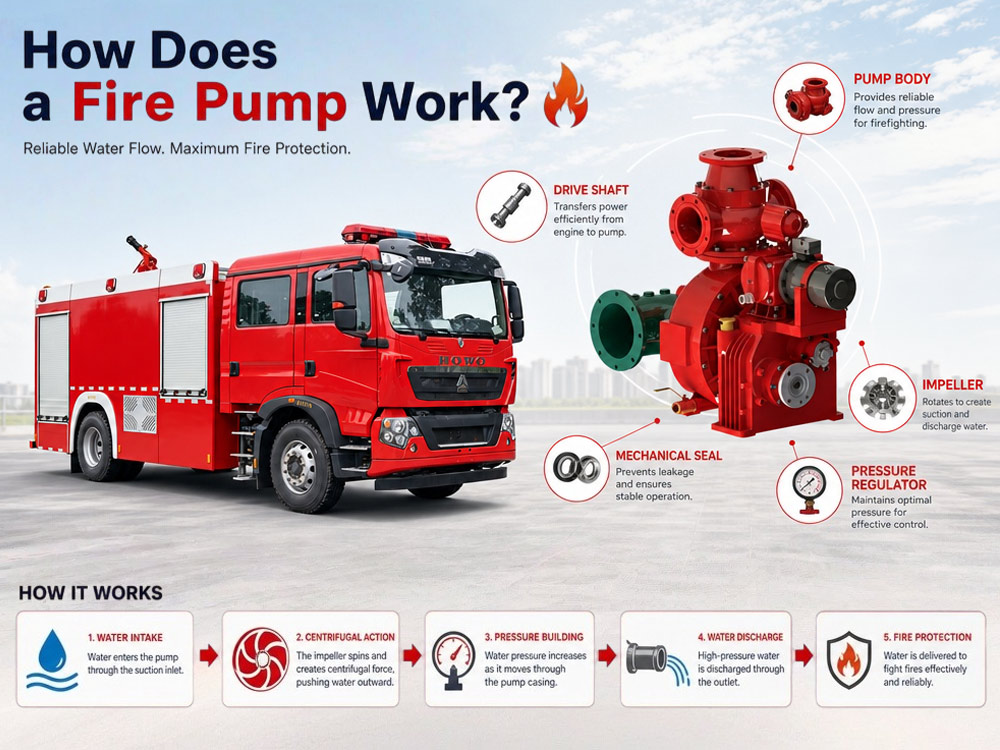
Een brandpomp is het hart van het watertoevoersysteem van elke brandweerwagen. Of het nu gaat om een woningbrand, industriële noodsituatie, luchthavenincident of natuurbrandoperatie, de brandpompop een brandweerwagenis verantwoordelijk voor het leveren van water onder hoge druk aan slangen, waterkanonnen en schuimsystemen.Het centrifugale waaierontwerp en het door PTO aangedreven systeem zorgen voor een stabiele druk en hoge debieten, waardoor de effectiviteit van brandbestrijding direct met meer dan 40% toeneemt, terwijl de responstijd met 3 keer wordt verkort. Het kan de onzichtbare bewaker van brandbestrijdingsoperaties en de technische hoeksteen van moderne noodhulp worden genoemd. Leer hoe een brandpomp werkt, inclusief het werkingsprincipe, de belangrijkste onderdelen, het waterstroomproces, drukopwekking en toepassingen. Ontdek hoe pompen op brandweerwagens een betrouwbare watervoorziening voor brandbestrijding leveren en hoe u de juiste pomp voor uw brandweervoertuig kiest.Laten we er vandaag meer over leren. » I. Eerst moeten we de drie belangrijkste onderdelen van het brandpompsysteem kennen: 1. Waaier:Het roterende onderdeel dat water aanzuigt en het door centrifugale kracht naar buiten werpt. Meestal gemaakt van brons, roestvrij staal of gietijzer. 2. Pomphuis:De behuizing die de waaier bevat en de waterstroom geleidt. Ontworpen om snelheid om te zetten in druk. 3. Krachtafnemer (PTO):De mechanische verbinding die motorvermogen van de transmissie van de wagen naar de brandpomp overbrengt. » II. Nadat we de belangrijkste onderdelen kennen, is het kernwerkingsprincipe van de brandpomp als volgt: 1. Vermogen wordt via de PTO van de motor overgebracht De motor van de wagen drijft de PTO aan, die verbonden is met de pompas. Wanneer de bediener de PTO inschakelt, wordt het motorvermogen omgeleid om de waaier van de pomp met hoge snelheid te laten draaien. 2. De waaier begint te draaien De waaier draait met 1.500–2.500 TPM en zuigt water via de zuiginlaat de pomp in. De draaiende waaierbladen creëren een lagedrukzone in het midden, waardoor water wordt aangezogen uit de watertank aan boord, brandkraan of natuurlijke waterbron. 3. Centrifugale kracht verhoogt de waterdruk Terwijl de waaier draait, werpt deze water door centrifugale kracht naar buiten. De snelheid van het water neemt toe wanneer het van het midden naar de buitenrand van de waaier beweegt. Het pomphuis zet deze snelheid vervolgens om in druk, waardoor water onder hoge druk via de uitlaatopening naar buiten wordt gestuwd. 4. Water onder hoge druk verlaat de uitlaatopening Water onder druk (doorgaans 0,8–1,2 MPa) verlaat de uitlaatopening en wordt naar brandslangen, waterkanonnen of schuimproportioneersystemen geleid voor brandbestrijdingsoperaties. » III. Waar haalt de brandpomp water vandaan? De brandpomp kan water uit drie bronnen aanzuigen: Watertank aan boord:De primaire waterbron voor de eerste aanval. Typische capaciteit: 2.000–12.000 liter. Levert onmiddellijk watervoorzi...
Details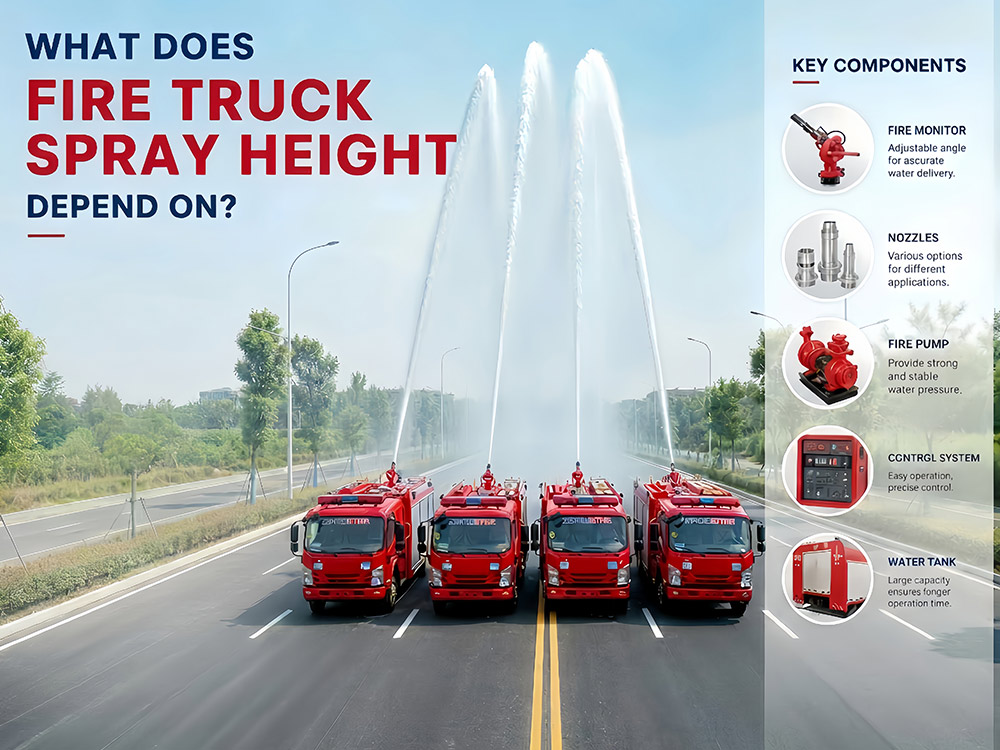
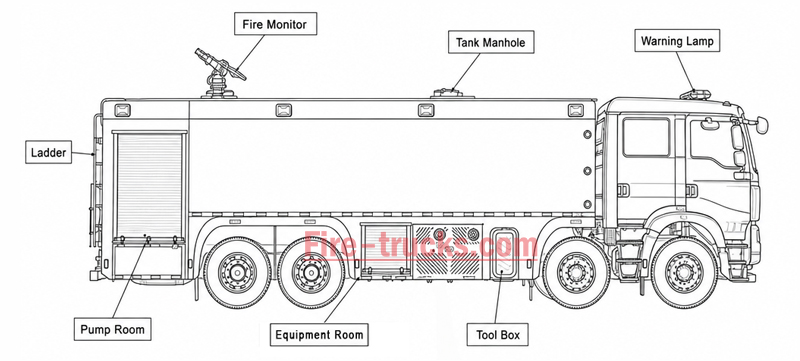
Het pomp- en sproeisysteem van een brandweerwagen is de kern van brandbestrijdingsoperaties. Het fungeert als de "krachtige arm" van de brandweerwagen. Door motorvermogen om te zetten in druk (variërend van 0,8 tot 1,4 MPa), levert het blusmiddelen tot hoogtes van maximaal 85 meter — of het nu gaat om een brand in een hoog gebouw in een dicht stadscentrum of een brand in een petrochemische opslagtank in een industriegebied, de brandweerwagen vertrouwt op dit systeem om een effectieve brandbestrijding te bereiken. Welke factoren beïnvloeden de sproeihoogte van een brandweerwagen, en hoe werken pompdruk, debiet en waterkanon samen? Dit zijn de aandachtspunten van veel klanten. Laten we er vandaag meer over leren. » I. Drie belangrijke onderdelen die de sproeihoogte bepalen 1. Brandsysteem met pomp: Het hart van de brandweerwagen. Centrifugaalpomp aangedreven door PTO. Veelvoorkomende drukklassen: 0,8 MPa, 1,0 MPa, 1,2 MPa, 1,4 MPa. Debieten van 2.000 tot meer dan 5.000 L/min. 2. Waterkanon: Het laatste onderdeel voordat het blusmiddel de wagen verlaat. Verkrijgbaar als waterkanon, schuimkanon en multifunctioneel kanon. PL-serie (PL48) met debieten tot 4.000 L/min en een sproeihoogte van meer dan 70 meter. 3. Toevoersysteem: Leidingen, slangen en straalpijpen die het blusmiddel van de pomp naar het kanon transporteren. Slangdiameter, lengte en type straalpijp beïnvloeden allemaal de uiteindelijke sproeihoogte. » II. Kernfactoren die de sproeihoogte bepalen 1.1. Pompdruk De pompdruk van een brandweerwagen is de kracht die door de brandpomp wordt opgewekt om het blusmiddel door slangen te duwen en via straalpijpen of kanonnen uit te stoten. Het is de belangrijkste factor voor zowel debiet als sproeiafstand. Een hogere druk zorgt voor een hogere snelheid bij de uitlaat van het kanon, waardoor de sproeihoogte direct toeneemt. De relatie wordt bepaald door de formule H ≈ P/(ρg), waarbij elke verhoging van 0,1 MPa ongeveer 10 meter theoretische hoogte toevoegt — maar verliezen in de praktijk verminderen dit. Bij praktische brandbestrijdingsoperaties gelden de volgende bereiken: Pompdruk Typische sproeihoogte 0,8 MPa 35–45 meter 1,0 MPa 45–55 meter 1,2 MPa 55–70 meter 1,4 MPa 70–85 meter 1.2. Hoe de brandpomp werkt: De pomp is meestal een centrifugaalpomp die door de motor van de wagen wordt aangedreven via een aftakas (PTO). Terwijl de waaier draait, zuigt deze het blusmiddel aan en werpt het door centrifugale kracht naar buiten, waardoor druk ontstaat die het middel door het uitlaatsysteem stuwt. Nominale druk versus bedrijfsdruk: Term Definitie Nominale druk De maximale druk die de pomp onder ontwerpomstandigheden continu kan handhaven Bedrijfsdruk De werkelijke druk die tijdens brandbestrijding wordt gebruikt, doorgaans lager dan de nominale druk om een veiligheidsmarge te behouden 2. Debiet (L/min) Voldoende debiet is net zo belangrijk als druk. Hoge druk met een laag debiet kan niet genoeg blusmiddel leveren om een brand te onderdrukken. Het pomp...
Details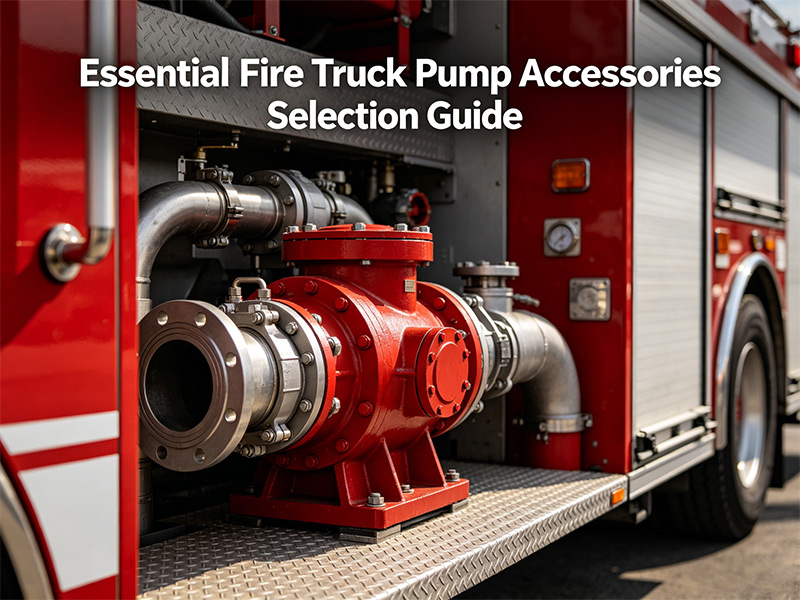
Een pompsysteem van een brandweerwagen is slechts zo betrouwbaar als zijn componenten. Van het aanzuigen van water uit een bron tot het afvoeren ervan onder hoge druk speelt elk accessoire een cruciale rol. Deze gids behandeltbrandweerwagen vijf belangrijke accessoirecategorieën: vacuümpompen, kogelkranen, bolkranen, schuimproportioners en hydraulische regelsystemen. Door deze componenten te begrijpen, kunnen brandweerlieden hun uitrusting onderhouden en de juiste accessoires voor specifieke toepassingen kiezen. I. Serie vacuümpompen (vacuümaanzuiginrichtingen) Vacuümpompen zijn essentieel voor het aanzuigen van water uit meren, rivieren of andere statische bronnen wanneer er geen brandkraan beschikbaar is. Ze verwijderen lucht uit de pomp en de zuigslang, waardoor atmosferische druk water in de pomp kan duwen. Productoverzicht Product Maximaal vacuüm Spanning Vermogen Geschikte pompgrootte 2-zuiger vacuümpomp >85 kPa 24 V - Minder dan 100 L/s Elektrische 2-zuiger vacuümpomp >85 kPa 24 V 2,1 kW Minder dan 100 L/s 4-zuiger vacuümpomp >85 kPa 24 V - Meer dan 100 L/s Elektrische 4-zuiger vacuümpomp >85 kPa 24 V 2,1 kW Meer dan 100 L/s Belangrijk kenmerk: elektrische vacuümpompen Elektrische vacuümpompen bieden een aanzienlijk voordeel: ze kunnen de pomp vullen zonder dat de pomp draait. Dit beschermt de mechanische afdichting tegen schade door drooglopen. Wanneer een standaard vacuümpomp vereist dat de pomp draait, werkt de elektrische versie onafhankelijk, waardoor de levensduur van de afdichting wordt verlengd. II. Serie kogelkranen (debietregeling) Kogelkranen regelen de waterstroom door slangen en uitlaatopeningen. Ze zijn ontworpen voor snelle aan/uit-bediening met een eenvoudige draai van 90°. Roestvrijstalen kogelkranen Model Materiaal Nominale druk Schroefdraad Bediening FQS65/2.5 Huis en kogel: roestvrij staal 304; afdichting: PTFE 2.5 MPa G2-1/2" Handwiel / hendel FQS80/2.5 Huis en kogel: roestvrij staal 304; afdichting: PTFE 2.5 MPa G3" Handwiel / hendel Kogelkranen van aluminiumlegering (lichter gewicht) Model Materiaal Nominale druk Schroefdraad Bediening FQS65/2.5 Huis: A356.2; kogel: 304; afdichting: PTFE 2.5 MPa G2.5" Handwiel / hendel FQS80/1.6 Huis: A356.2; kogel: 304; afdichting: PTFE 1.6 MPa G3" Handwiel / hendel FQS65/2.5 Vierkant Huis: A356.2; kogel: 304; afdichting: PTFE 2.5 MPa - Pneumatisch / hendel Ⅲ. Membraanafsluiterserie (druk- en stroomregeling) In tegenstelling tot kogelkranen die zijn ontworpen voor aan/uit-bediening, maken membraanafsluiters een nauwkeurige regeling van debiet en druk mogelijk. Ze zijn ideaal voor situaties waarin geleidelijke aanpassing nodig is. Model Materiaal Nominale druk Schroefdraad Bediening DN65/2.5 Huis: A356.2; Spindel: H62; Afdichting: NBR 2.5 MPa G2.5" Handwiel DN80/2.5 Huis: A356.2; Spindel: H62; Afdichting: NBR 2.5 MPa G3" Handwiel Wanneer een globeafsluiter gebruiken Gebruik globeafsluiters op uitlaatpunten waar nauwkeurige drukregeling vereist is, ...
Details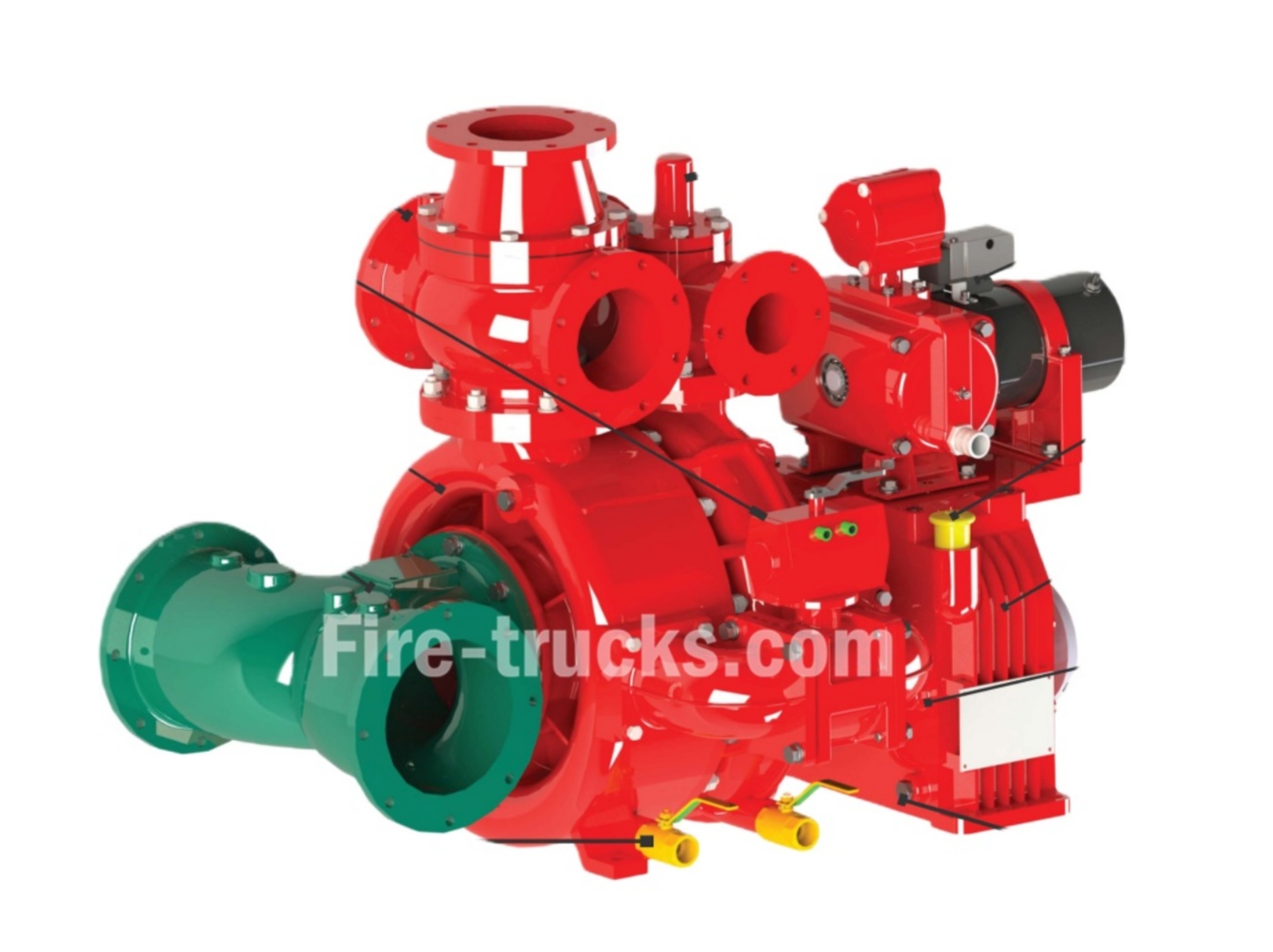
Als professionele xiongzhen fabrikant van brandpompen in China, Powerstar Trucks Het bedrijf heeft een eigen merk, de "Xiongzhen"-productserie, waaronder lagedrukbrandpompen, middendrukbrandpompen en hogedrukbrandpompen voor voertuigen, evenals bijbehorende apparatuur zoals brandmonitoren en schuimdoseerapparaten. De brandpompen zijn vervaardigd van nieuwe materialen zoals aluminiumlegering en roestvrij staal en zijn uitgerust met een elektromagnetische koppeling voor automatische ontkoppeling en een terugslagklep, wat resulteert in uitstekende prestaties, eenvoudige bediening en gemakkelijk onderhoud. De producten van het bedrijf hebben de typekeuring doorstaan van het Nationaal Centrum voor Kwaliteitscontrole en Inspectie van Brandweerapparatuur, zijn CCC-gecertificeerd en ISO 9001-gecertificeerd voor kwaliteitsmanagementsystemen. De brandbluspompen van Xiongzhen omvatten hoofdzakelijk de volgende modellen: CB10/20-XZ, CB10/30-XZ , CB10/40-XZ, CB10/60-XZ CB10/80-XZ, CB10/100-XZ, CB20.10/15.30-XZ, CB20.10/20.40-XZ, CB20.10/30.60-XZ, enz. Brandweerpomp CB10/20-XZ voor brandweerwagens Brandweerpompen CB10/30-XZ voor brandweerwagens Brandweerpompen model CB10/40-XZ voor brandweerwagens uit China Brandweerpompen model CB10-60 voor brandweerwagens Noodbrandpompen CB10/80-XZ voor brandweerwagens Brandbestrijdingspompen CB10/100-XZ voor brandweervoertuigen Xiongzhen brandpompsysteem CB10/100-XZ specificaties Xiongzhen CB-serie brandpompfabrikanten Specificaties van de brandpompsets CB10/150 Brandbestrijdingspompsysteem CB10/160-XZ Xiongzhen fabriek Specificaties van de noodbrandpompen CB10/170-XZ Powerstar Trucks beschikt over sterke technische capaciteiten, heeft vier patenten op zijn naam staan en maakt gebruik van geavanceerde productieapparatuur zoals CAD-tekensoftware en CNC-bewerkingsmachines om een hoge productkwalificatiegraad en klanttevredenheid te garanderen. De producten zijn voornamelijk bestemd voor bedrijven die brandweerwagens ombouwen en voor brandweerkorpsen. CB20.10 20.40 brandpomp details specificatie Brandweerpomp CB20.10 30.60-XZ van de Xiongzhen-fabriek Brandweerpomp CB20/15-XZ-serie Noodbrandpomp CB20/20-XZ-serie Details over de installatie van de brandbluspomp CB20 25 Hier vindt u een onderhoudsschema voor uw XIONGZHEN. brandweerpompen , gecategoriseerd per week, maand, kwartaal en jaar voor gemakkelijke naslag: 01, Dagelijkse inspectie van de Powersar brandpomp: Controleer de start-stopdruk en -frequentie van de drukstabilisatiepomp. Controleer het startvermogen van de accu van de dieselbrandweerpomp. Controleer de watertoevoerregelkleppen en alarmklepconstructies op beschadigingen. 02, Powersar brandweerpomp Wekelijkse inspectie: Test de brandbluspomp met automatische startmotor. Controleer het brandstofniveau van de dieselbrandweerpomp. 03, Powersar brandweerpomp Maandelijkse inspectie: Test de handmatig startende motor. brandweerpomp en een brandweerpomp op dieselmotor. Controleer het waterpeil van de bluswatertank en de ve...
Details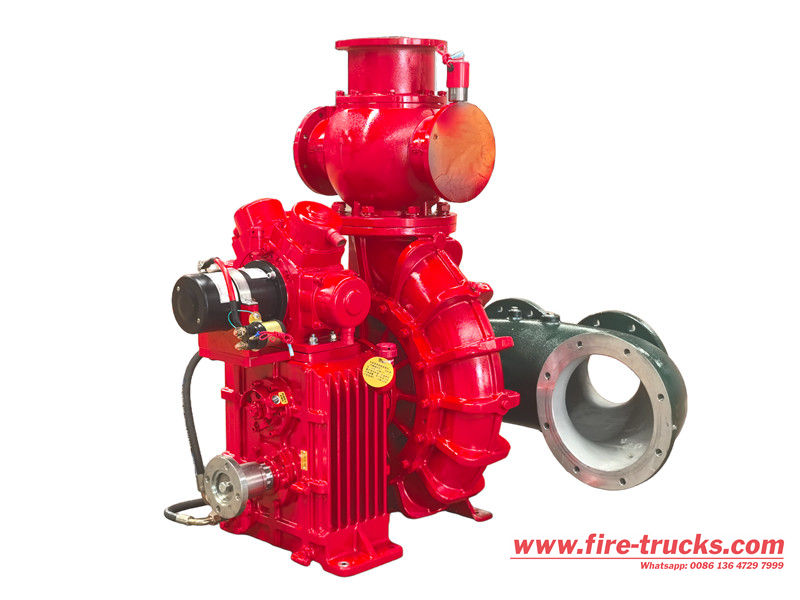
De CB10/140 schuimbluspomp is een veelgebruikt, op voertuigen gemonteerd of stationair bluswatersysteem met een nominale druk van 1,0 MPa en een nominaal debiet van 140 l/s, waarmee wordt voldaan aan de basisbehoeften voor wateraanvoer in brandbestrijdingssystemen. De pomphuis en waaier zijn vervaardigd van hoogwaardige, slijtvaste materialen en bieden corrosie- en hogedrukbestendigheid. Het beschikt over een dubbele inlaat voor snelle omschakeling tussen waterbronnen en wordt aangedreven door een zeer efficiënte elektromotor of dieselmotor, waardoor een opstarttijd van 30 seconden of minder wordt bereikt. Dankzij het compacte ontwerp, het eenvoudige onderhoud en de betrouwbare werking is het een ideale oplossing. CB10/140 schuimbrandbluspomp Het is een essentieel onderdeel van de uitrusting om een efficiënte watervoorziening voor brandbestrijdingsoperaties te garanderen. De CB10/140-XZ lagedrukbrandbluspomp voor vrachtwagens heeft een eentraps centrifugaalconstructie met een pomphuis van aluminiumlegering en een waaier van messing. Hij maakt gebruik van een elektrisch vierzuiger-wateraanzuigsysteem met elektrische schakeling. De optionele CB10/20 schuimpomp maakt gebruik van een pneumatisch scheidingsmechanisme. Dit product biedt uitstekende prestaties, een compacte constructie, eenvoudige bediening en gemakkelijk onderhoud. De CB10/140-XZ brandweerpomp is een eentraps centrifugaalwaterpomp die wordt gebruikt in brandweerwagens. Deze pomp kenmerkt zich door een aanzuiginrichting met twee zuigers die automatisch in- en uitschakelt. Hij is ontworpen voor hoge prestaties met een compacte constructie, eenvoudige bediening en gemakkelijk onderhoud. Belangrijke specificaties zijn een debiet van 140 l/s en een uitlaatdruk van 1,0 MPa bij een nominaal toerental van 2600 tpm. » . Werkingsprincipe van de CB10/140 schuimbluspomp ● Inname van water- en schuimconcentraat: Water wordt uit een waterbron gehaald en schuimconcentraat wordt uit de opslagtank gehaald. ● Verhouding: De doseerder mengt het schuimconcentraat met het water in een vooraf bepaalde verhouding. ● Drukverhoging: De pomp brengt het mengsel onder druk, waardoor de snelheid en de druk toenemen. ● Afvoer: De onder druk staande schuimoplossing wordt door de afvoerslang naar het mondstuk geperst, waar deze op het vuur wordt gespoten. ● Brandbestrijding: Het schuim omhult de brandstofbron, scheidt deze van de zuurstof en dooft het vuur. » . Gedetailleerde introductie van de CB10/140 schuimbrandbluspomp 1. Superieur constructief ontwerp, stabiele en betrouwbare prestaties: ● De CB10/140 brandweerpomp Het apparaat heeft een eentraps centrifugaalontwerp en is vervaardigd uit een zeer sterke aluminiumlegering, wat voordelen biedt zoals een laag gewicht, corrosiebestendigheid en hoge temperatuurbestendigheid. ● De interne structuur van de pomp is nauwkeurig gefreesd, wat een soepele doorstroming en uitstekende hydraulische prestaties garandeert. Een mechanische afdichting voorkomt lekkages en zorgt vo...
Details
Lees verder, blijf op de hoogte, abonneer je en laat ons vooral weten wat je ervan vindt.

 IPv6 Network ondersteund

 Nederlands
 English
 français
 Deutsch
 русский
 italiano
 español
 português
 العربية
 日本語
日本語 한국의
한국의 Türkçe
 Melayu
 ไทย
ไทย Tiếng Việt
 Indonesia
  中文
中文 қазақ
қазақ Filipino
 မြန်မာ
 српски