Laat Een Bericht Achter
Als u geïnteresseerd bent in onze producten en meer details wilt weten, laat dan hier een bericht achter. We nemen zo snel mogelijk contact met u op.

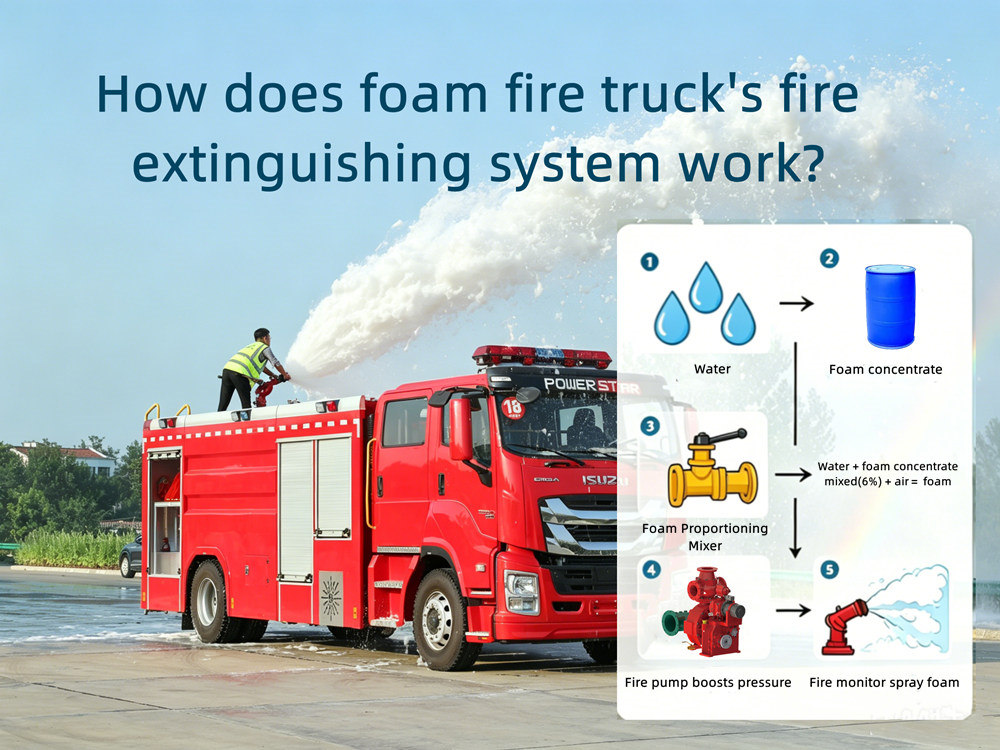
★. Waarom kan water oliebranden niet blussen?
• Verschil in dichtheid: Water is zwaarder dan olie en zinkt direct naar de bodem, waardoor het de vlam nooit raakt.
• Overkoken: Het water op de bodem verdampt onmiddellijk bij contact met hoge temperaturen, zet duizenden keren uit in volume en spat de olielaag uiteen.
• Herontsteking: Een kleine hoeveelheid water die tot stoom verdampt, isoleert de olie slechts tijdelijk van zuurstof; zodra de stoom verdwijnt, ontbrandt het olieoppervlak onmiddellijk opnieuw.
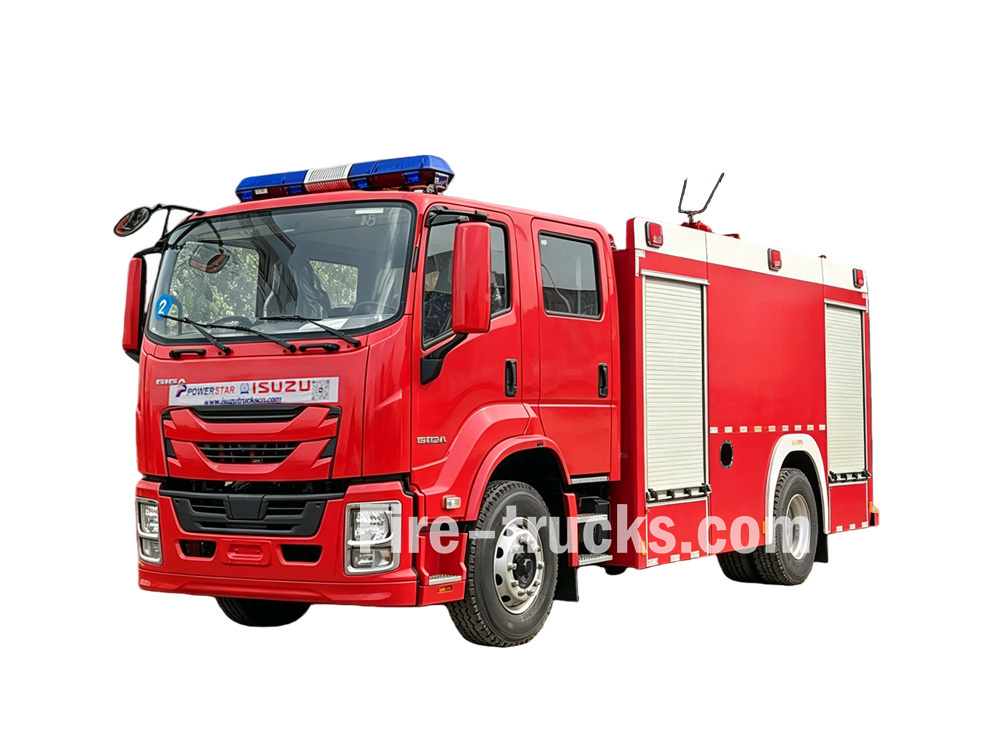
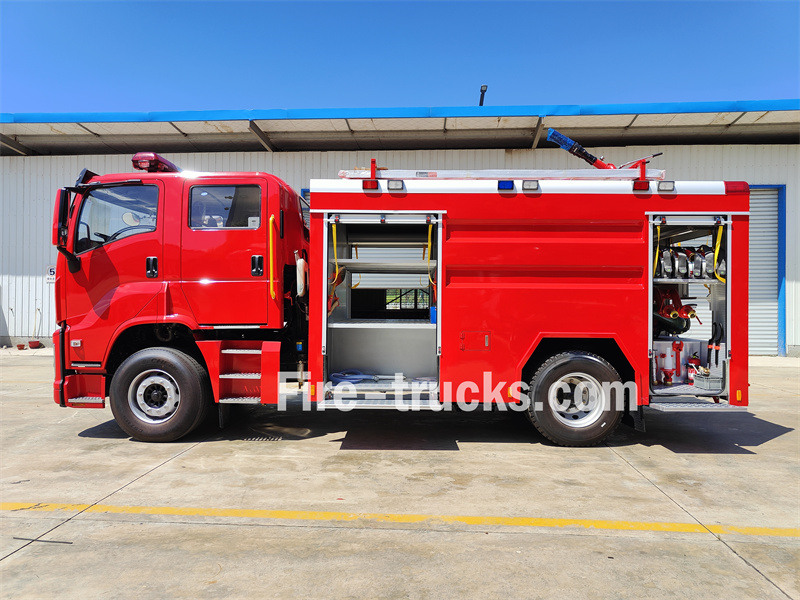
1. Watervoorziening en vloeistofvoorziening – twee onafhankelijke opslagsystemen
De schuimbluswagen heeft twee aparte tanks: een watertank en een schuimvloeistoftank.
2. Brandpomp
Brandpompen vormen het krachtcentrum van het volledige brandblussysteem en zijn speciaal ontworpen voor het leveren van water of schuimoplossingen. Onze brandweerwagens gebruiken voornamelijk brandpompen van twee bekende merken: Xiongzhen en Rongshen. De drukken omvatten lage, middelhoge en middel-lage druk; de debieten variëren van 20 L/s tot 180 L/s; de zuigdiepte is 7 m.
Daarvan gebruiken we vaak de CB10/60-brandpomp, met een debiet van 60 L/s en een nominale druk van 1,0 MPa.
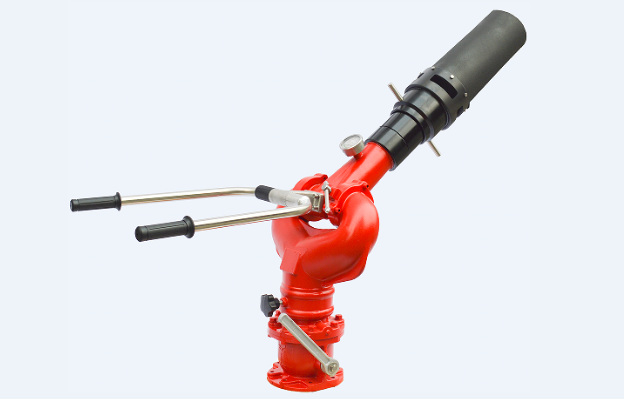
 3. Blusmonitor
Dubbel doel, geschikt voor het spuiten van water om vaste branden te blussen en schuim om oliebranden te blussen; onze brandweerwagens gebruiken voornamelijk Chengdu West-blusmonitors, die water of schuimvloeistof kunnen spuiten en zowel een sproeipatroon als een rechte straalfunctie hebben; ze hebben een groot bereik, een geconcentreerde straal, een hoge schuimverhouding en een groot beschermingsgebied; ze zijn flexibel en gemakkelijk te bedienen, en het monitorlichaam kan horizontaal en verticaal draaien.
Daarvan gebruiken we vaak de PL8/48-blusmonitor, met een debiet van 48 L/s en een nominale druk van 0,8 MPa; het bereik is ≥70 m voor water en ≥60 m voor schuim.
4. Waterkanonnen en schuimkanonnen
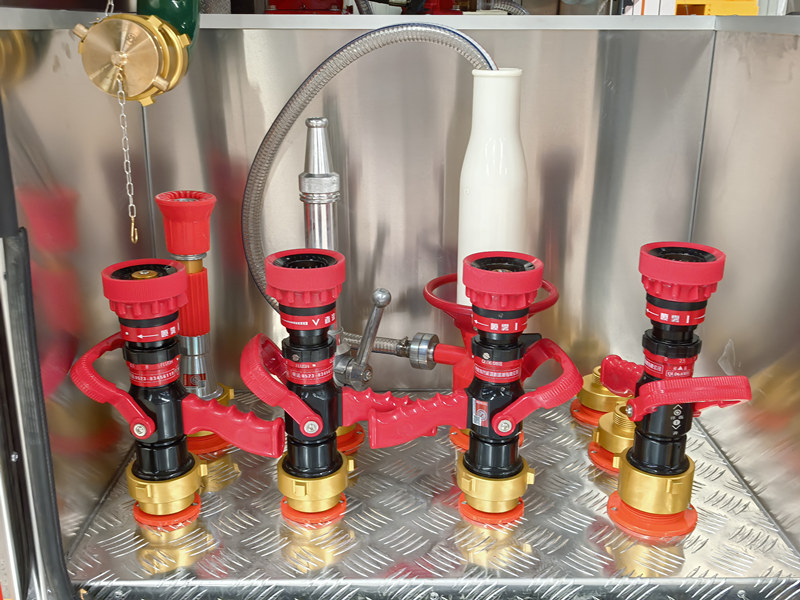
Water of schuim wordt via leidingen en brandslangen naar de eindbluskanonnen/schuimkanonnen geleid voor brandblussing.
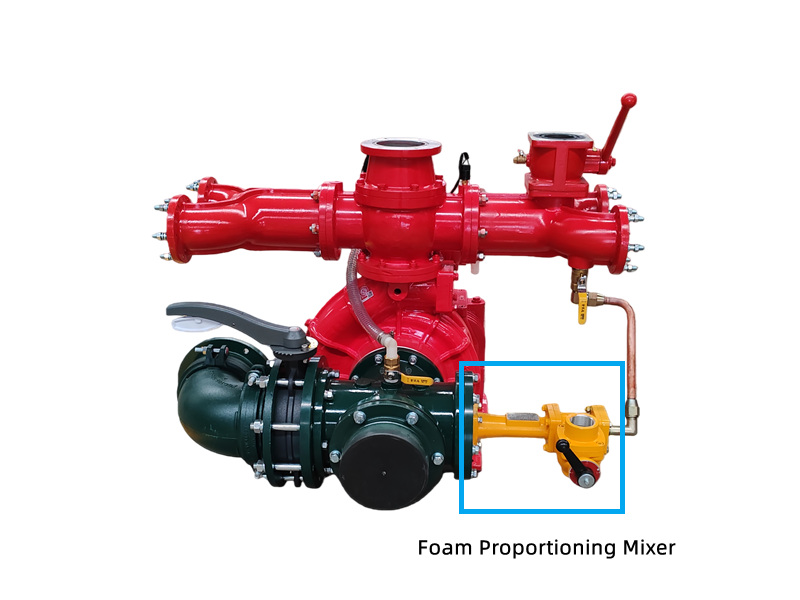
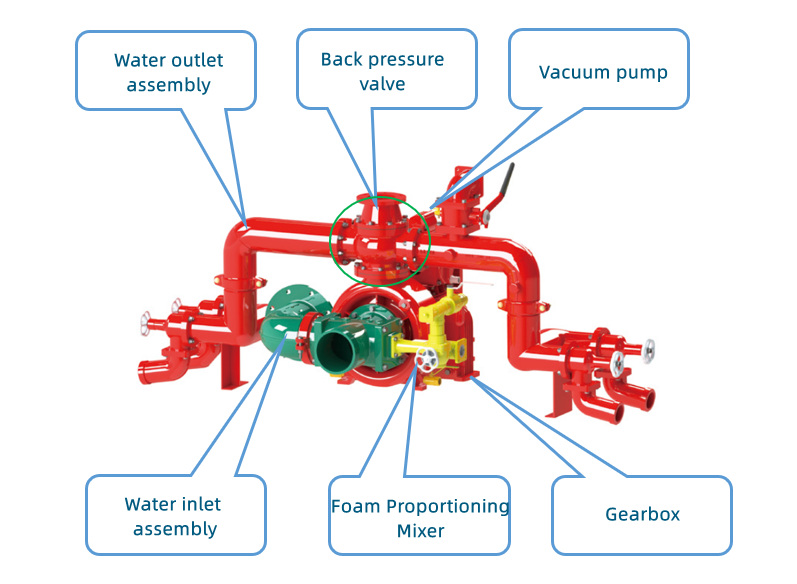
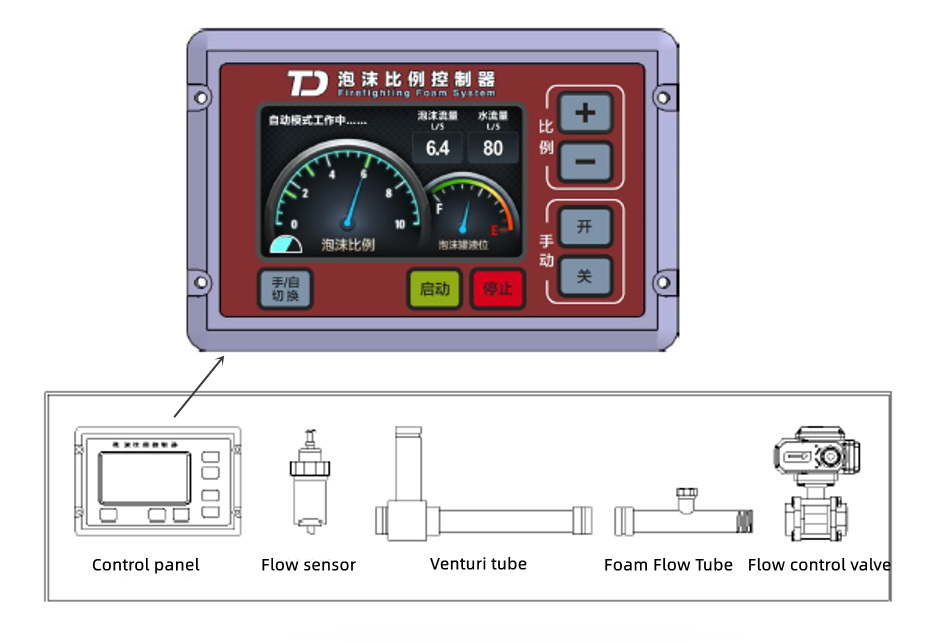
5. Vaste schuimproportioner versus volledig automatische schuimproportioner
|
Vergelijkingsdimensies |
Vaste doseerverhouding (Type circulatiepomp, onderdruk) |
Variabele doseerverhouding (Type circulatiepomp, onderdruk) |
|
Mengverhouding |
6%(voorbeeld:PH64-RS) |
1%~10%,stap 0,5% |
|
Werkdrukbereik |
0.6~1.4MPa |
0.6~2.5MPa |
|
Debietbereik |
16~64L/s |
TAF-PH120,120L/s;TAF-PH240,240L/s |
|
Doseernauwkeurigheid |
Sterk beïnvloed door waterdruk en leidingweerstand, wat leidt tot aanzienlijke afwijkingen. |
Realtime dynamische correctie zorgt voor een hoge doseernauwkeurigheid en minimale afwijking. |
|
Toepassingsscenario's |
Geschikt voor grote en middelgrote brandweerwagens met een constant debiet en stabiele druk |
Geschikt voor scenario's met grote debietvariaties en meerdere wijzigingen in bedrijfsomstandigheden |
|
Onderhoudscomplexiteit |
Laag, eenvoudige structuur |
Gemiddeld, vereist kalibratie vanwege sensorelementen |
|
Kosten |
Laag |
Hoog |
|
Vaste schuimproportioner |
 Volautomatische schuimproportioner Volautomatische schuimproportioner
|
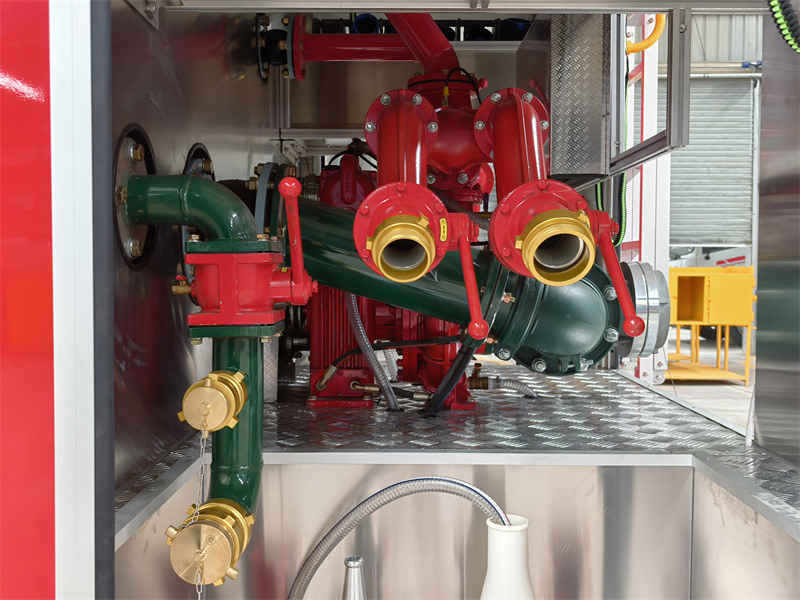
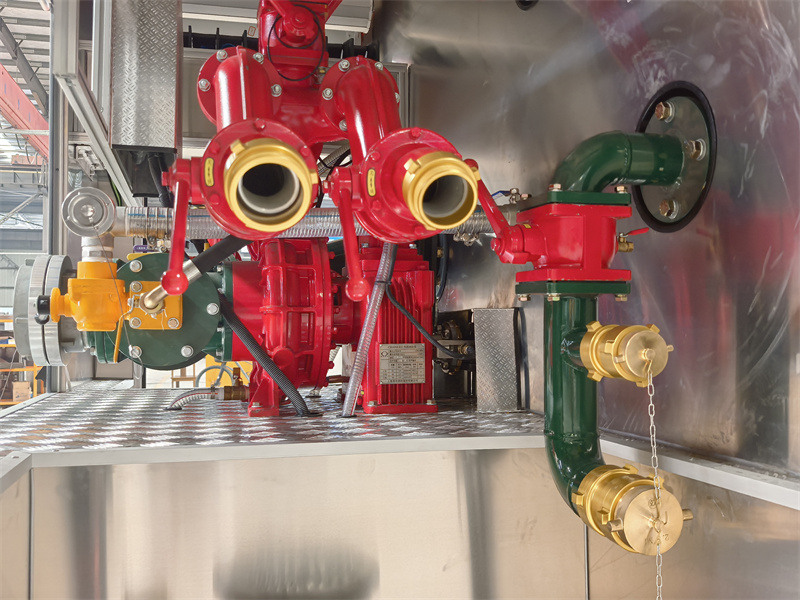
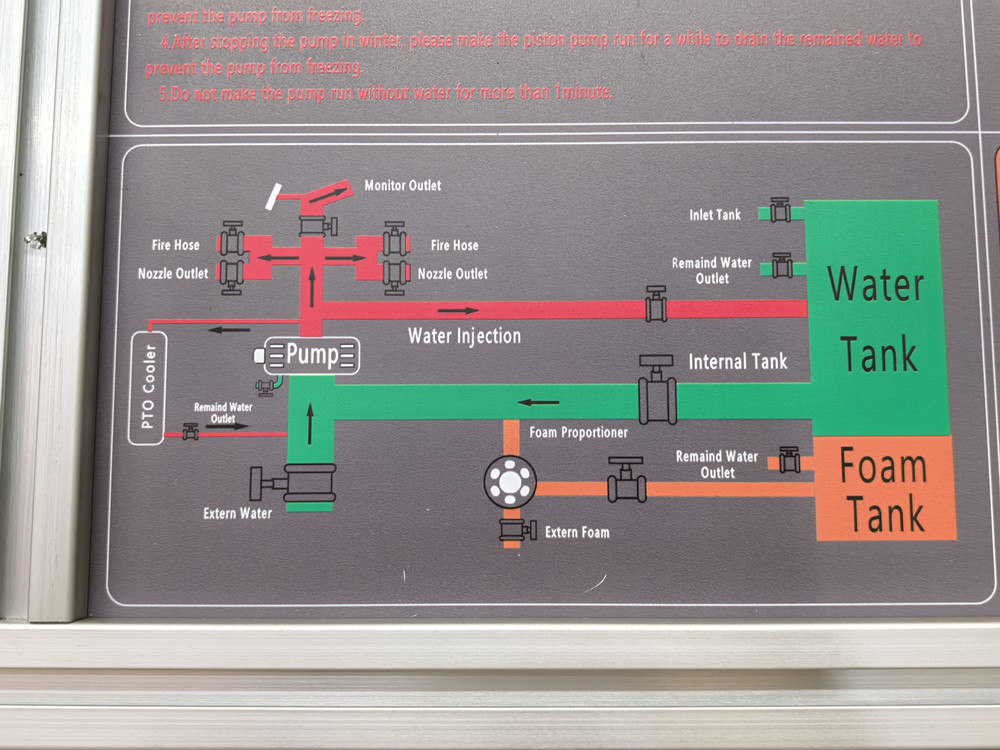 Leidingschema voor watertank en schuimtank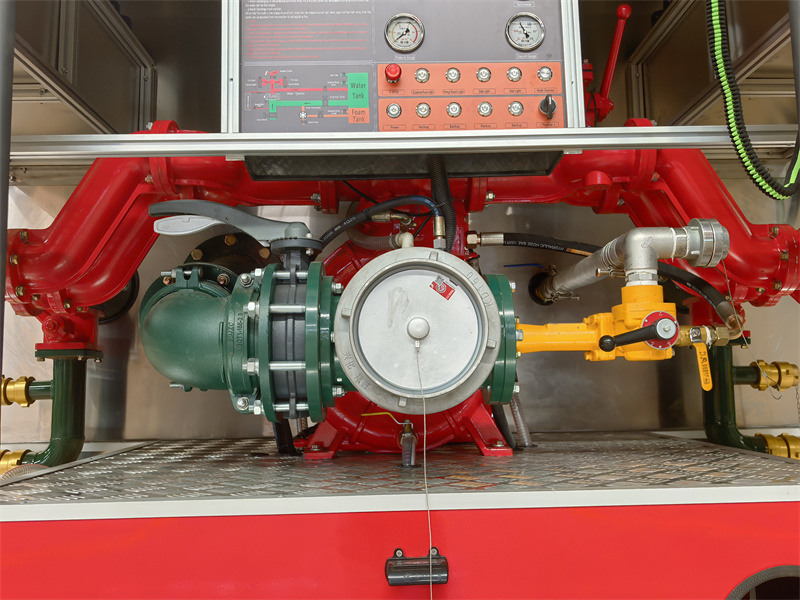
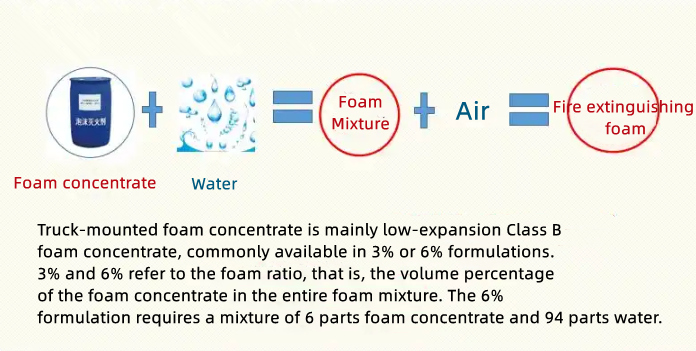
1. Het schuimmengsel (water + schuimconcentraat) is nog steeds een vloeistof, met een debiet dat vergelijkbaar is met water. Echt schuim vereist dat een grote hoeveelheid lucht in het mengsel wordt opgenomen.
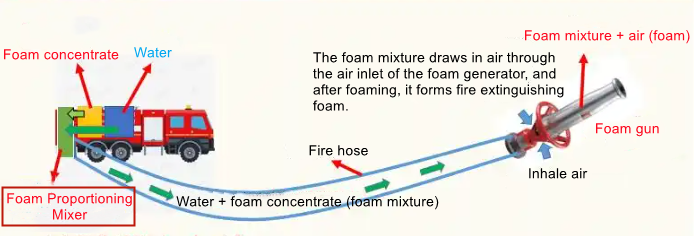
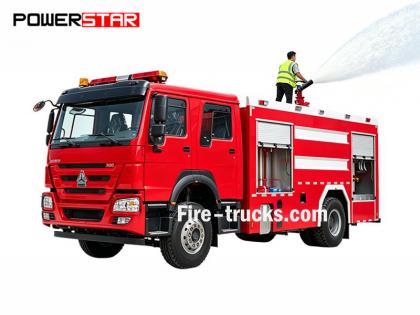
De schuimbrandweerwagen heeft functies voor twee bedrijfsmodi: afzonderlijke waterafgifte en schuimafgifte:
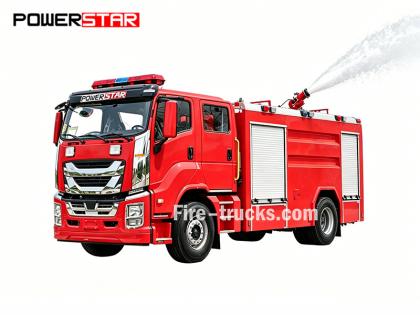
De wagen kan eenvoudig schoon water aanzuigen, dit onder druk brengen via een waterpomp en schoon water via slangen en brandkanonnen spuiten om conventionele vaste branden te blussen;
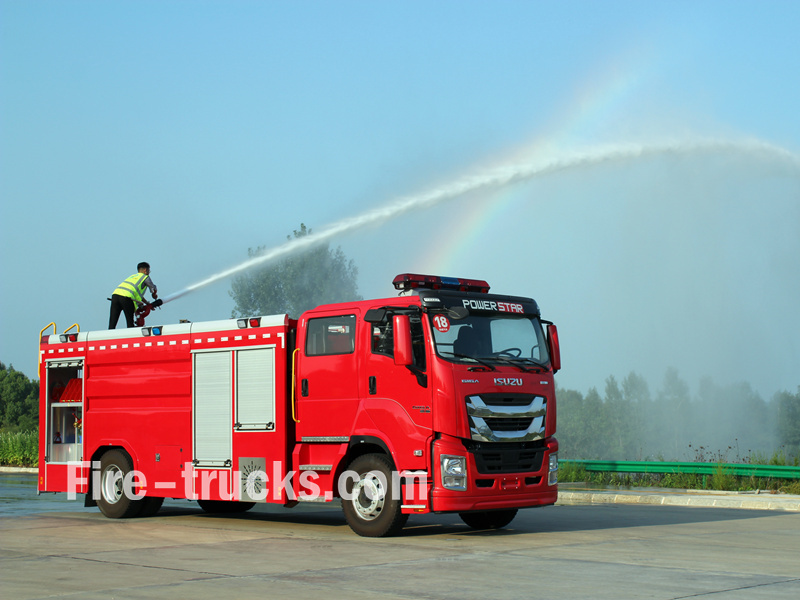 Watertest van de schuimbrandweerwagen
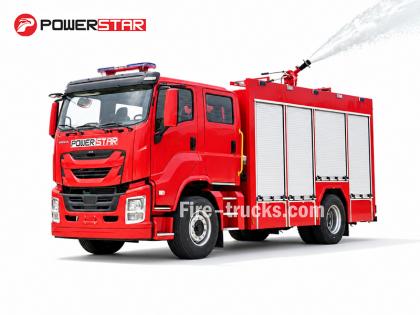
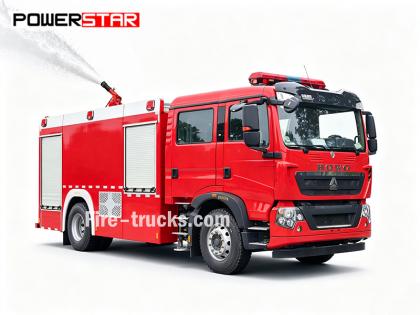
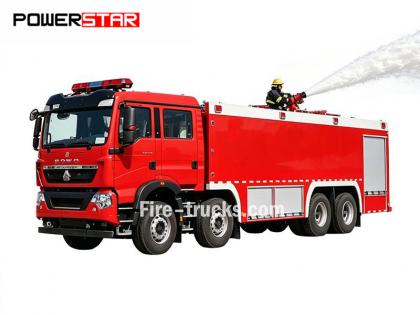
Het schuimproportionele mengsysteem kan ook worden gestart om schoon water en schuimvloeistof volgens de standaardverhouding te mengen tot een schuimmengsel. Nadat het bluswater door de waterpomp onder druk is gebracht, wordt het naar het schuimpistool of de op het voertuig gemonteerde brandmonitor geleid om te worden gespoten. Het mengsel en de lucht worden volledig geïntegreerd om luchtschuim te vormen. Schuim kan snel het oppervlak van brandbare vloeistoffen bedekken, lucht isoleren, afkoelen en vlammen vertragen, de verdamping van olie en gas remmen en herontsteking voorkomen. Het is gespecialiseerd in branden van brandbare vloeistoffen, zoals bij tankstations, in de chemische industrie en in oliedepots.
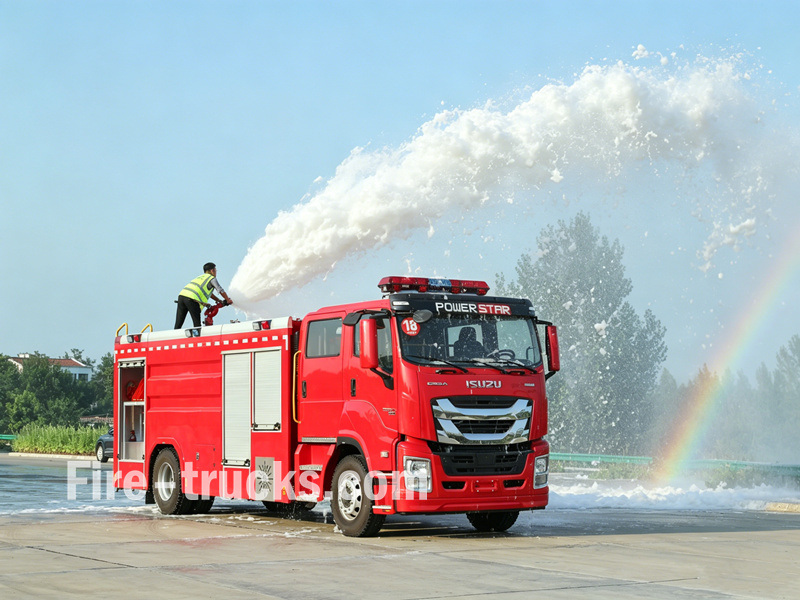 Schuimtest van de schuimbrandweerwagen


U bent misschien geïnteresseerd in de volgende informatie
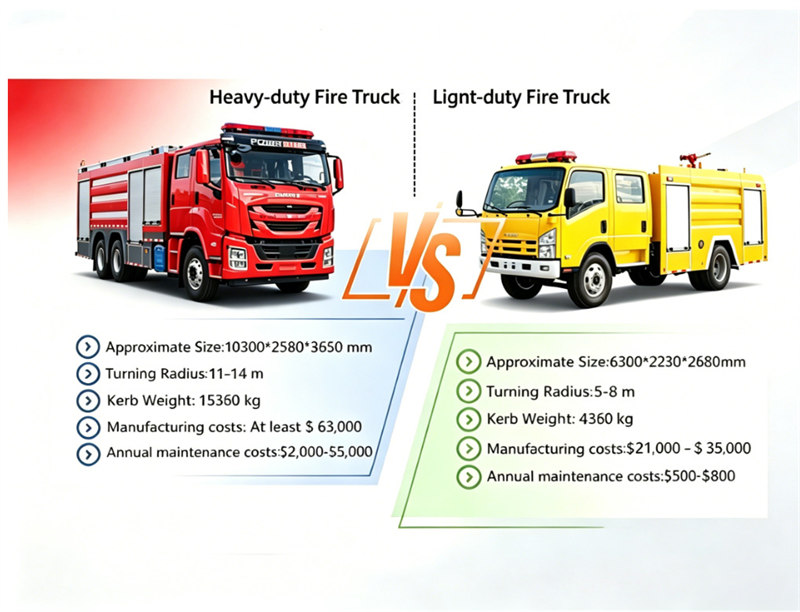
Brandweerwagen voor brandbestrijdingDe behoeften variëren sterk tussen grootstedelijke gebieden en landelijke of kleinschalige gemeenschappen. Grote stedelijke brandweerkorpsen vertrouwen op zware brandweerwagens met enorme watertanks, hoge ladders en volledige industriële configuraties om hoogbouwbranden, industriële branden en grootschalige noodsituaties aan te pakken. Voor kleine steden, landelijke dorpen, dorpsbrandweerkazernes en vrijwillige brandweerkorpsen worden zware brandweerwagens echter vaak meer een last dan een voordeel. Daarom zijn lichte brandweerwagens wereldwijd de gangbare en meest praktische oplossing geworden voor kleine stedelijke en landelijke brandweerkorpsen. Door een compacte afmeting, flexibele mobiliteit, volledige basisreddingsfuncties en lage totale kosten te combineren, sluiten ze perfect aan bij de dagelijkse reddings- en brandpreventiebehoeften van lokale brandweerteams. De lichte brandweerwagen is een compact, lichtgewicht noodhulpvoertuig voor brandbestrijding, speciaal ontworpen voor lokale, voorstedelijke en landelijke brandsituaties. I. Vergelijking tussen zware brandweerwagens en lichte brandweerwagens: Om duidelijk te bekijken wat het verschil is tussen zware en lichte brandweerwagens, hebben we een directe vergelijkingstabel opgesteld met de belangrijkste praktische meetpunten. Zware modellen zijn meer dan 10 meter lang, hebben een draaicirkel van 11–14 m en een leeggewicht van 15 ton, met bouwkosten van minimaal $63.000 plus $2.000–$5.000 aan jaarlijks onderhoud. Daarentegen halveren compacte lichte brandweerwagens bijna de afmetingen, wegen ze slechts 4.360 kg, beginnen ze bij $21.000 en blijven de jaarlijkse onderhoudskosten onder $800, waardoor ze veel betere mobiliteit en budgetwaarde bieden voor landelijke en kleinschalige brandweerkazernes. Ⅱ.Belangrijkste kenmerken van lichte brandweerwagens: 1.Lichtgewicht maar sterk dragend ontwerp. Het totale toegestane voertuiggewicht blijft onder 8.000 kg, zelfs wanneer het voertuig volledig beladen is, waardoor een ultrasnelle noodrespons mogelijk is. 2.Aanpassing met vierwielaandrijving is beschikbaar om ruwe, ongelijke wegoppervlakken aan te pakken die vaak voorkomen in afgelegen gebieden. 3.De volledige brandbestrijdingsfunctionaliteit blijft behouden: a. Twee onafhankelijke tanks voor water en brandblusschuim. b. Dubbele cabine met twee zitrijen om een volledig team van reagerende brandweerlieden te huisvesten. c. Volledige standaarduitrusting van noodreddings- en brandbestrijdingsgereedschappen. d. Optionele uitbreidingen waaronder terreinverlichtingssystemen en sleepapparatuur. 4.Het aftakassysteem (PTO) dient als de kern van de aandrijving. Het beschikt over intuïtieve bediening en eenvoudig onderhoud en vervanging van onderdelen. Duurzame kerncomponenten verlagen de langdurige operationele noodkosten voor landelijke en gemeentelijke brandweerkorpsen aanzienlijk. Ⅲ.De volgende zijn de populairste modellen lichte brandweerw...
Details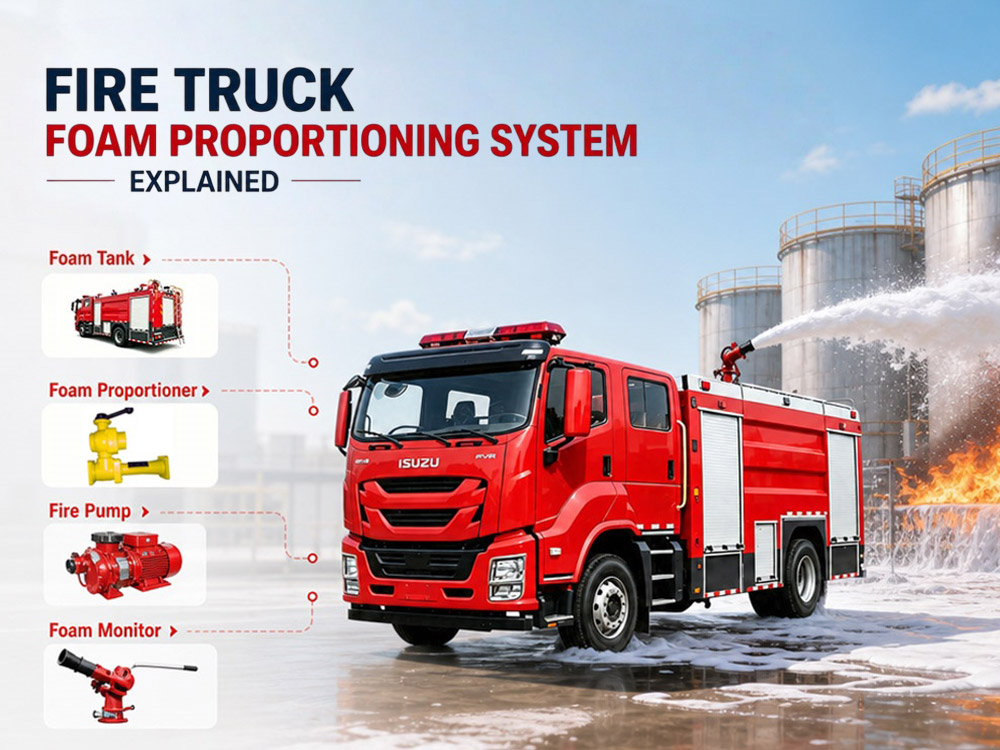
Het schuimsysteem van een brandweerwagen mengt water met schuimconcentraat in nauwkeurige verhoudingen (1%, 3% of 6%) om een schuimoplossing te creëren. Deze oplossing wordt vervolgens door de brandpomp onder druk gebracht en met lucht geëxpandeerd via schuimsproeiers — dit is het kernwerkingsprincipe van hoe een schuimbluswagen schuim en water mengt — en uiteindelijk een stabiele schuimdeken produceert die het brandstofoppervlak bedekt. Dit proces verhoogt de efficiëntie van brandbestrijding met meer dan 50% en vermindert tegelijkertijd de verspilling van schuimconcentraat met 30%. » I. Waarom heeft een brandweerwagen een schuimsysteem nodig? Vergeleken met het gebruik van alleen water biedt schuim drie belangrijke voordelen: 1. Zuurstofisolatie— Schuim bedekt het brandende oppervlak en vormt een dichte fysieke barrière die voorkomt dat zuurstof de verbrandingszone bereikt, waardoor de brand wordt onderdrukt. 2. Temperatuurverlaging— Het watergehalte in de schuimoplossing neemt grote hoeveelheden warmte op wanneer het verdampt, waardoor de temperatuur van het brandende gebied snel daalt. 3. Voorkomen van herontsteking— De schuimlaag blijft het brandgebied bedekken, zelfs nadat de brand is geblust, en isoleert effectief zuurstof en brandbare dampen, waardoor het risico op herontsteking aanzienlijk wordt verminderd. » II. Kernwerkingsprincipes van het schuimsysteem 1. Mengsysteem:Water stroomt door de menger → creëert negatieve druk (negatiefdruksysteem) of gebruikt een schuimpomp (positiefdruksysteem) → trekt schuimconcentraat uit de schuimtank → mengt volgens de vooraf ingestelde verhouding (1%, 3% of 6%) → de schuimoplossing stroomt naar de pomp. 2. Drukopbouw door de pomp:De schuimoplossing komt de centrifugaalpomp binnen → wordt onder druk gebracht tot 0,8–1,2 MPa → wordt via leidingen naar uitlaatopeningen of de schuimmonitor geleid. 3. Schuimexpansie:De schuimoplossing onder druk stroomt door een schuimsproeier of beluchtingsapparaat → lucht wordt opgenomen → de oplossing zet uit tot gevormd schuim → bedekt het brandstofoppervlak → sluit zuurstof af en onderdrukt de brand. Kernbegrip:Schuimconcentraat + water is niet gelijk aan afgewerkt schuim. De gemengde schuimoplossing is nog steeds een vloeistof — deze moet via een schuimsproeier met lucht worden gecombineerd om echt brandbestrijdingsschuim te worden. Wanneer de schuimoplossing onder hoge druk met hoge snelheid door de sproeier stroomt, ontstaat een plaatselijke zone met negatieve druk die lucht krachtig aanzuigt. De lucht en vloeistof botsen en worden sterk gescheiden in de sproeier, waardoor ze onmiddellijk uiteenvallen in miljoenen kleine belletjes die zich ophopen tot wit schuim. » III. Hoe mengt een brandweerwagen schuim en water? Het schuimmengproces op een brandweerwagen bestaat uit vier hoofd stappen, van watertoevoer tot uiteindelijke schuimvorming. Stap 1: De brandpomp levert de waterstroom Nadat de brandweerwagen is gestart, levert de brandpomp de aandrijving voor het schuim...
Details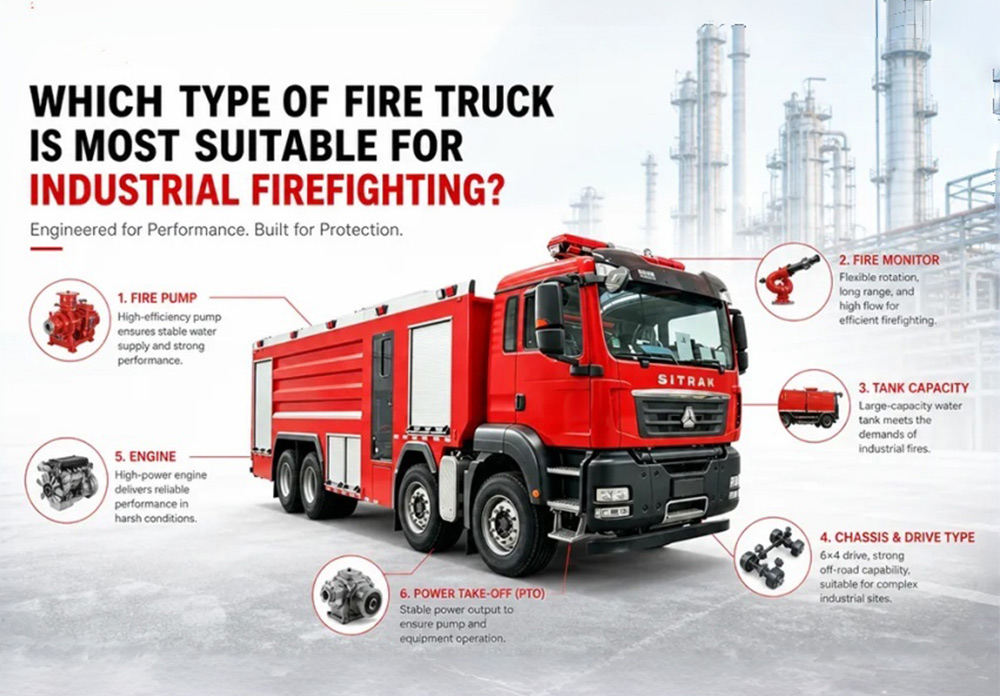
Industriële branden verschillen fundamenteel van gewone gebouwbranden. Petrochemische fabrieken hebben voornamelijk te maken met branden van ontvlambare vloeistoffen en brandbare gassen, terwijl productiebedrijven en logistieke opslagcentra vaker te maken hebben met gewone brandbare materialen — daarom zijn verschillende soorten industriële brandweerwagens nodig voor verschillende brandrisico's. Dit artikel vergelijkt waterbrandweerwagens, schuimbrandweerwagens, poederbrandweerwagens en combinatie-eenheden. Deze uitgebreide koopgids helpt inkoopmanagers, ingenieurs, distributeurs en aannemers de belangrijkste verschillen tussen soorten industriële brandweerwagens te begrijpen en het meest geschikte voertuig te kiezen voor hun specifieke industriële brandbestrijdingsbehoeften. » I. Kort antwoord: Welke brandweerwagen is het beste voor industriële brandbestrijding? De selectie moet gebaseerd zijn op het brandtype, de kenmerken van de industrie en de vereisten voor blusmiddelen: Industrie Aanbevolen brandweerwagen Reden Petrochemie Combinatie-eenheid met water + schuim + droog poeder Dekt brandklassen A, B, C en elektrische branden; past zich aan complexe brandsituaties aan Aardgas / LNG Droogpoederbrandweerwagen Snelle onderdrukking van gasbranden; vermindert het risico op herontsteking Algemene productie Waterbrandweerwagen Lagere kosten; geschikt voor brandklasse A; eenvoudig onderhoud Opslag en logistiek Schuimbrandweerwagen Kan zowel gewone brandbare materialen als sommige vloeistofbranden aan Energiecentrale Droogpoeder- + schuimbrandweerwagen Voldoet aan zowel de behoeften voor het blussen van elektrische apparatuur als olieverbranden Mijnbouw 6x4-waterbrandweerwagen Hoge laadcapaciteit; goede terreincapaciteiten; geschikt voor ruig terrein Eenvoudig gezegd: Algemene industriële faciliteiten: een waterbrandweerwagen is meestal voldoende. Petroleum- en chemische industrieën: een schuimbrandweerwagen is de eerste keuze. Speciale industrieën (aardgas, elektrische apparatuur): een droogpoederbrandweerwagen wordt aanbevolen. Grote geïntegreerde industrieparken: een combinatie-eenheid met water + schuim + droog poeder biedt de meest uitgebreide brandbestrijdingscapaciteit en is de meest veelzijdige keuze. » II. Industriële brandrisico's begrijpen Voordat kopers een brandweerwagen selecteren, moeten zij de brandgevaren in hun faciliteit begrijpen. Industriële branden worden ingedeeld op basis van het type brandstof dat betrokken is. Brandclassificaties voor industriële omgevingen Brandklasse Brandstoftype Voorbeelden Vereist blusmiddel Klasse A Gewone brandbare stoffen Hout, papier, textiel, rubber, kunststoffen (vaste materialen) Water, schuim, droog poeder Klasse B Brandbare vloeistoffen Benzine, olie, diesel, chemicaliën, oplosmiddelen Schuim, droog poeder, CO2 Klasse C Brandbare gassen Methaan, propaan, waterstof, aardgas Droog poeder, gasonderbreking Klasse D Brandbare metalen Magnesium, titanium, natrium, aluminiumpoeder Alleen gespecialis...
Details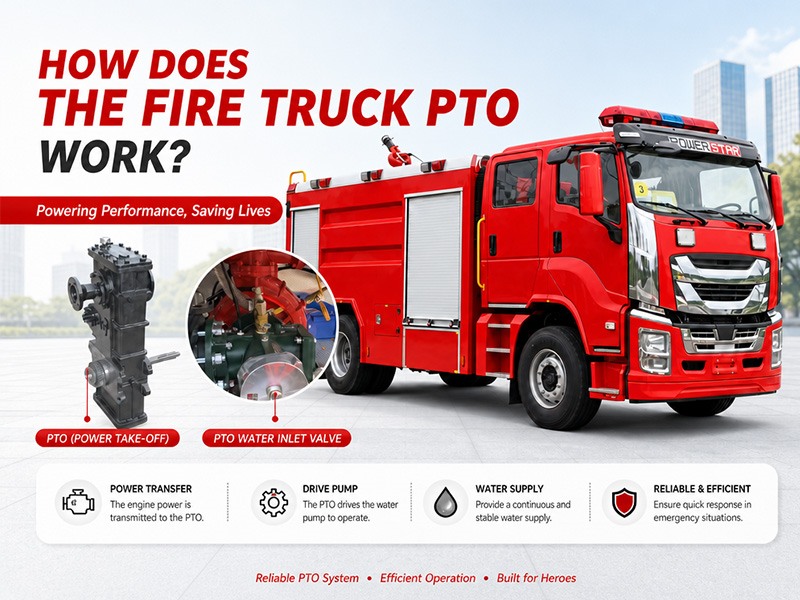
De PTO (Power Take-Off) van de brandweerwagen is een krachtoverbrengingsapparaat dat het motorvermogen overdraagt naar de brandbluspomp. Wanneer de brandweerman de PTO activeert, wordt mechanisch vermogen van de motor via de transmissie en PTO naar de brandbluspomp overgebracht — dit is het kernwerkingsprincipe van hoe een brandweerwagen PTO-systeem werkt — waardoor de pomp water of schuim met hoge druk en hoge doorstroming kan leveren zonder dat een aparte hulpmotor nodig is. Moderne brandweerwagens gebruiken doorgaans zijdelings gemonteerde PTO- of volledige vermogens-PTO-systemen. Deze bieden een stabiele vermogensafgifte, eenvoudige bediening en lage onderhoudskosten, waardoor ze een essentieel onderdeel vormen van het brandbestrijdingssysteem van de brandweerwagen. »I. Wat is een PTO van een brandweerwagen? 1. Definitie van PTO PTO (Power Take-Off) is een cruciaal onderdeel van het aandrijfsysteem van de brandweerwagen. Het is een tandwieloverbrengingsapparaat dat tussen de motor en de transmissie is geïnstalleerd en is ontworpen om een deel van het mechanische vermogen van de motor of transmissie van het voertuig af te leiden naar de brandbluspomp of andere hulpapparatuur, zonder de normale rijeigenschappen van het voertuig te beïnvloeden. De motor van de brandweerwagen is oorspronkelijk alleen verantwoordelijk voor het aandrijven van de wielen. Zodra de brandweerwagen echter op de brandlocatie aankomt, hebben de wielen geen vermogen meer nodig, terwijl de brandbluspomp vermogen nodig heeft om water aan te zuigen en onder druk te zetten. De PTO is het apparaat dat deze "vermogensschakelaar" realiseert. 2. Wat betekent Power Take-Off? Power Take-Off (PTO) betekent letterlijk "vermogensafgifteapparaat". Op een brandweerwagen verwijst dit naar het onttrekken van rotatievermogen aan het vliegwiel van de motor of de transmissietandwielen via tandwielkoppeling, en het overbrengen hiervan naar de brandbluspomp of andere hulpapparatuur. De naam beschrijft de functie: Motor = Energiebron PTO = Vermogensverdeler Brandbluspomp = Verbruikspunt van vermogen Daarom is de PTO de brug die de "energiebron" en het "brandbestrijdingssysteem" met elkaar verbindt. »II. Waarom heeft een brandweerwagen een PTO nodig? De belangrijkste reden waarom brandweerwagens met een PTO moeten worden uitgerust, is dat brandbestrijdingswerkzaamheden een continue, stabiele vermogensafgifte met hoog vermogen vereisen die niet afhankelijk kan zijn van de rijtoestand van het voertuig. Belangrijkste redenen: 1. Levert continu vermogen voor brandbestrijding De brandbluspomp moet tijdens brandbestrijdingswerkzaamheden langdurig draaien. De PTO maakt het mogelijk dat de motor de brandbluspomp continu aandrijft bij stationair toerental of een vast toerental, waardoor een stabiele waterdruk en doorstroming worden gegarandeerd. 2. Verbetert de efficiëntie van het vermogensgebruik Zonder een PTO zou een aparte hulpmotor nodig zijn om de brandbluspomp aan te drijven, wat zou leiden tot een...
Details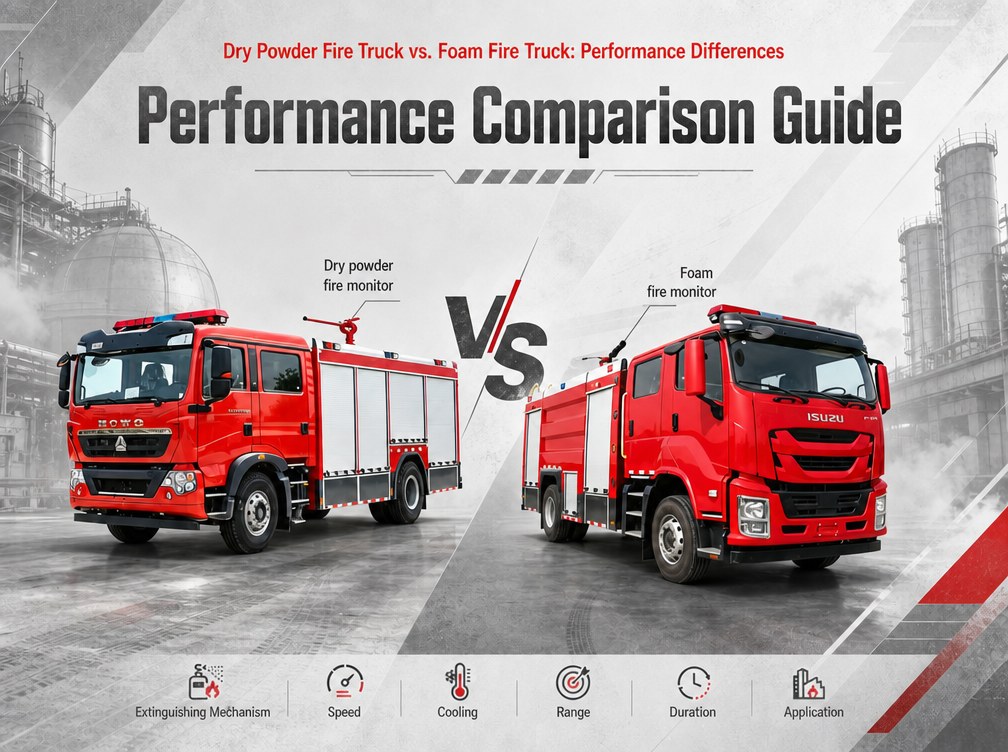
Een systeem met gecomprimeerd luchtschuim (CAFS) voor brandbestrijdingeneenbrandweerwagen met bluspoederkunnen beide worden gebruikt voor het bestrijden van branden met ontvlambare vloeistoffen en gassen. Beide zijn gespecialiseerde voertuigen die zijn ontworpen om gevaren van klasse B en klasse C aan te pakken. Hun blusmiddelen, werkingsprincipes en toepassingsscenario's zijn echter fundamenteel verschillend. Dit artikel legt de belangrijkste verschillen uit tussenbrandweerwagens met bluspoederen CAFS-brandweerwagens vanuit meerdere perspectieven: blusmechanisme, werkingsprincipe, belangrijkste onderdelen, prestatieparameters, toepassingsscenario's en kosten. »I. Hoe werken verschillende blusmiddelen? 1.Waarom kan water niet alle soorten branden blussen •• Klasse B (ontvlambare vloeistoffen):Water is zwaarder dan olie en zinkt direct naar de bodem, waardoor het nooit het vlamoppervlak bereikt. •• Klasse C (ontvlambare gassen):Water kan een gaslek niet stoppen; het kan de vlam zelfs verspreiden of een stoomexplosie veroorzaken. •Elektrische branden:Water geleidt elektriciteit, waardoor een ernstig risico op elektrische schokken voor brandweerlieden ontstaat. •Klasse D (brandbare metalen):Water reageert heftig met brandende metalen zoals magnesium, titanium en natrium, wat explosies en de verspreiding van brandende metaalfragmenten veroorzaakt. 2.Hoe werkt bluspoeder? •Chemische onderbreking:Bluspoederdeeltjes onderbreken de kettingreactie van de verbranding, waardoor de brand vrijwel onmiddellijk stopt. •Beperkte koeling:In tegenstelling tot water of schuim biedt bluspoeder zeer weinig koelend effect. •Geen afdeklaag:Het poeder vormt geen blijvende barrière; zodra het zich verspreidt, kan de brand opnieuw ontbranden als de brandstof nog heet is. •Niet-geleidend:Bluspoeder geleidt geen elektriciteit, waardoor het veilig is voor elektrische branden. 3.Hoe werkt gecomprimeerd luchtschuim (CAFS)? •Afdekking:Het schuim bedekt het brandstofoppervlak en vormt een dichte fysieke barrière die de toevoer van zuurstof blokkeert. •Koeling:Het schuim bevat een grote hoeveelheid water; waterverdamping absorbeert warmte en voert continu warmte weg van het brandstofoppervlak. •Damponderdrukking:De schuimlaag voorkomt dat brandstofdampen in de lucht verdampen en doorbreekt de keten van brandstof-luchtmenging. •Hechting:CAFS-schuim hecht zich aan verticale oppervlakken en plafonds en biedt bescherming die water niet kan bereiken. » II.Belangrijkste onderdelen van elk systeem Droogpoederbrandweerwagen Onderdeel Beschrijving Poedertank Slaat droog chemisch poeder op (capaciteit: 2.000 - 10.000 kg) Drijfgascilinders Slaan samengeperste stikstof of lucht op onder hoge druk (15-20 MPa) Drukregelaar Verlaagt de gasdruk tot een veilig bedrijfsniveau (1,5-2,5 MPa) Poederafvoerklep Regelt de poederstroom van de tank naar de afvoerleiding Slangen en sproeiers Voeren poeder naar de brand; speciale sproeiers voorkomen verstopping Bedieningspaneel Stelt de operator in staa...
Details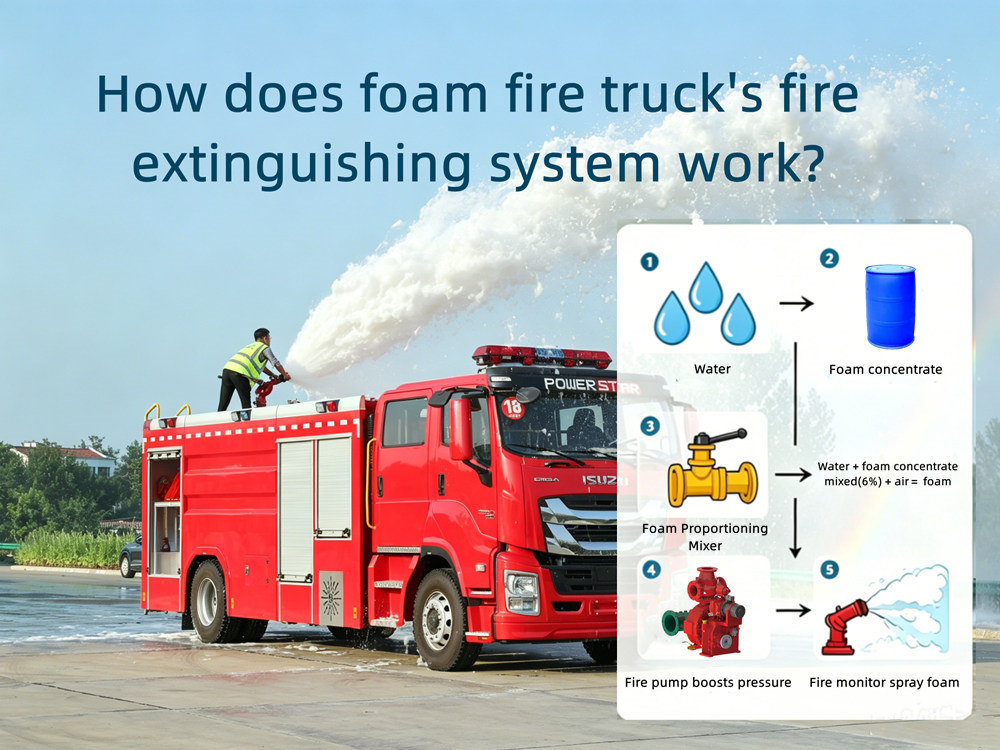
» De onderliggende logica van brandblussing met schuim ★. Waarom kan water oliebranden niet blussen? • Verschil in dichtheid: Water is zwaarder dan olie en zinkt direct naar de bodem, waardoor het de vlam nooit raakt. • Overkoken: Het water op de bodem verdampt onmiddellijk bij contact met hoge temperaturen, zet duizenden keren uit in volume en spat de olielaag uiteen. • Herontsteking: Een kleine hoeveelheid water die tot stoom verdampt, isoleert de olie slechts tijdelijk van zuurstof; zodra de stoom verdwijnt, ontbrandt het olieoppervlak onmiddellijk opnieuw. ★. Hoe werkt schuim? • Isolatie: Het schuim bedekt het olieoppervlak en vormt een dichte fysieke barrière die de zuurstoftoevoer blokkeert. • Koeling: Het schuim bevat een grote hoeveelheid water; de verdamping van dit water neemt warmte op en voert voortdurend warmte af van het olieoppervlak. • Blokkering: De schuimlaag voorkomt dat oliedamp in de lucht verdampt en doorbreekt de keten van brandstof-luchtmenging. » Belangrijkste onderdelen van brandblussing 1. Watervoorziening en vloeistofvoorziening – twee onafhankelijke opslagsystemen De schuimbluswagen heeft twee aparte tanks: een watertank en een schuimvloeistoftank. 2. Brandpomp Brandpompen vormen het krachtcentrum van het volledige brandblussysteem en zijn speciaal ontworpen voor het leveren van water of schuimoplossingen. Onze brandweerwagens gebruiken voornamelijk brandpompen van twee bekende merken: Xiongzhen en Rongshen. De drukken omvatten lage, middelhoge en middel-lage druk; de debieten variëren van 20 L/s tot 180 L/s; de zuigdiepte is 7 m. Daarvan gebruiken we vaak de CB10/60-brandpomp, met een debiet van 60 L/s en een nominale druk van 1,0 MPa. 3. Blusmonitor Dubbel doel, geschikt voor het spuiten van water om vaste branden te blussen en schuim om oliebranden te blussen; onze brandweerwagens gebruiken voornamelijk Chengdu West-blusmonitors, die water of schuimvloeistof kunnen spuiten en zowel een sproeipatroon als een rechte straalfunctie hebben; ze hebben een groot bereik, een geconcentreerde straal, een hoge schuimverhouding en een groot beschermingsgebied; ze zijn flexibel en gemakkelijk te bedienen, en het monitorlichaam kan horizontaal en verticaal draaien. Daarvan gebruiken we vaak de PL8/48-blusmonitor, met een debiet van 48 L/s en een nominale druk van 0,8 MPa; het bereik is ≥70 m voor water en ≥60 m voor schuim. 4. Waterkanonnen en schuimkanonnen Water of schuim wordt via leidingen en brandslangen naar de eindbluskanonnen/schuimkanonnen geleid voor brandblussing. 5. Vaste schuimproportioner versus volledig automatische schuimproportioner Vergelijkingsdimensies Vaste doseerverhouding (Type circulatiepomp, onderdruk) Variabele doseerverhouding (Type circulatiepomp, onderdruk) Mengverhouding 6%(voorbeeld:PH64-RS) 1%~10%,stap 0,5% Werkdrukbereik 0.6~1.4MPa 0.6~2.5MPa Debietbereik 16~64L/s TAF-PH120,120L/s;TAF-PH240,240L/s Doseernauwkeurigheid Sterk beïnvloed door waterdruk en leidingweers...
Details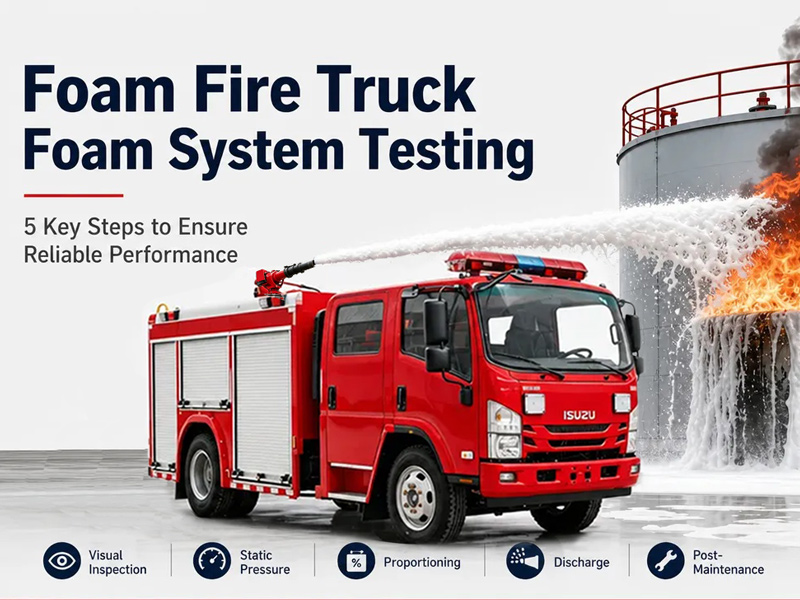
De schuimbrandweerwagen is de kernuitrusting voor het bestrijden van branden met ontvlambare vloeistoffen. Door schuimconcentraat nauwkeurig met water te mengen in verhoudingen van 1%, 3% of 6% (nauwkeurigheid ±0,5%), levert deze schuimbrandweerwagen een gelijkmatige schuimdeken voor vliegtuigbrandstofbranden op luchthavens of tankbranden in raffinaderijen. De roestvrijstalen schuimtank en het intelligente doseersysteem garanderen nul mengfouten, verhogen de brandblusefficiëntie met meer dan 50% en verminderen schuimverspilling met 30%. Het is de onzichtbare beschermer van industriële brandveiligheid. Het kernwerkingsprincipe en de belangrijkste testprocedures van het schuimsysteem van de schuimbrandweerwagen zijn voor veel klanten een belangrijk aandachtspunt. Laten we er vandaag meer over leren. 1. Drie belangrijke onderdelen van het schuimsysteem van de schuimbrandweerwagen 1.1 SchuimtankConstructie van 304 roestvrij staal (bodemplaat van 4 mm, zijplaten van 3 mm), corrosiebestendig ontwerp, uitgerust met mangatdeksel, niveaumeter, aftapopening en ontluchtingsklep. 1.2 SchuimproportionerGeïnstalleerd in de waterleiding, creëert een vacuüm wanneer water erdoor stroomt en zuigt schuimconcentraat in de waterstroom. Veelgebruikte mengverhoudingen: 1%, 3% en 6%. 1.3 Schuimmonitor en sproeiersOp het dak gemonteerd of handbediend, horizontale rotatie van 360°, verticale kanteling van -30° tot 80°, geschikt voor het produceren van geëxpandeerd schuim voor brandbestrijding. 2. Kernwerkingsprincipe van het schuimsysteem 2.1 DoseersysteemWater stroomt door de proportioner → creëert een vacuüm → zuigt schuimconcentraat uit de schuimtank → mengt volgens de ingestelde verhouding (1%, 3% of 6%) → schuimoplossing stroomt naar de pomp. 2.2 Drukverhoging door de pompDe schuimoplossing komt de centrifugaalpomp binnen → wordt onder druk gebracht tot 1,0-1,2 MPa → wordt via leidingen naar de uitlaatopeningen of monitor geleid. 2.3 SchuimexpansieDe schuimoplossing onder druk gaat door het schuimsproeistuk → lucht wordt meegevoerd → de oplossing zet uit tot afgewerkt schuim → de schuimdeken bedekt het brandstofoppervlak → sluit zuurstof af en onderdrukt de brand. 3. Materiaal- en componentselectie Om klanten een meer perfecte schuimbrandweerwagen te bieden, selecteert Fire TRUCKS de beste materialen en componenten voor het schuimsysteem. 3.1 Schuimtanksysteem (kern voor opslag en corrosiebescherming) Constructielaag Materiaal / proces Functie Binnentank 304 roestvrij staal (bodem 4 mm, zijkanten 3 mm) Corrosiebestendigheid, compatibiliteit met schuimconcentraat Mangateksel Snelvergrendelingsmechanisme Gemakkelijke toegang voor vullen en reinigen Niveaumeter Visuele meter Realtime bewaking van het niveau van het schuimconcentraat Ontluchtingsklep Drukontlasting Voorkomt vacuüm of overdruk in de tank 3.2 Doseersysteem (mengactuator) Schuimproportioner:Geïnstalleerd in de waterleiding, gebruikt het venturi-effect om schuimconcentraat aan te zuigen. Veelvoorkomende ...
Details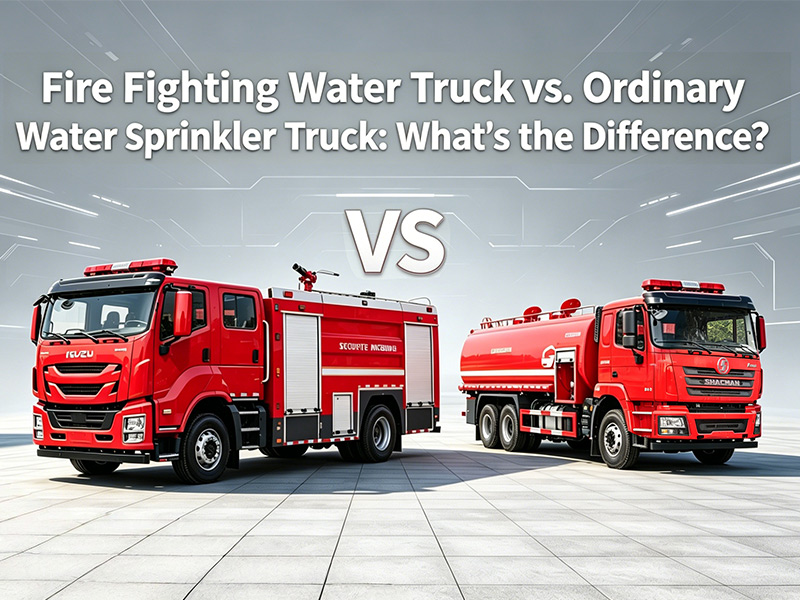
Een brandbestrijdingswaterwagen en een gewone waterwagen kunnen er vergelijkbaar uitzien. Beide zijn grote voertuigen met watertanks, pompen en slangen. Hun ontwerp, onderdelen en beoogde toepassingen zijn echter fundamenteel verschillend. Dit artikel legt de belangrijkste verschillen uit tussen brandbestrijdingswaterwagens (ook bekend als multifunctionele waterwagens of bosbrandweerwagens) en gewone waterwagens vanuit meerdere perspectieven: uiterlijk, configuratie, werkingsprincipe, toepassing en meer. » I. Wat is een brandbestrijdingswaterwagen? Een brandbestrijdingswaterwagen is ook bekend als een multifunctionele waterwagen, bosbrandweerwagen of brandwatervoorzieningswagen. Deze behoort tot de civiele brandweerwagenserie. Dit voertuig combineert brandbestrijding en besproeiingsfuncties in één geheel. Het bevindt zich tussen een professionele brandweerwagen en een gewone waterwagen. Primaire toepassingen: Landschapsverzorging en irrigatie van groene zones Brandbestrijding en brandonderdrukking Noodvoorziening van bluswater Stofonderdrukking in mijnen en bouwplaatsen Kleinschalige brandbestrijding in woonwijken Besproeien met pesticiden (optioneel) Belangrijkste kenmerken: Tankcapaciteit: 2.000 – 12.000 liter Pomptype: Brandpomp aangedreven door sandwich-PTO Spuitbereik: 50 meter of meer Pompopbrengst: Tot 100 kubieke meter per uur Kleur: Brandweerrood of technisch geel Dakmonitor: 360° horizontale rotatie, -30° tot 80° verticale kanteling » II. Wat is een gewone waterwagen? Een gewone waterwagen is een type gemeentelijk voertuig gebouwd op een commercieel tweezijdig chassis. Deze bestaat uit een corrosiebestendige watertank, een aftakas (PTO), een aandrijfas, een speciale zelfaanzuigende waterpomp, een leidingsysteem, sproei-uitlaten en een werkplatform. Primaire toepassingen: Landschapsverzorging en irrigatie van groene zones Wegonderhoud en reiniging Stofonderdrukking op bouwplaatsen Straatreiniging Agrarische bestrijding met pesticiden (optioneel) Noodbrandbestrijding (beperkte capaciteit) Belangrijkste kenmerken: Tankcapaciteit: 5.000 – 20.000 liter Pomptype: Zelfaanzuigende waterpomp (zijdelings gemonteerde PTO) Spuitbereik: 28 meter of minder Pompopbrengst: Ongeveer 40 kubieke meter per uur Kleur: Gewoonlijk afgestemd op de kleur van de cabine van het chassis (wit komt vaak voor) » III. Belangrijkste verschillen tussen een brandbestrijdingswatertankwagen en een gewone watertankwagen 1. Uiterlijk en kleur Kenmerk Brandbestrijdingswatertankwagen Gewone watertankwagen Kleur van de carrosserie Brandweerrood of technisch geel Komt overeen met de kleur van de chassis-cabine (vaak wit) Cabinemarkering "FIRE" of vergelijkbaar "SPRINKLER" of "WATER" of geen markering Tankvorm Vierkante of ronde tank met compartimenten Ronde of rechthoekige tank Achterstructuur Pomphuis met oprolbare deuren Werkplatform voor spuitkanon Uitrusting bovenop Brandmonitor, noodwaterleiding, handrails Alleen mangatdeksel van de tank Waarschuwingslichten Grote noodv...
Details
Lees verder, blijf op de hoogte, abonneer je en laat ons vooral weten wat je ervan vindt.

 IPv6 Network ondersteund

 Nederlands
 English
 français
 Deutsch
 русский
 italiano
 español
 português
 العربية
 日本語
日本語 한국의
한국의 Türkçe
 Melayu
 ไทย
ไทย Tiếng Việt
 Indonesia
  中文
中文 қазақ
қазақ Filipino
 မြန်မာ
 српски