Laat Een Bericht Achter
Als u geïnteresseerd bent in onze producten en meer details wilt weten, laat dan hier een bericht achter. We nemen zo snel mogelijk contact met u op.

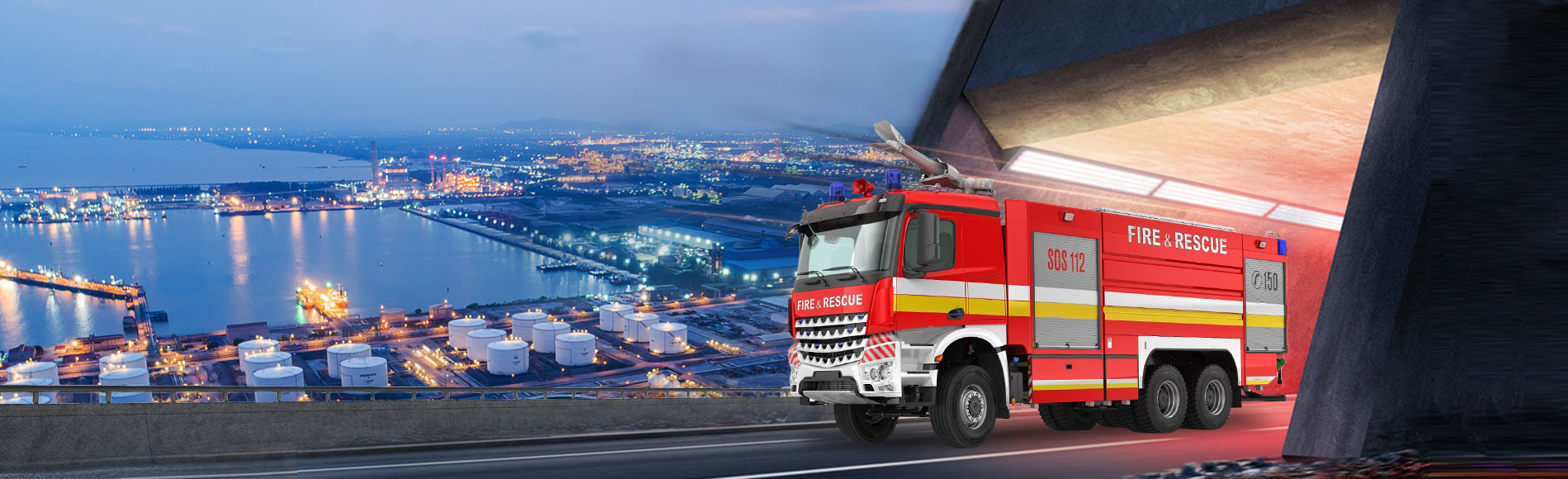
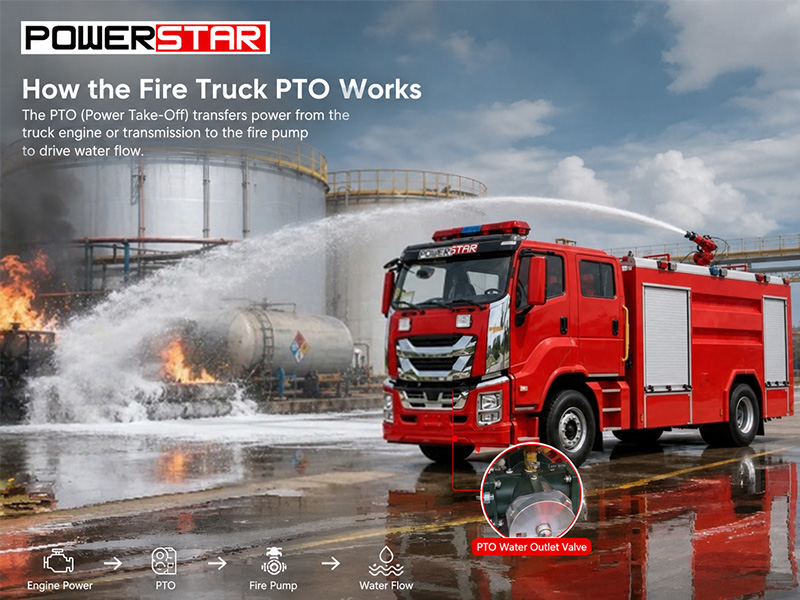
De PTO (Power Take-Off) van de brandweerwagen is een krachtoverbrengingsapparaat dat het motorvermogen overdraagt naar de brandbluspomp. Wanneer de brandweerman de PTO activeert, wordt mechanisch vermogen van de motor via de transmissie en PTO naar de brandbluspomp overgebracht — dit is het kernwerkingsprincipe van hoe een brandweerwagen PTO-systeem werkt — waardoor de pomp water of schuim met hoge druk en hoge doorstroming kan leveren zonder dat een aparte hulpmotor nodig is.
Moderne brandweerwagens gebruiken doorgaans zijdelings gemonteerde PTO- of volledige vermogens-PTO-systemen. Deze bieden een stabiele vermogensafgifte, eenvoudige bediening en lage onderhoudskosten, waardoor ze een essentieel onderdeel vormen van het brandbestrijdingssysteem van de brandweerwagen.
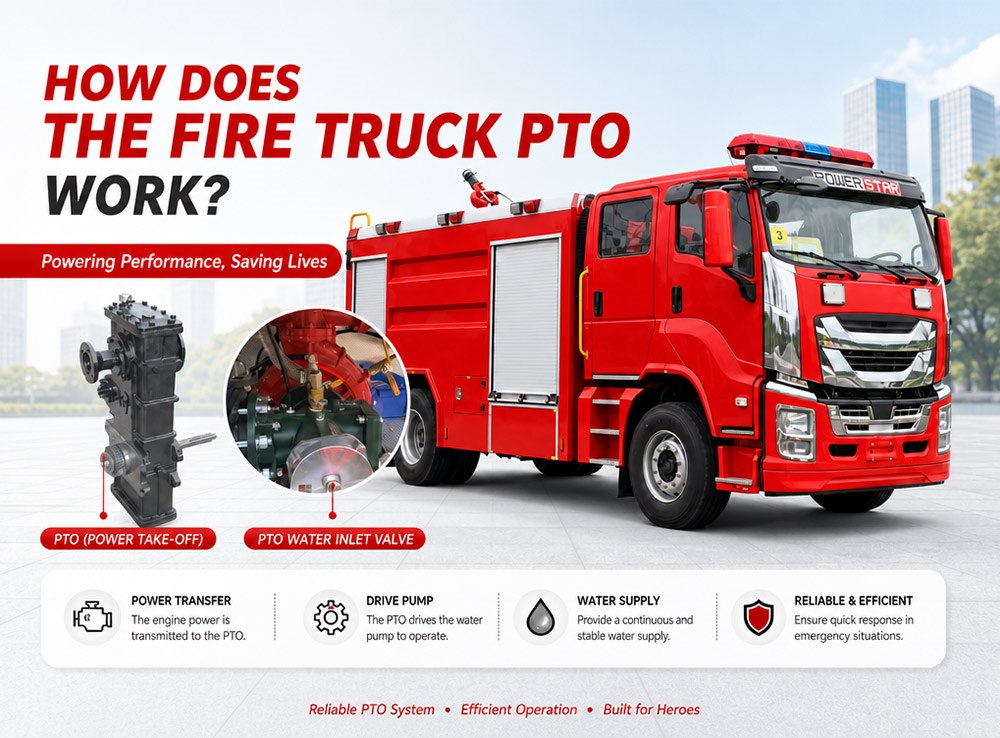
PTO (Power Take-Off) is een cruciaal onderdeel van het aandrijfsysteem van de brandweerwagen. Het is een tandwieloverbrengingsapparaat dat tussen de motor en de transmissie is geïnstalleerd en is ontworpen om een deel van het mechanische vermogen van de motor of transmissie van het voertuig af te leiden naar de brandbluspomp of andere hulpapparatuur, zonder de normale rijeigenschappen van het voertuig te beïnvloeden.
De motor van de brandweerwagen is oorspronkelijk alleen verantwoordelijk voor het aandrijven van de wielen. Zodra de brandweerwagen echter op de brandlocatie aankomt, hebben de wielen geen vermogen meer nodig, terwijl de brandbluspomp vermogen nodig heeft om water aan te zuigen en onder druk te zetten. De PTO is het apparaat dat deze "vermogensschakelaar" realiseert.
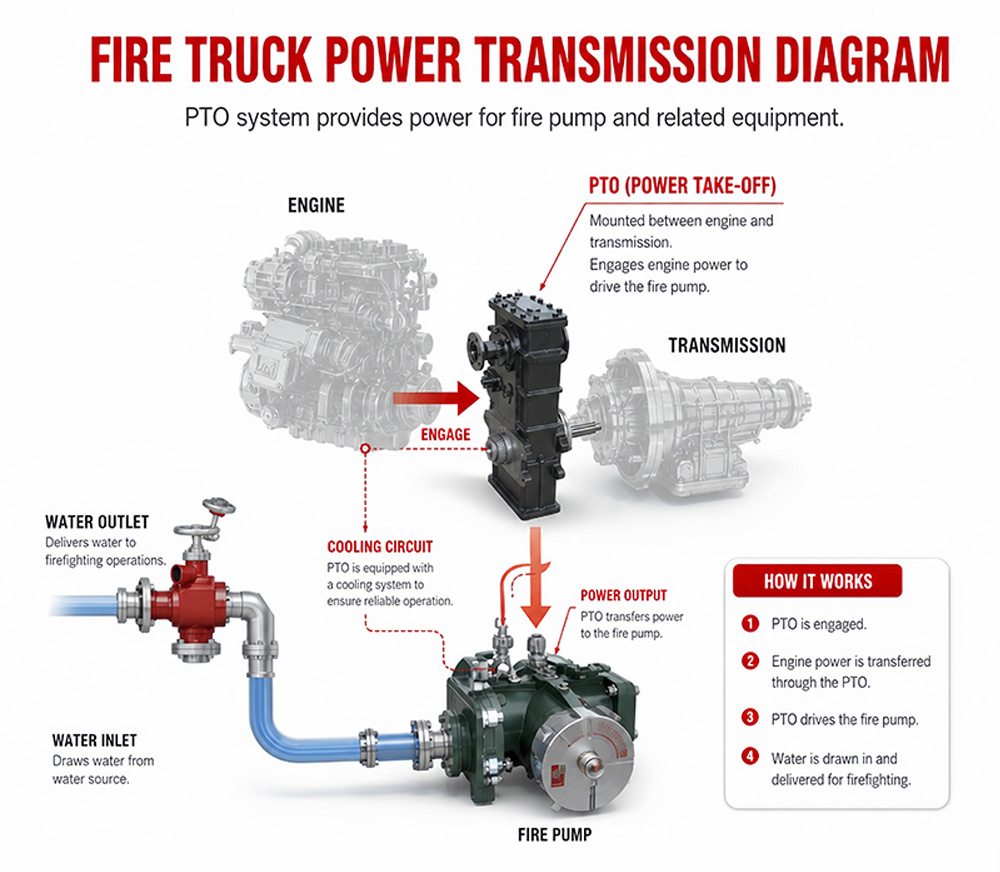
Power Take-Off (PTO) betekent letterlijk "vermogensafgifteapparaat".
Op een brandweerwagen verwijst dit naar het onttrekken van rotatievermogen aan het vliegwiel van de motor of de transmissietandwielen via tandwielkoppeling, en het overbrengen hiervan naar de brandbluspomp of andere hulpapparatuur.
De naam beschrijft de functie:
Motor = Energiebron
PTO = Vermogensverdeler
Brandbluspomp = Verbruikspunt van vermogen
Daarom is de PTO de brug die de "energiebron" en het "brandbestrijdingssysteem" met elkaar verbindt.
De belangrijkste reden waarom brandweerwagens met een PTO moeten worden uitgerust, is dat brandbestrijdingswerkzaamheden een continue, stabiele vermogensafgifte met hoog vermogen vereisen die niet afhankelijk kan zijn van de rijtoestand van het voertuig.
Belangrijkste redenen:
1. Levert continu vermogen voor brandbestrijding
De brandbluspomp moet tijdens brandbestrijdingswerkzaamheden langdurig draaien. De PTO maakt het mogelijk dat de motor de brandbluspomp continu aandrijft bij stationair toerental of een vast toerental, waardoor een stabiele waterdruk en doorstroming worden gegarandeerd.
2. Verbetert de efficiëntie van het vermogensgebruik
Zonder een PTO zou een aparte hulpmotor nodig zijn om de brandbluspomp aan te drijven, wat zou leiden tot een toename van:
Kosten
Onderhoudscomplexiteit
Risico op storingen
Ruimtegebruik
De PTO maakt rechtstreeks gebruik van het motorvermogen van het voertuig en verbetert zo de algehele efficiëntie.
3. Ondersteunt meerdere brandbestrijdingssystemen
Moderne industriële brandweerwagens kunnen niet alleen waterpompen bevatten, maar ook:
Schuimsystemen
Droogpoedersystemen
Hogedrukwatersystemen
Op afstand bediende brandmonitoren
Zonder een PTO zijn er slechts twee oplossingen:
Een aparte motor installeren om de pomp aan te drijven → verhoogt het gewicht, de kosten, het aantal onderhoudspunten en neemt ruimte in beslag
Houd de pomp permanent aangesloten op de transmissie → de pomp stopt wanneer het voertuig stopt en kan ter plaatse geen water pompen
De PTO lost beide problemen tegelijkertijd op:
| Modus | PTO-status | Vermogensbestemming | Resultaat |
| Rijmodus | Uitgeschakeld | Alles naar de wielen | Normaal rijden |
| Brandbestrijdingsmodus | Ingeschakeld | Alles naar de brandpomp | Pompen terwijl het voertuig stilstaat |
De PTO is in wezen een "vermogensverdelings- en omzettingssysteem" dat het aandrijfvermogen van het voertuig omzet in operationeel vermogen voor brandbestrijding.
Vanuit technisch oogpunt is het volledige vermogenspad:
Motor → Transmissie → PTO → Aandrijfas → Brandpomp → Waterkanon/slangsysteem
Het werkingsprincipe van de PTO kan worden samengevat in drie belangrijke fasen: krachtafname, inschakeling en overbrenging.
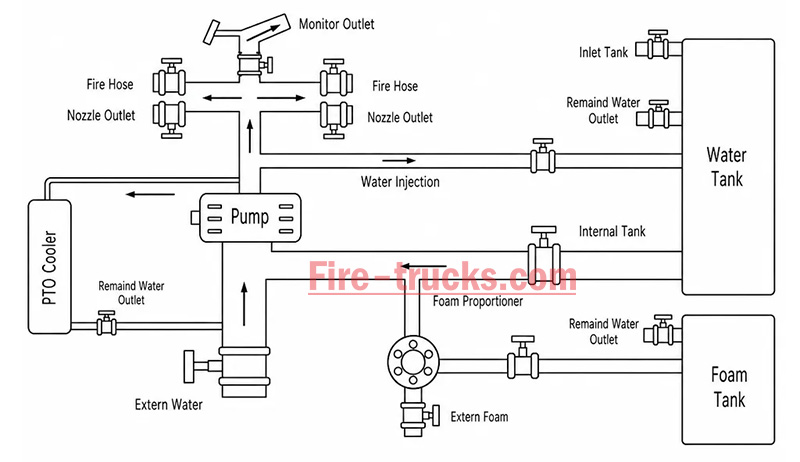
De PTO neemt vermogen af van de motor. Afhankelijk van de installatiepositie verschilt de methode van krachtafname:
| PTO-type | Installatiepositie | Vermogensbron | Kenmerken |
| Aan de zijkant gemonteerde PTO | Transmissiezijde | Tandwiel van de secundaire as van de transmissie | Eenvoudige constructie, lager vermogen (≤50% van motorvermogen) |
| Sandwich-PTO | Tussen motor en transmissie | Vliegwiel van de motor | Volledig vermogensoutput, gangbare configuratie |
| PTO met gedeelde as | Tussen transmissie en aandrijfas | Uitgaande as van de transmissie | Hoog vermogen, maakt pompen tijdens het rijden mogelijk |
Nadat de bestuurder de PTO-schakelaar in de cabine indrukt, wordt het inschakelmechanisme geactiveerd:
| Inschakelmethode | Werkingsprincipe | Veelvoorkomende toepassing |
| Elektrische solenoïdebediening | Elektrisch signaal activeert de solenoïde, waardoor de schakelvork wordt aangeduwd | Gangbaar bij moderne brandweerwagens |
| Pneumatische bediening | Perslucht duwt de zuiger aan, waardoor de vork wordt bediend | Grote brandweerwagens |
| Handmatige kabel | Mechanische kabel trekt de vork direct aan | Oudere voertuigen |
Bedieningsvolgorde:
Druk op PTO-schakelaar → Solenoïde/cilinder wordt geactiveerd → Schakelvork duwt schuifwiel → grijpt in met vliegwiel of transmissietandwiel → Vermogen verbonden
Nadat de uitgaande PTO-as begint te draaien, wordt het vermogen via de aandrijfas naar de brandbluspomp overgebracht:
Uitgaande PTO-as draait → Aandrijfas → Ingaande as van brandbluspomp → Pomprotor draait → Water wordt onder druk gezet en afgevoerd
| Stap | Actie | Resultaat |
|---|---|---|
| Stap 1 | Motor start, voertuig stationair draaiend of rijdend | Motor draait, PTO uitgeschakeld |
| Stap 2 | Aankomst op locatie, bestuurder drukt op PTO-schakelaar | Rijvermogen uitgeschakeld (bij sommige modellen), PTO-tandwiel geactiveerd |
| Stap 3 | PTO maakt een vermogensverbinding met de transmissie | Het transmissievermogen wordt omgeleid naar de uitgaande PTO-as |
| Stap 4 | Aandrijfas brengt vermogen over naar de brandbluspomp | Brandbluspomp begint continu mechanisch vermogen te ontvangen |
| Stap 5 | Pomprotor van de brandbluspomp draait met hoge snelheid | Aanzuiging → Drukverhoging → Levering naar de uitlaatleidingen → Brandbestrijding |
| Stap 6 | Systeem bereikt gebalanceerd toerental | Stabiele output, instelbare druk, debiet en sproeipatroon |
Het PTO-systeem van de brandweerwagen is een complete krachtoverbrengingsketen, waarbij meerdere componenten samenwerken om het motorvermogen over te brengen naar de brandbluspomp. Het systeem kan worden onderverdeeld in zes kerncomponenten:
De motor is de krachtbron van het PTO-systeem en het hart van de gehele brandweerwagen.
Functie: Genereert onbewerkte roterende kracht en drijft het vliegwiel of de krukas aan.
Vermogensoutput: Doorgaans 300–600 HP (afhankelijk van chassismodel en configuratie).
Relatie met PTO: De PTO haalt vermogen uit het vliegwiel of de krukas van de motor — dit is het beginpunt van de krachtoverbrenging.
Belangrijk kenmerk: Het motortoerental heeft rechtstreeks invloed op de uitgangssnelheid van de PTO en het waterafvoervermogen van de brandbluspomp. Brandweerwagens zijn doorgaans uitgerust met krachtige dieselmotoren, die niet alleen het voertuig aandrijven maar ook voldoende vermogensreserve bieden voor de brandbluspomp. Na inschakeling van de PTO kan de bestuurder de afvoerdruk van de pomp regelen door het motortoerental aan te passen.
De transmissie is verantwoordelijk voor de vermogensoverdracht en het afstemmen van de snelheid.
Functie: Ontvangt motorvermogen en past snelheid en koppel aan via verschillende tandwielcombinaties.
Relatie met PTO: Een zijdelings gemonteerde PTO haalt vermogen uit de interne transmissietandwielen; een sandwich-PTO wordt aan de voorkant van de transmissie geïnstalleerd.
Belangrijk kenmerk: De versnellingsstand van de transmissie heeft geen invloed op de uitgangssnelheid van de PTO — de PTO werkt onafhankelijk van de gekozen versnelling.
Twee posities voor krachtafname:
Krachtafname via het zijvenster van de transmissie: PTO gemonteerd aan de zijkant van de transmissie, waarbij vermogen wordt gehaald uit tandwielen van de tussenas of contraroterende as; gebruikelijk bij middelzware brandweerwagens.
Krachtafname aan het achtereinde van de transmissie (sandwich): PTO geïnstalleerd tussen motor en transmissie, waarbij vermogen rechtstreeks van het vliegwiel wordt gehaald en volledig vermogen mogelijk wordt gemaakt.
De PTO is de kern van het gehele systeem en is verantwoordelijk voor het "aftappen" van vermogen van de motor en het leveren ervan aan de brandbluspomp.
Functie: Haalt vermogen uit de motor of transmissie en zet dit om naar de snelheid en het koppel die geschikt zijn voor de brandbluspomp.
Installatiepositie: Aan de zijkant van de transmissie (zijdelings gemonteerd) of tussen motor en transmissie (sandwich).
Belangrijk kenmerk: Bepaalt de efficiëntie van de krachtoverbrenging, de afstemming van snelheid en het gebruiksgemak.
De aandrijfas is de "krachtbrug" die de PTO en de brandbluspomp met elkaar verbindt.
Functie: Brengt de roterende kracht van de uitgaande as van de PTO over naar de ingang van de brandbluspomp.
Structuur:Bestaat doorgaans uit een metalen schachtbuis, kruiskoppelingen en spieverbindingen.
Belangrijk kenmerk:Moet nauwkeurig worden uitgelijnd om trillingen te voorkomen; kruiskoppelingen maken hoekcompensatie mogelijk.
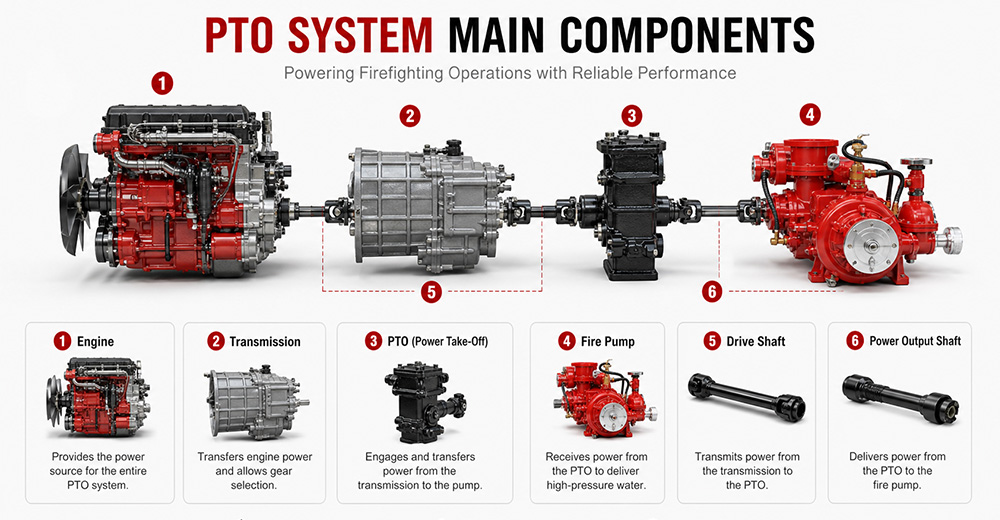
De brandbluspomp is de laatste belasting van het PTO-systeem en is verantwoordelijk voor het omzetten van mechanische energie in waterdrukenergie.
Functie:Ontvangt roterend vermogen van de PTO, drijft de waaier aan om te draaien, zuigt water aan en voert dit onder hoge druk af.
Type:Centrifugaalpomp (eentraps, tweetraps of meertraps).
Typisch debiet:20 L/s – 180 L/s (1.200 – 6.000 L/min).
Typische druk:1,0 – 2,5 MPa (10 – 25 bar).
Het PTO-regelsysteem is het "commandocentrum" tussen de bestuurder en het PTO-systeem en is verantwoordelijk voor inschakeling, uitschakeling, veiligheidsbeveiliging en statusindicatie.
Functie:Regelt het in- en uitschakelen van de PTO, bewaakt de systeemstatus en biedt veiligheidsbeveiliging.
Bedieningslocatie:Cabine-interieur (primaire bediening) en pomppaneel (secundaire bediening).
Bedieningsmethoden:Handmatige kabel, elektrische solenoïde, pneumatisch.
Specifieke bedieningsfuncties:
(1) PTO-inschakelbediening
De bestuurder drukt op de PTO-schakelaar (elektrische solenoïde/pneumatisch) of trekt aan de hendel (handmatig) in de cabine. Het regelsysteem stuurt een signaal om de interne tandwielen van de PTO met de krachtbron te verbinden. Nadat de succesvolle inschakeling is bevestigd, gaat een controlelampje branden, zodat de bestuurder het motortoerental kan verhogen.
(2) PTO-uitschakelbediening
De bestuurder drukt opnieuw op de schakelaar of zet de hendel terug. Het regelsysteem onderbreekt het signaal en de PTO-tandwielen worden ontkoppeld. Nadat de uitschakeling is bevestigd, gaat het controlelampje uit.
| PTO-type | Installatiepositie | Krachtbron | Vermogensuitvoer | Typische toepassing |
| Sandwich-PTO | Tussen motor en transmissie | Motorvliegwiel | Volledig vermogen (≥90%) | Brandweerautopompen, hoogwerkers |
| PTO met gedeelde as | Aandrijfas in het midden van het chassis | Uitgaande transmissieas | Volledig vermogen | Grote vacuümwagens, luchthavenbrandweerwagens |
| Aan de zijkant gemonteerde PTO | Zijkant van de transmissie | Transmissietandwielen | Gedeeltelijk vermogen (lager) | Sproeiwagens, kleine vacuümwagens |
Sandwich-PTO
Voordelen:Volledig vermogen (≥90%), ondersteunt "pompen tijdens het rijden" (dubbele functie), hoge transmissie-efficiëntie, eenvoudige smering.
Nadelen:Hogere kosten, complexe installatie, vereist aanpassing van de verbinding tussen motor en transmissie.
PTO met gedeelde as
Voordelen:Volledig vermogen, geen extra ruimte nodig, hoge betrouwbaarheid, goede dynamische balans, kan een hulpmotor vervangen om grote pompen aan te drijven.
Nadelen:Vereist het doorsnijden van de originele aandrijfas; de installatiepositie moet rekening houden met de hoek van de aandrijfas en lengtecompensatie.
Aan de zijkant gemonteerde PTO
Voordelen:Lage kosten, eenvoudige installatie, kan rechtstreeks vermogen van de transmissiezijde aftakken.
Nadelen:Slechts gedeeltelijk vermogen beschikbaar, lager uitgangskoppel, kan geen brandpompen met hoog vermogen aandrijven, voornamelijk gebruikt voor apparatuur met lage snelheid en laag vermogen.
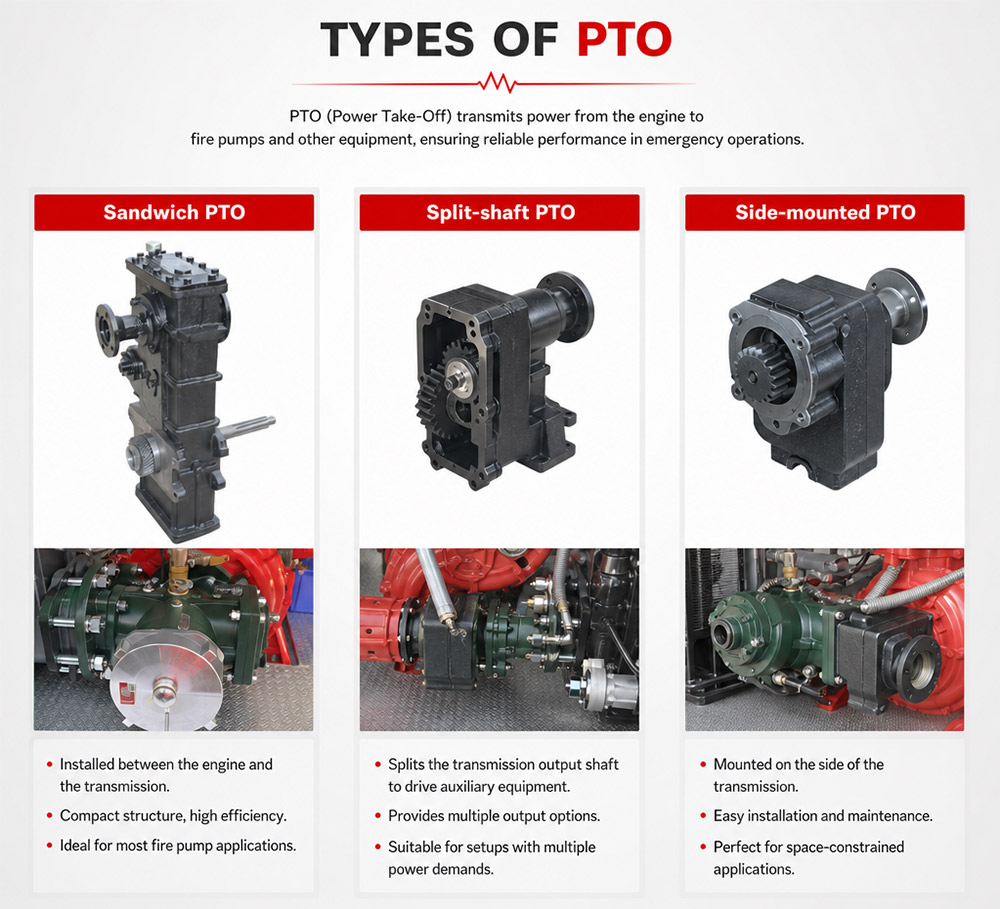
Het proces volgt een duidelijke mechanische overbrengingsketen:
Motor → PTO → Aandrijfas → Brandpomp → Waaierrotatie → Aanzuiging → Drukverhoging → Straalpijp
| Factor | Rol |
|---|---|
| Eigenschap van centrifugaalpomp | Wanneer het toerental van de waaier constant is, blijft de uitlaatdruk van nature stabiel |
| Starre PTO-verbinding | Geen slip of vermogensverlies, waardoor een continue stabiele vermogensinvoer wordt gegarandeerd |
| Drukregelaar | Detecteert automatisch veranderingen in de doorstroming en past het motortoerental aan om de ingestelde druk te handhaven |
| Overdrukventiel | Leidt automatisch om wanneer de druk de limiet overschrijdt en voorkomt zo schade aan apparatuur |
① Pompsnelheid wordt bepaald door het motortoerental
Toerental van de waaier van de brandbluspomp = motortoerental × PTO-verhouding. De PTO-verhouding is vast (bijv. 1,75:1), dus de pompsnelheid verandert rechtstreeks met het motortoerental.
Berekeningsformule:
Motortoerental × PTO-verhouding = Pompsnelheid (RPM)
② Fysieke relatie tussen druk en snelheid
De druk die wordt opgewekt door een centrifugaalpomp is evenredig met dekwadraatvan de waaiersnelheid. Deze natuurkundige wet betekent dat kleine veranderingen in RPM aanzienlijke drukschommelingen veroorzaken.
Snelheid neemt toe → centrifugale kracht neemt toe → persdruk stijgt
Snelheid neemt af → centrifugale kracht neemt af → persdruk daalt
1. PTO schakelt niet in
Mogelijke oorzaken:Lage luchtdruk (pneumatisch type), defecte solenoïde, beschadigde of vastzittende kabel, niet voldane vergrendelingsvoorwaarden (parkeerrem niet ingeschakeld, transmissie niet in neutraal).
Oplossingen:Controleer de druk van het luchtsysteem (moet ≥0,6 MPa zijn); test de solenoïde; inspecteer de kabel; bevestig dat de parkeerrem is ingeschakeld en de transmissie in neutraal staat.
2. PTO schakelt in maar de pomp werkt niet
Mogelijke oorzaken:Defecte PTO-koppeling, gebroken aandrijfas of versleten spiebanen, beschadigde interne tandwielen.
Oplossingen:Controleer de inschakeling van de PTO-koppeling; inspecteer de aandrijfas op breuken of losse verbindingen; demonteer en inspecteer de interne tandwielen.
3. Ongebruikelijk geluid van de PTO
Mogelijke oorzaken:Slechte vertanding of slijtage, versleten lagers, onvoldoende of verslechterde smering, PTO niet volledig uitgeschakeld.
Oplossingen:Controleer de tandwielspeling en tandslijtage; inspecteer de lagers; vervang door geschikt smeermiddel; bevestig dat de PTO volledig is uitgeschakeld.
4. Olielekkage van de PTO
Mogelijke oorzaken:Versleten of verslechterde afdichtingen, gescheurde behuizing, losse bevestigingsbouten.
Oplossingen:Vervang afdichtingen (O-ringen, oliekeerringen); inspecteer de behuizing op scheuren; draai de bevestigingsbouten vast.
5. Oververhitting van de PTO
Mogelijke oorzaken:Langdurige werking onder hoge belasting, onvoldoende of verslechterde smeerolie, defect koelsysteem.
Oplossingen:Verminder de belasting of schakel uit voor afkoeling; vervang door een geschikt smeermiddel; inspecteer de koelleidingen.
6. Onvoldoende PTO-vermogen
Mogelijke oorzaken:Onjuiste PTO-verhouding geselecteerd, motortoerental te laag ingesteld, slippen van de koppeling.
Oplossingen:Controleer of de PTO-verhouding overeenkomt met de brandbluspomp; verhoog het motortoerental tot het nominale werkbereik; inspecteer de koppeling op slippen.
V1. Waar staat PTO voor op een brandweerwagen?
PTO staat voor Power Take-Off. Het is een mechanisch systeem dat motorvermogen van de transmissie van de vrachtwagen naar de brandbluspomp overdraagt. Eenvoudig gezegd zorgt PTO ervoor dat de motor van de brandweerwagen het pompsysteem kan aandrijven, zodat het systeem water of schuim onder hoge druk kan leveren voor brandbestrijdingswerkzaamheden zonder dat een aparte motor nodig is. Het is een essentieel onderdeel van industriële en gemeentelijke brandweerwagens.
V2. Waarom hebben brandweerwagens een PTO nodig?
Brandweerwagens hebben een PTO nodig omdat deze ervoor zorgt dat de hoofdmotor van het voertuig de brandbluspomp efficiënt kan aandrijven. Zonder een PTO zou de brandbluspomp een aparte motor nodig hebben, wat de kosten, het gewicht en de onderhoudscomplexiteit verhoogt. PTO-systemen bieden een compacte, betrouwbare en brandstofefficiënte manier om tijdens brandbestrijdingswerkzaamheden een continue toevoer van water of schuim te garanderen.
V3. Kan een brandweerwagen zonder PTO werken?
De meeste moderne brandweerwagens kunnen hun pompsysteem niet zonder een PTO gebruiken, omdat de PTO verantwoordelijk is voor de overdracht van motorvermogen naar de brandbluspomp. Sommige gespecialiseerde brandweervoertuigen kunnen echter een onafhankelijke hulpmotor gebruiken om de pomp aan te drijven. Deze ontwerpen komen minder vaak voor vanwege de hogere kosten, het grotere onderhoud en de lagere efficiëntie in vergelijking met systemen op basis van PTO.
V4. Wat is het verschil tussen een PTO en een brandbluspomp?
De PTO is een apparaat voor krachtoverdracht, terwijl de brandbluspomp een water- of schuimpompsysteem is. De PTO levert mechanisch vermogen van de motor aan de pomp, en de brandbluspomp zet dat vermogen om in hydraulische druk om water of schuim te verplaatsen. Kort gezegd is de PTO de "aansluiting voor de krachtbron" en de brandbluspomp het "uitvoerapparaat voor brandbestrijding".
V5. Hoeveel vermogen kan een PTO van een brandweerwagen leveren?
Het vermogensuitgangsvermogen van een PTO van een brandweerwagen hangt af van het voertuigontwerp en het transmissiesysteem. Gewoonlijk kunnen PTO-systemen tussen 50 kW en meer dan 300 kW aan mechanisch vermogen leveren. Zware industriële en luchthavenbrandweerwagens gebruiken vaak PTO-systemen met hoge capaciteit die grote brandbluspompen en langdurige werkzaamheden onder hoge druk kunnen ondersteunen.
V6. Welke verschillende soorten PTO's voor brandweerwagens zijn er?
Er zijn verschillende soorten PTO-systemen voor brandweerwagens, waaronder zijgemonteerde PTO, achtergemonteerde PTO, split shaft PTO en full power PTO. Zijgemonteerde PTO wordt vaak gebruikt in standaardbrandweerwagens, terwijl split shaft PTO- en full power PTO-systemen worden gebruikt in industriële en luchthavenbrandweerwagens waar een hoger vermogen en continue werking vereist zijn.
V7. Hoe onderhoud je een PTO van een brandweerwagen?
PTO-onderhoud omvat regelmatige inspectie van het smeerolieniveau, controle op lekkages, het vastdraaien van bevestigingsbouten en het zorgen voor een correcte uitlijning van de aandrijfas. Bedieners moeten ook regelmatig de in- en uitschakelfuncties testen. Preventief onderhoud is essentieel om oververhitting, mechanische slijtage en onverwachte storingen tijdens noodsituaties te voorkomen.
V8. Waardoor kan een PTO van een brandweerwagen defect raken?
Veelvoorkomende oorzaken van PTO-storingen zijn onvoldoende smering, versleten tandwielen, verkeerde uitlijning van de aandrijfas, oververhitting en onjuist gebruik door de bestuurder. Storingen in elektrische of hydraulische regelsystemen kunnen ook voorkomen dat de PTO wordt ingeschakeld. Regelmatig onderhoud en correcte bedieningsprocedures verminderen het risico op PTO-storingen aanzienlijk.
V9. Welke PTO is het beste voor industriële brandweerwagens?
Voor industriële brandweerwagens is een split shaft PTO- of full power PTO-systeem meestal de beste keuze. Deze systemen kunnen een hoog vermogen, continue werking en brandbluspompen met grote capaciteit aan. Ze worden veel gebruikt in petrochemische fabrieken, raffinaderijen, luchthavens en grote industriële installaties waar betrouwbare en langdurige brandbestrijdingsprestaties vereist zijn.
V10. Waar moeten kopers op letten bij het kiezen van een PTO voor een brandweerwagen?
Kopers moeten rekening houden met de compatibiliteit van het motorvermogen, het vereiste debiet van de brandbluspomp, het voertuigtype en de werkomgeving. Het is ook belangrijk om de duurzaamheid van de PTO, de koelprestaties, de toegankelijkheid voor onderhoud en de compatibiliteit met het chassis te beoordelen. Voor exportprojecten moeten ook naleving van internationale normen en lokale voorschriften in overweging worden genomen om goedkeuring en operationele betrouwbaarheid te garanderen.
PTO (Power Take-Off) is het kernsysteem dat motorvermogen overdraagt naar de brandbluspomp — het bepaalt of het volledige brandbestrijdingssysteem correct kan functioneren.
De vermogensketen van een brandweerwagen is: Motor → Transmissie → PTO → Aandrijfas → Brandbluspomp → Waterkanon. Elke zwakke schakel in deze keten beïnvloedt de uiteindelijke brandbestrijdingsprestaties.
De primaire functie van de PTO is het leveren van een stabiele, continue mechanische vermogensafgifte, waardoor de brandweerwagen efficiënt water of schuim kan leveren zonder een aparte motor nodig te hebben.
Verschillende PTO-typen (zijgemonteerd, achtergemonteerd, split shaft, full power) zijn geschikt voor verschillende klassen brandweerwagens. Industriële brandweerwagens geven doorgaans prioriteit aan PTO-systemen met hoog vermogen.
De PTO-prestaties moeten overeenkomen met het debiet van de brandbluspomp en het voertuigchassis, anders kunnen problemen ontstaan zoals onvoldoende vermogen, instabiele druk of overbelasting van het systeem.
Regelmatig onderhoud van het PTO-systeem (smering, vastdraaien, uitlijningsinspectie) is essentieel om een betrouwbare werking van de brandweerwagen te garanderen, vooral in industriële toepassingen met hoge intensiteit.
Bij de aankoop van industriële brandweerwagens moeten kopers zich niet alleen op de prijs richten. PTO-vermogen, stabiliteit, compatibiliteit en aftersalesondersteuning zijn eveneens kritieke factoren om te beoordelen.
Voor risicovolle scenario's zoals petrochemische fabrieken, luchthavens en grote industrieterreinen worden Full Power PTO- of Split Shaft PTO-systemen aanbevolen om continue operationele capaciteit te garanderen.


U bent misschien geïnteresseerd in de volgende informatie
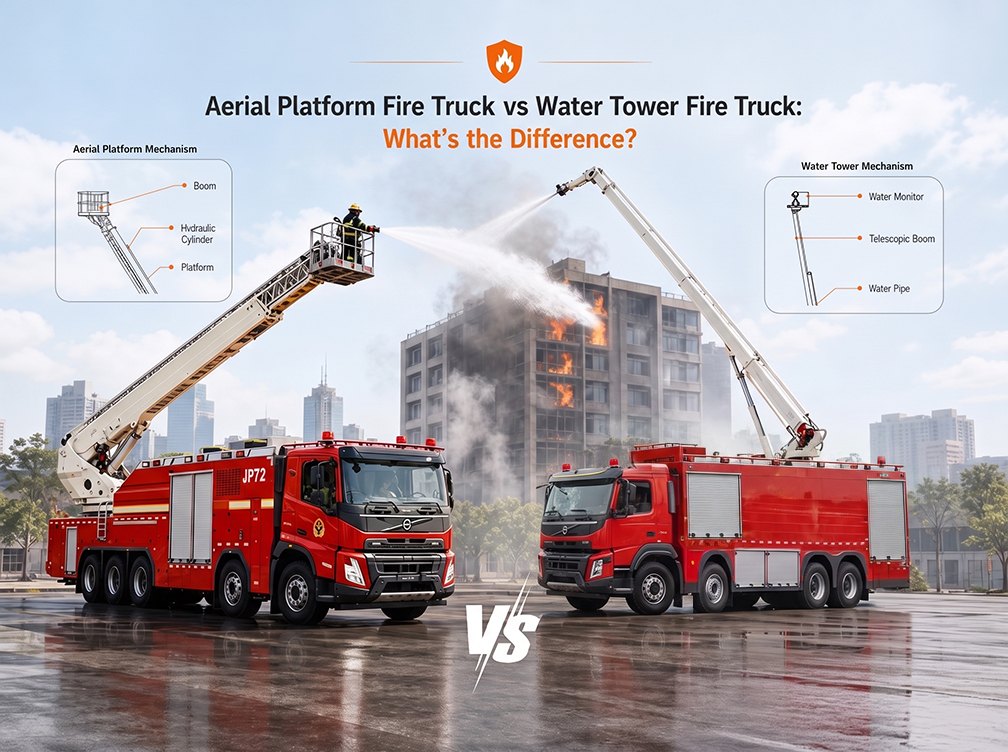
Als het gaat om het bestrijden van branden in hoogbouw, industriële faciliteiten of grote magazijnen, zijn hoogwerkbrandweerwagens onmisbaar. Maar onder de verschillende soorten hoogwerkende voertuigen zorgen er twee vaak voor verwarring: debrandweerwagen met hoogwerkerplatformen debrandweerwagen met watertoren. Hoewel ze op het eerste gezicht vergelijkbaar kunnen lijken—beide hebben hydraulische armen en zijn ontworpen voor brandbestrijding op hoogte—vervullen ze fundamenteel verschillende taken. Dit artikel zet de belangrijkste verschillen tussen deze twee voertuigtypen uiteen en helpt brandweerdiensten, inkoopmanagers en distributeurs van apparatuur om weloverwogen beslissingen te nemen op basis van operationele behoeften. I. Wat zijn hoogwerkerplatformwagens? Volgens de Chinese nationale norm GB 7956.12-2015 vallen beide voertuigen onder de categoriehoogwerkende brandbestrijdingsvoertuigen—voertuigen uitgerust met hefarmen, draaikransen en brandbestrijdingsapparatuur voor werkzaamheden op grote hoogte. Hun specifieke definities benadrukken echter een cruciaal verschil. Brandweerwagen met hoogwerkerplatform Een brandweerwagen met hoogwerkerplatform is uitgerust met een vouwbare of vouwbaar-telescopische combinatiearm, een personenplatform, een draaikrans en brandbestrijdingsapparatuur. Het kenmerkende onderdeel is hetwerkplatform (bak)aan het uiteinde van de arm, waar brandweerlieden kunnen staan om reddings- en brandbestrijdingswerkzaamheden uit te voeren. Belangrijkste kenmerken:• Uitgerust met een platform dat750 lbs tot meer dan 1.500 lbsaan personen en apparatuur kan dragen• Ontworpen voor zowelredding en brandbestrijding—brandweerlieden kunnen rechtstreeks vanaf het platform werken• Het platform kan worden gebruikt met afdaalbeveiligingsmiddelen, hydraulische lieren of reddingsglijgoten• Groter horizontaal bereik en grotere werkspanne vergeleken met watertorens II. Wat zijn watertorenbrandweerwagens? Een watertorenbrandweerwagen is uitgerust met een vouwbare of vouwbaar-telescopische combinatiearm, een draaikrans en brandbestrijdingsapparatuur—zonder personenplatform. In plaats daarvan is een waterkanon op het uiteinde van de arm gemonteerd, dat op afstand vanaf de grond kan worden bediend. Belangrijkste kenmerken:•Geen personenplatform—brandweerlieden bedienen het systeem vanaf de grond via afstandsbediening• Gericht uitsluitend opbrandblussing op hoogte, niet op redding• Levert een uitzonderlijk hoge waterstroom—meer dan 2.000 gallon per minuutop veel industriële modellen• Ontworpen voor industriële brandbeveiliging waarbij reddingsmogelijkheden niet vereist zijn III. Vergelijking naast elkaar Functie Brandweerwagen met hoogwerkerplatform Brandweerwagen met watertoren Primaire functie Redding + brandbestrijding Alleen brandbestrijding Uitrusting aan het uiteinde van de arm Werkplatform (bak) voor personeel Blusmonitor (waterkanon) Personeel op de arm Ja—brandweerlieden kunnen vanaf het platform werken Nee—bediend vanaf de grond...
Details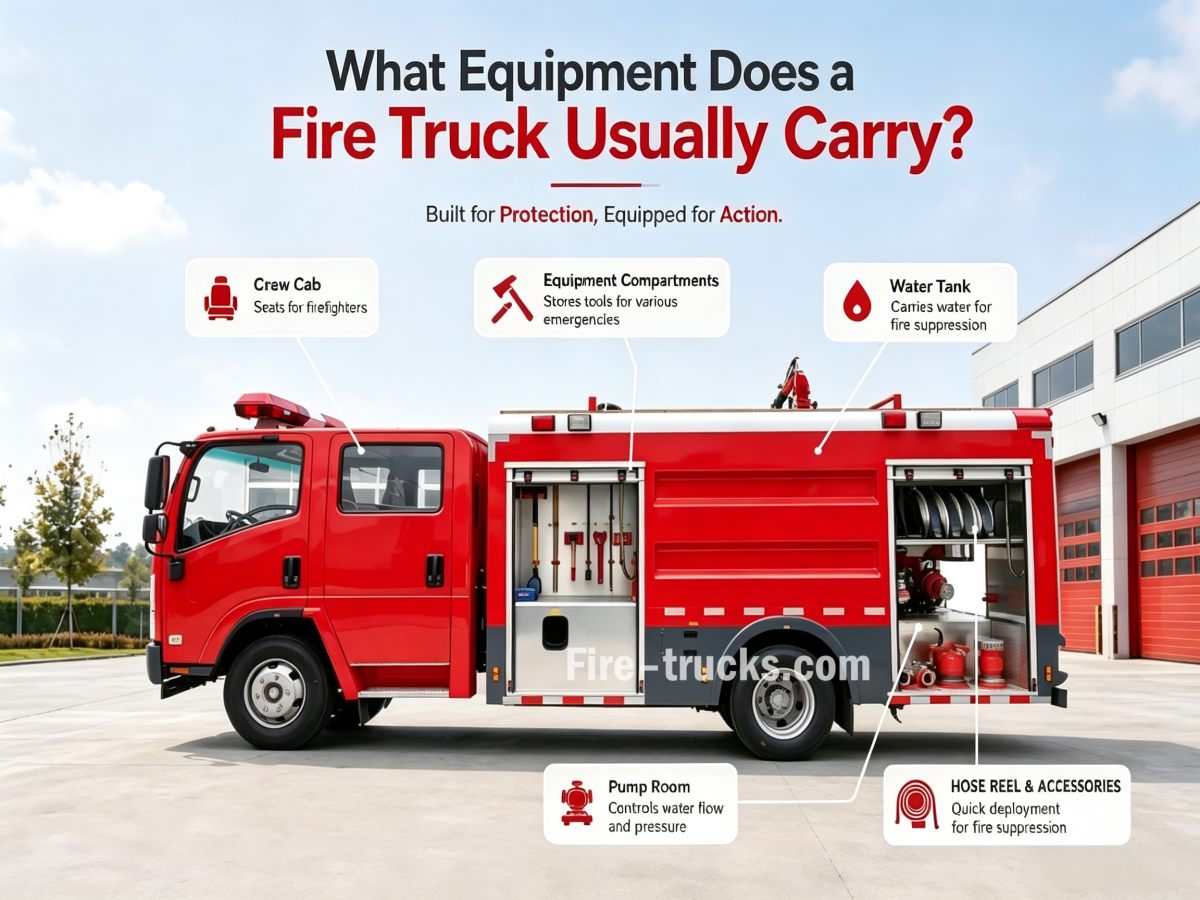
Een brandweerwagen vervoert doorgaans brandbestrijdings-, watervoorzienings-, reddings- en veiligheidsbeschermingsapparatuur. Tot de gebruikelijke uitrusting behoren brandpompen, watertanks, brandslangen, brandstraalpijpen, waterkanonnen, kleppen, brandladders, reddingsgereedschap, beschermende uitrusting en communicatieapparatuur. Dit artikel behandelt systematisch de classificatie, functies en selectieoverwegingen van standaard brandweerwagenuitrusting, en helpt inkoopprofessionals en eindgebruikers een volledig inzicht te krijgen in de configuraties van brandweervoertuigen. I. Classificatie van brandweerwagenuitrusting 1. Brandbestrijdingsuitrusting— Kernhulpmiddelen voor directe brandbestrijding, waaronder brandstraalpijpen, waterkanonnen, brandslangen, waterverdelers en adapters. 2. Reddings- en toegangsuitrusting— Gereedschap voor het creëren van toegangswegen voor reddings- en brandbestrijdingswerkzaamheden, waaronder hydraulisch reddingsgereedschap, brandbijlen, breekijzers, koevoeten, doorslijpers en kettingzagen. 3. Reddings- en levensreddende uitrusting— Uitrusting voor het zoeken, verplaatsen en beschermen van personen, waaronder brancards, reddingstouwen, veiligheidshaken, afdaalcontroleapparaten, onafhankelijke ademluchttoestellen (SCBA) en reserve-luchtcilinders. 4. Rookafvoer- en verlichtingsuitrusting— Uitrusting voor het verbeteren van omstandigheden op de brandlocatie, waaronder rookafzuigers, mobiele lichtmasten en draagbare zoeklichten met hoge intensiteit. 5. Persoonlijke beschermingsmiddelen (PBM)— Uitrusting ter bescherming van de veiligheid van brandweerlieden, waaronder helmen, beschermende kleding voor structurele brandbestrijding, handschoenen, laarzen en veiligheidsgordels. 6. Communicatie- en verkenningsuitrusting— Uitrusting voor het verzamelen van informatie op de brandlocatie en coördinatie van de leiding, waaronder portofoons, warmtebeeldcamera's en detectoren voor giftige gassen. II. Brandbestrijdingsuitrusting op brandweerwagens 1. Brandpomp De brandpomp is de krachtbron voor alle brandbestrijdingswerkzaamheden. Deze verhoogt mechanisch de waterdruk en geeft het water voldoende kinetische energie om het volledige proces van "aanzuigen → onder druk brengen → transporteren → uitstoten" te voltooien. Typische specificaties van brandpompen: •Standaarddruk-brandpomp (type CB10/30):Debiet ≥30L/s, nominale druk 1,0MPa, achteraan gemonteerde installatie. Geschikt voor standaard waterwagens en schuimblusvoertuigen en voldoet aan de meeste stedelijke en industriële eisen voor watervoorziening bij brandbestrijding. •Middel-/hogedruk-brandpomp:Lagedrukdebiet 30L/s bij 1,0MPa, hogedrukdebiet 20L/s bij 2,0MPa, achteraan gemonteerde installatie. Het ontwerp met dubbele druk ondersteunt zowel toevoer met groot volume (lage druk) als levering over lange afstanden/naar hoge gebouwen (hoge druk) met één enkele pomp. Ideaal voor stedelijke hoofdbrandweerwagens en brandbestrijding in hoogbouwscenario's. •Hogedruk-brandpomp:Debiet 1...
Details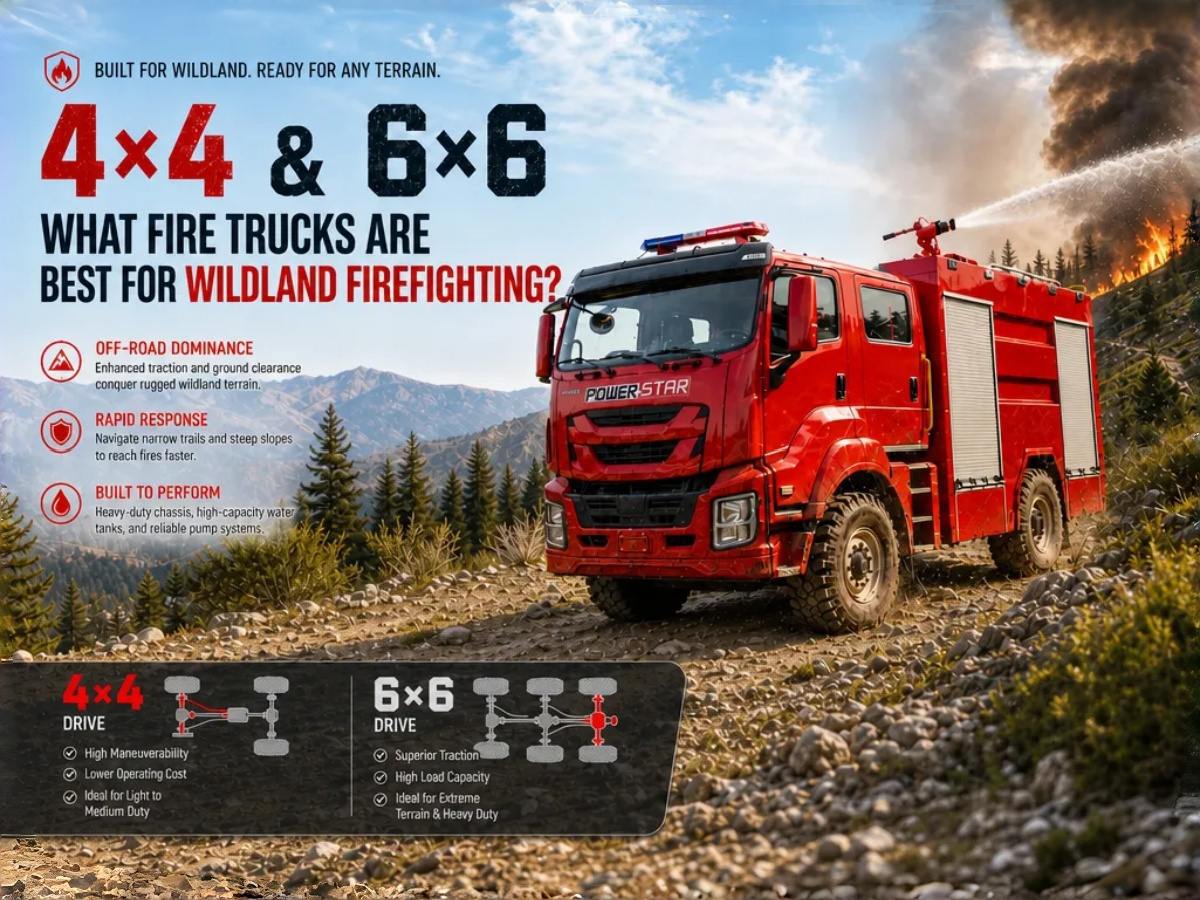
Bosbrandbestrijding brengt uitdagingen met zich mee die fundamenteel verschillen van brandbestrijding in gebouwen. In afgelegen bossen, graslanden en bergachtig terrein moeten brandweerwagens over smalle paden navigeren, steile hellingen beklimmen en ver van brandkranen of waterbronnen opereren. Het kiezen van de juiste brandweerwagen is een strategische beslissing die rechtstreeks invloed heeft op de reactietijd, de veiligheid van de bemanning en de effectiviteit van de brandbestrijding. Dit artikel biedt een uitgebreide analyse van de meest geschikte typen brandweerwagens voor bosbrandbestrijding, hun belangrijkste kenmerken en selectiemethoden, zodat u de juiste beslissing kunt nemen op basis van uw specifieke operationele vereisten. Kort antwoord Bosbranden worden gekenmerkt door grote brandgebieden, complex terrein, beperkte waterbronnen en slechte wegomstandigheden, waardoor er geen enkele brandweerwagen is die alle scenario's van bosbranden aankan. Over het algemeen gebruikt bosbrandbestrijding voornamelijk de volgende typen brandweerwagens: • Lichte brandweerwagens voor bosbrandbestrijding: voor toegang tot boswegen en snelle respons• 4×4-terreinbrandweerwagens voor bosbrandbestrijding: voor bergachtig en heuvelachtig terrein• 6×6-brandweerwagens voor bosbrandbestrijding: voor grootschalige bosbranden en langdurige inzet• Watertankwagens: voor continue watervoorziening en ondersteuning• Schuimbluswagens: voor olie-installaties, bosbouwmaterieel of speciale branden• Reddingsvoertuigen: voor communicatie, verlichting, doorbraakwerkzaamheden en logistieke ondersteuning I. Waarom vereisen bosbranden gespecialiseerde brandweerwagens? Bosbranden verschillen op verschillende kritieke manieren fundamenteel van gebouwbranden: Belangrijkste kenmerken van bosbranden:• Grote brandgebieden die hectares land beslaan• Snel veranderende windrichtingen• Complex en ruig terrein• Beperkte of geen toegang tot brandkranen of waterbronnen• Smalle, onverharde boswegen• Moeilijke communicatieomstandigheden Standaard stedelijke brandweerwagens zijn over het algemeen ongeschikt voor bosbrandbestrijding om de volgende redenen: • Ontbreken van 4×4- of vierwielaandrijving voor onverharde bergwegen en steile hellingen;• Grotere afmetingen en geringe bodemvrijheid zorgen ervoor dat ze gemakkelijk vast komen te zitten op smalle bospaden en zachte ondergrond;• Stedelijke pompen geven prioriteit aan een hoog debiet bij gematigde druk, terwijl bosbrandbestrijding hoge druk vereist over lange slangen met beperkte watervoorziening—een fundamenteel andere aanpak. II. Veelvoorkomende typen brandweerwagens voor bosbrandbestrijding Type brandweerwagen Belangrijkste kenmerken Toepasselijke scenario's Lichte brandweerwagen voor bosbrandbestrijding Hoge mobiliteit, compact formaat Bosbewaking, eerste aanval 4x4-brandweerwagen voor bosbrandbestrijding Sterk terreinvermogen Bergachtig en heuvelachtig terrein 6x6-brandweerwagen voor bosbrandbestrijding Grote watercapaciteit, lange i...
Details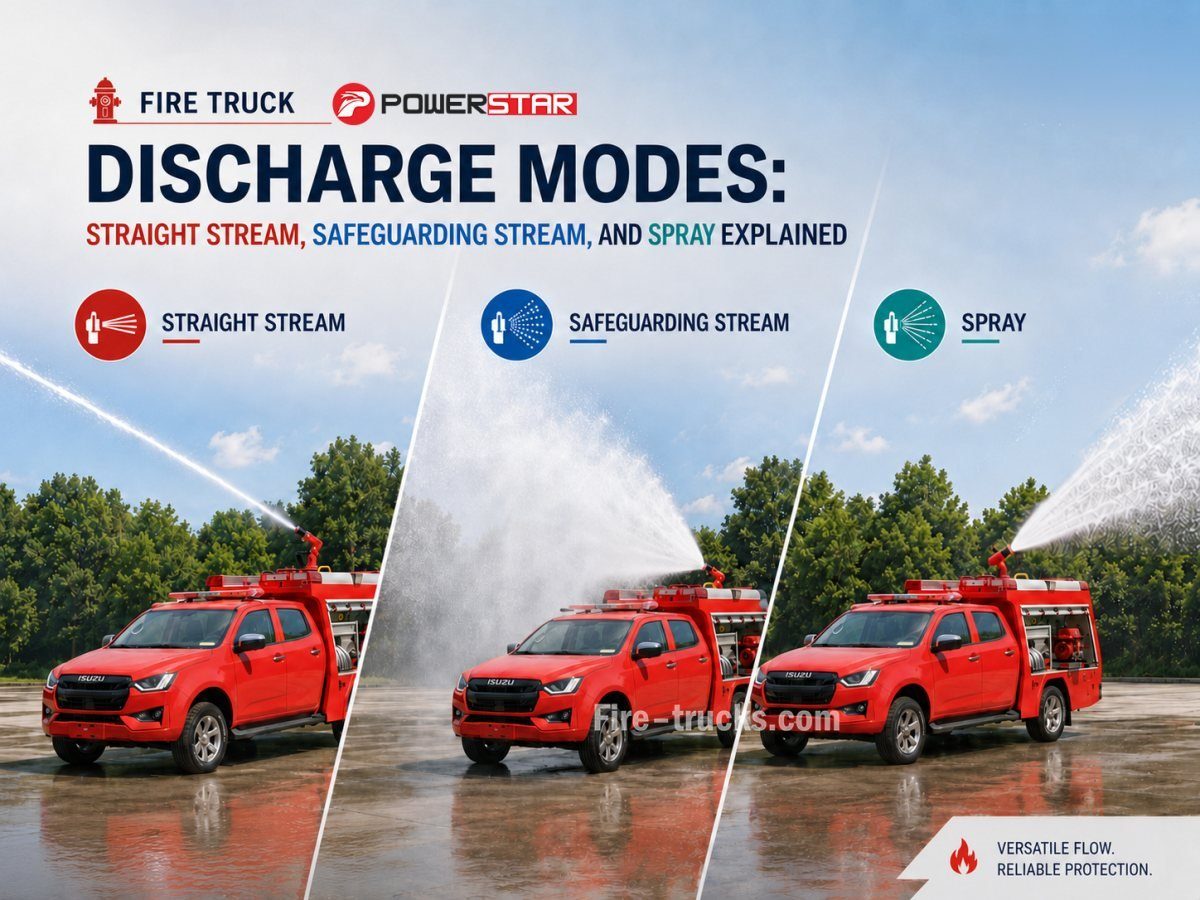
Bij brandbestrijdingsoperaties bepaalt de keuze van de straalmodus rechtstreeks de efficiëntie van de brandblussing, de operationele veiligheid en de effectiviteit van de brandbeheersing. De meeste mensen weten niet dat brandweerwagen-straalpijpen kunnen schakelen tussen drie kernmodi voor waterafgifte: volle straal, sproeistraal en beschermingsstraal. Verschillende modi verschillen aanzienlijk in stroompatroon, bereik, slagkracht en dekkingsgebied, en elk komt overeen met volledig verschillende toepasselijke brandsituaties. Dit artikel analyseert op basis van professionele normen voor brandbestrijding de principes, belangrijkste kenmerken en toepasselijke scenario's van de drie straalmodi uitgebreid, zodat onze klanten de technieken voor waterafgifte van brandweerwagens systematisch kunnen beheersen. I. Waarom hebben brandweerwagens verschillende straalmodi nodig? Volle straal, sproeistraal en beschermingsstraal komen overeen met drie verschillende brandblusmechanismen: blussen door slagkracht, verstikking door verdamping en bescherming tegen thermische straling. Brandweerlieden moeten flexibel schakelen op basis van de omstandigheden ter plaatse. Dus, waarom kunnen we niet gewoon één type straal blijven gebruiken? 1. De diversiteit van brandtypes vereist verschillende vormen van blusmiddelen Verschillende brandtypes hebben verschillende verbrandingseigenschappen, die de geschikte blusmethode bepalen: • Branden van vaste materialen van klasse A vereisen de slagkracht van een volle straal om brandende materialen uiteen te breken en door te dringen voor interne koeling; • Vloeistofbranden van klasse B kunnen geen volle straal gebruiken (omdat dit opspatten veroorzaakt en de brand verspreidt), maar moeten een beschermingsstraal of sproeistraal gebruiken voor bedekking en verdunning; • Geactiveerde elektrische branden van klasse E kunnen alleen met een sproeistraal worden bestreden, omdat fijne waterdruppels geen doorlopend geleidend pad vormen; • Branden in afgesloten ruimtes vereisen een sproeistraal om de volledige ruimte te vullen, waarbij blussing wordt bereikt door warmteabsorptie door verdamping en verstikking. Geen enkele modus kan zich aanpassen aan alle brandtypes. 2. Verschillende fasen van dezelfde brand vereisen verschillende tactische benaderingen Zelfs bij dezelfde brand vereisen verschillende fasen verschillende straalmodi: • In de beginfase, wanneer de brand hevig is, is een volle straal nodig om op lange afstand op de brandhaard in te werken voor snelle onderdrukking; • Tijdens het oprukken is een beschermingsstraal nodig om een watergordijnbarrière te vormen die thermische straling blokkeert en personeel beschermt; • Voordat een ruimte wordt betreden, is een sproeistraal nodig om rook en gassen af te koelen en te verdunnen, waardoor omstandigheden voor een binnenaanval worden gecreëerd. Een enkele modus kan de operationele behoeften gedurende het volledige brandbestrijdingsproces niet afdekken. 3. Bereik, dekkingsgebied en koeleff...
Details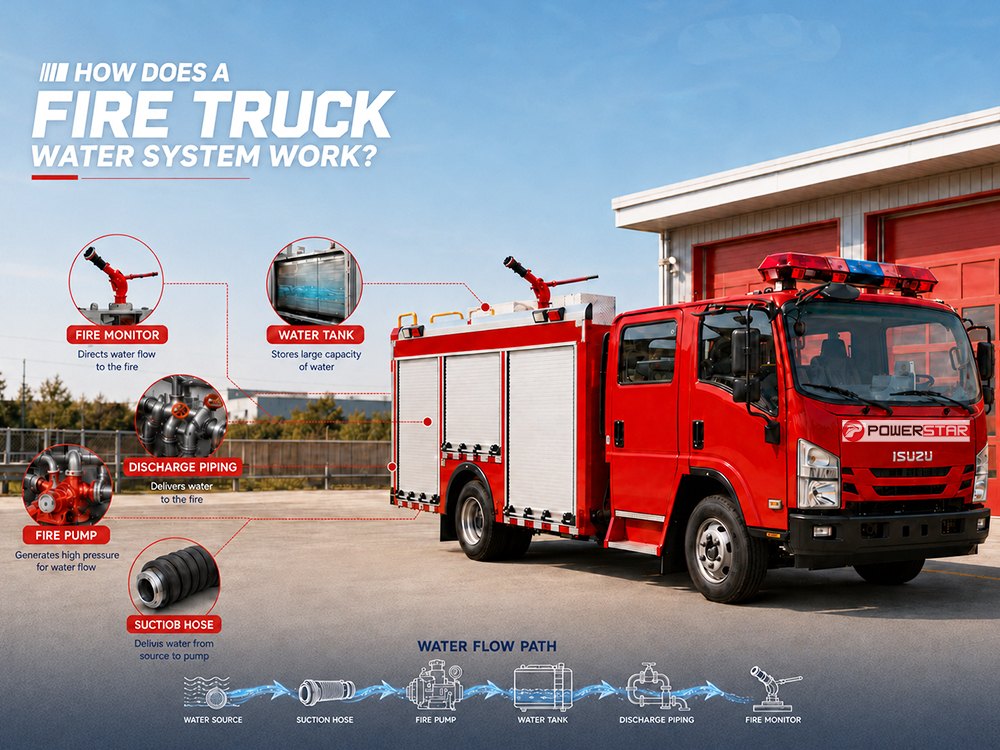
Het waterleidingsysteem van de brandweerwagen is de kern van elke brandbestrijdingsoperatie. Het leidt water nauwkeurig van de tank of een externe bron door de pomp, kleppen en leidingen om water onder hoge druk of schuim naar de brandlocatie te leveren — of het nu gaat om een brand in een hoog gebouw in een dichtbevolkt stadscentrum of een brand in een petrochemische opslagtank in een industriegebied. De brandweerwagen waterleidingsysteem bestaat uit meerdere componenten die samenwerken: brandbluspomp, watertank, zuigslang, persleidingen, kleppen, verdeelstuk, verzamelstuk, zeef, blusmonitor, slangkoppelingen en meer. De volledige stroomroute is:Watertank → Zuigslang → Zeef → Brandbluspomp → Drukregelsysteem → Persverdeelstuk → Kleppen → Verdeelstuk → Blusmonitor / Slangkoppelingen → Straalpijp Dit artikel legt elk onderdeel van het waterleidingsysteem uit en hoe ze samenwerken om water met de juiste druk en het juiste debiet te leveren. I. Kerncomponenten van het waterleidingsysteem Watertank Slaat de watervoorraad aan boord op. ● Capaciteit:Doorgaans 2.000–12.000 liter. ● Levering:Voert water via aanzuigleidingen naar de pomp. ● Kenmerken:Antislinger-schotten voor voertuigstabiliteit, een zeef om vuil te filteren en een vulsysteem voor het aanzuigen uit natuurlijke waterbronnen. Brandbluspomp Een centrifugaalpomp die via PTO door de vrachtwagenmotor wordt aangedreven; enkel- of meertraps, van gietijzer of brons. ●Drukklassen: Beschikbaar in standaardwaarden van 0,8 MPa, 1,0 MPa, 1,2 MPa en 1,4 MPa, afgestemd op typische brandbestrijdingseisen. ●Debieten: Variëren van 1.200 tot 6.000 L/min, met prestatiecurves die zijn geoptimaliseerd voor zowel hogedruk- als grootvolumegebruik. Kleppen en leidingen Een netwerk van leidingen en kleppen dat de richting en hoeveelheid van de waterstroom regelt. ●Inlaatklep: Verbindt de pomp met externe waterbronnen (brandkraan of aanzuigpunt) ● Tank-naar-pompklep: Hiermee kan de pomp rechtstreeks water uit de ingebouwde tank aanzuigen ● Perskleppen: Regelen de waterstroom naar slangen en straalpijpen II. Hoe het waterleidingsysteem van de brandweerwagen werkt Stap 1: Waterinlaat en vullen Water komt het systeem binnen vanuit de ingebouwde tank, brandkraan of natuurlijke waterbronnen (meren, rivieren, vijvers). Bij het aanzuigen uit natuurlijke bronnen verwijdert het vulsysteem (vacuümpomp) lucht uit de zuigslang, waardoor een vacuüm ontstaat dat de atmosferische druk gebruikt om water in de pomp te duwen. Een zeef filtert vuil om de pomp te beschermen en een terugslagklep voorkomt terugstroming. Stap 2: Pompdrukopbouw De centrifugaalpomp wordt aangedreven door de vrachtwagenmotor via een krachtafnemer (PTO). Zodra water de pomp vult, draait de waaier met hoge snelheid (1.500–2.500 RPM). De centrifugaalkracht werpt het water naar buiten, waardoor de snelheid toeneemt. Het pomphuis zet deze snelheid om in druk (doorgaans 0,8–1,2 MPa). Een elektronische drukregelaar handhaaft automatisch de ingestelde druk, terwijl...
Details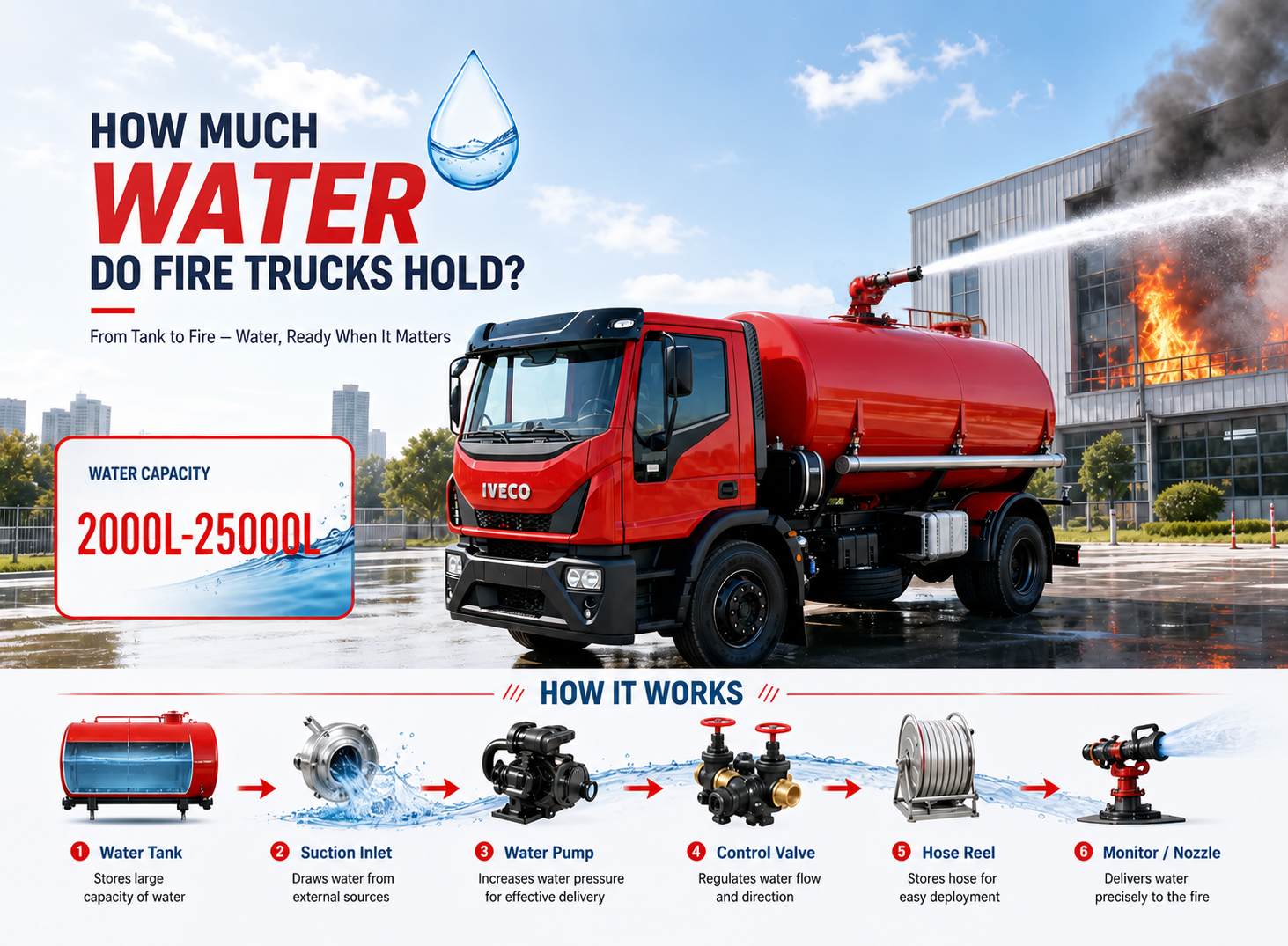
Hoeveel water kan een brandweerwagen vervoeren? Dit is een van de eerste vragen waarmee onze klanten te maken krijgen bij het selecteren van een brandweerwagen. Er bestaat geen enkel vast aantal — het hangt af van het voertuigtype, de chassiscapaciteit, het ontwerpdoel en regionale voorschriften, variërend van lichte eenheden van 2.000 liter tot industriële brandweerwagens van 25.000 liter. Maar een grotere tank betekent niet altijd betere prestaties; brandbestrijdingsvoertuig de capaciteit van de watertank moet goed worden afgestemd op het pompdebiet, het afvoerdebiet van de monitor en de chassiscapaciteit om effectieve brandbestrijdingsresultaten te leveren. Dit artikel begint met de basisprincipes van de watertankcapaciteit van brandweerwagens, analyseert typische opslagbereiken voor verschillende voertuigtypen, onderzoekt de belangrijkste factoren die het tankontwerp beïnvloeden en biedt praktische aankooprichtlijnen. Belangrijkste punten: De watertankcapaciteit van brandweerwagens varieert doorgaans van 2.000 tot 25.000 liter Verschillende typen brandweerwagens hebben verschillende tankcapaciteiten Een grotere tank betekent niet automatisch betere brandbestrijdingsmogelijkheden De tankcapaciteit moet worden afgestemd op pompdebiet, monitorstroom en chassiscapaciteit Industriële brandbestrijding vereist doorgaans grote tanks, terwijl gemeentelijke brandbestrijding prioriteit geeft aan wendbaarheid » I. Drie basistypen watertanks voor brandweerwagens Pompwagens:Deze zijn de meest voorkomende gemeentelijke brandweerwagens. Ze zijn voornamelijk afhankelijk van brandkranen voor de watervoorziening en vervoeren ongeveer 1.900–3.800 liter water aan boord voor een eerste aanval. De kern van deze voertuigen is de pomp, niet de tank — ze zijn ontworpen om water onder druk te leveren zodra ze op een brandkraan zijn aangesloten. Tankwagens (watertankwagens):Deze voertuigen zijn bedoeld voor het vervoeren van grote hoeveelheden water, met tankcapaciteiten die doorgaans meer dan 11.400 liter bedragen. Ze spelen een cruciale rol in landelijke en afgelegen gebieden waar geen brandkranen beschikbaar zijn, door water van waterbronnen naar de brandlocatie te vervoeren zodat pompwagens het kunnen gebruiken. Pomp-tankwagens:Deze voertuigen combineren pomp- en watertransportfuncties in één eenheid. Ze kunnen zowel water voor brandbestrijding afgeven als andere voertuigen bevoorraden. Tankcapaciteiten variëren doorgaans van 5.700 tot 11.400 liter, waardoor ze een veelzijdige oplossing zijn voor brandweerkorpsen. » II. Hoeveel water kunnen verschillende typen brandweerwagens vervoeren? Type brandweerwagen Typische tankcapaciteit Primaire toepassing Lichte brandweerwagen 2.000–3.000 L Snelle stedelijke respons, eerste aanval Gemeentelijke pompwagen 3.000–6.000 L Gemeentelijke brandbestrijding, gebouwbranden Middelzware pompwagen 6.000–10.000 L Gecombineerde stedelijke en industriële taken Zware pompwagen 10.000–15.000 L Langdurige inzet, respons over lange afstand I...
Details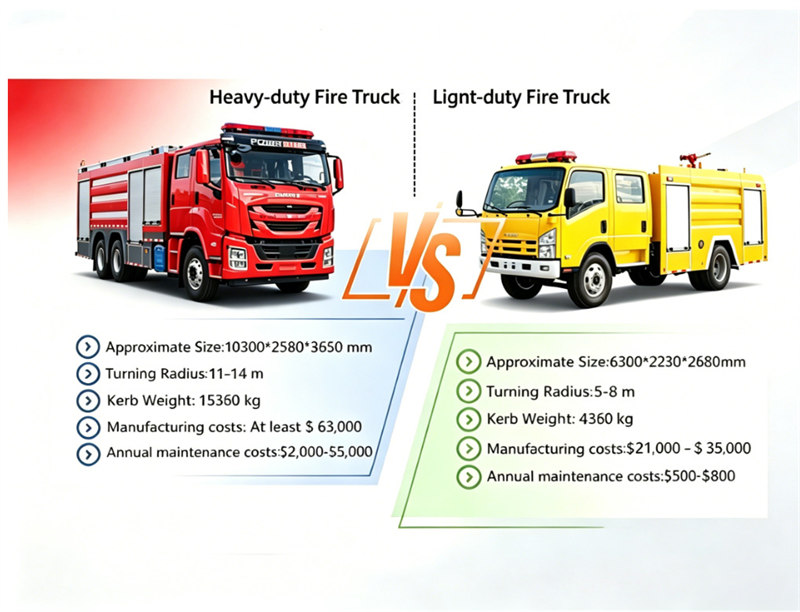
Brandweerwagen voor brandbestrijdingDe behoeften variëren sterk tussen grootstedelijke gebieden en landelijke of kleinschalige gemeenschappen. Grote stedelijke brandweerkorpsen vertrouwen op zware brandweerwagens met enorme watertanks, hoge ladders en volledige industriële configuraties om hoogbouwbranden, industriële branden en grootschalige noodsituaties aan te pakken. Voor kleine steden, landelijke dorpen, dorpsbrandweerkazernes en vrijwillige brandweerkorpsen worden zware brandweerwagens echter vaak meer een last dan een voordeel. Daarom zijn lichte brandweerwagens wereldwijd de gangbare en meest praktische oplossing geworden voor kleine stedelijke en landelijke brandweerkorpsen. Door een compacte afmeting, flexibele mobiliteit, volledige basisreddingsfuncties en lage totale kosten te combineren, sluiten ze perfect aan bij de dagelijkse reddings- en brandpreventiebehoeften van lokale brandweerteams. De lichte brandweerwagen is een compact, lichtgewicht noodhulpvoertuig voor brandbestrijding, speciaal ontworpen voor lokale, voorstedelijke en landelijke brandsituaties. I. Vergelijking tussen zware brandweerwagens en lichte brandweerwagens: Om duidelijk te bekijken wat het verschil is tussen zware en lichte brandweerwagens, hebben we een directe vergelijkingstabel opgesteld met de belangrijkste praktische meetpunten. Zware modellen zijn meer dan 10 meter lang, hebben een draaicirkel van 11–14 m en een leeggewicht van 15 ton, met bouwkosten van minimaal $63.000 plus $2.000–$5.000 aan jaarlijks onderhoud. Daarentegen halveren compacte lichte brandweerwagens bijna de afmetingen, wegen ze slechts 4.360 kg, beginnen ze bij $21.000 en blijven de jaarlijkse onderhoudskosten onder $800, waardoor ze veel betere mobiliteit en budgetwaarde bieden voor landelijke en kleinschalige brandweerkazernes. Ⅱ.Belangrijkste kenmerken van lichte brandweerwagens: 1.Lichtgewicht maar sterk dragend ontwerp. Het totale toegestane voertuiggewicht blijft onder 8.000 kg, zelfs wanneer het voertuig volledig beladen is, waardoor een ultrasnelle noodrespons mogelijk is. 2.Aanpassing met vierwielaandrijving is beschikbaar om ruwe, ongelijke wegoppervlakken aan te pakken die vaak voorkomen in afgelegen gebieden. 3.De volledige brandbestrijdingsfunctionaliteit blijft behouden: a. Twee onafhankelijke tanks voor water en brandblusschuim. b. Dubbele cabine met twee zitrijen om een volledig team van reagerende brandweerlieden te huisvesten. c. Volledige standaarduitrusting van noodreddings- en brandbestrijdingsgereedschappen. d. Optionele uitbreidingen waaronder terreinverlichtingssystemen en sleepapparatuur. 4.Het aftakassysteem (PTO) dient als de kern van de aandrijving. Het beschikt over intuïtieve bediening en eenvoudig onderhoud en vervanging van onderdelen. Duurzame kerncomponenten verlagen de langdurige operationele noodkosten voor landelijke en gemeentelijke brandweerkorpsen aanzienlijk. Ⅲ.De volgende zijn de populairste modellen lichte brandweerw...
Details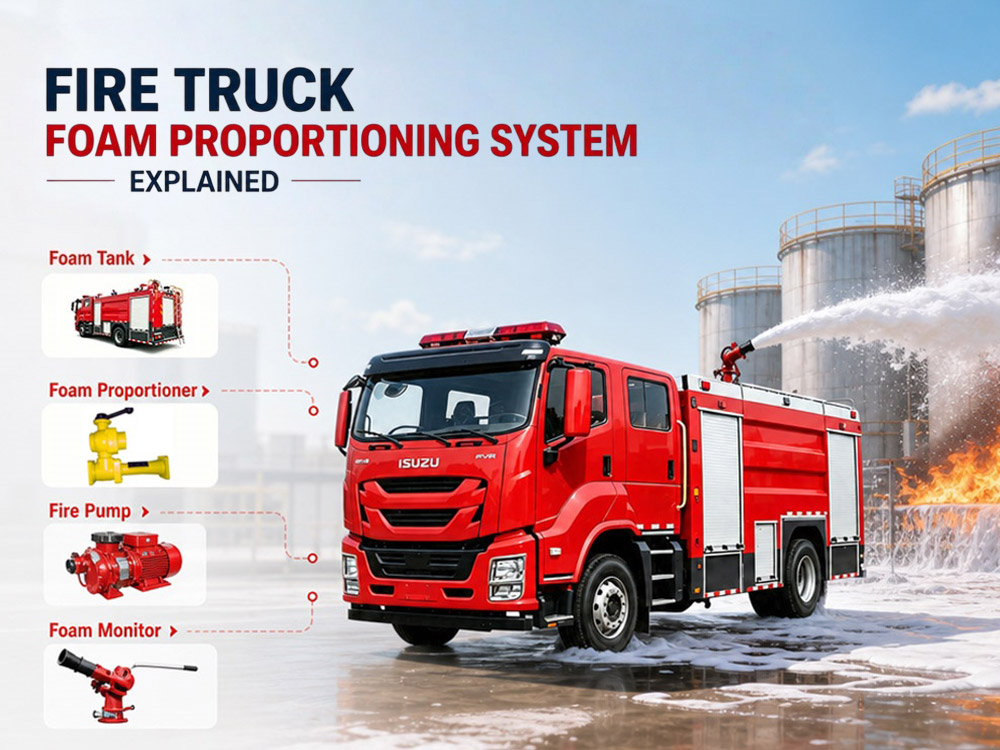
Het schuimsysteem van een brandweerwagen mengt water met schuimconcentraat in nauwkeurige verhoudingen (1%, 3% of 6%) om een schuimoplossing te creëren. Deze oplossing wordt vervolgens door de brandpomp onder druk gebracht en met lucht geëxpandeerd via schuimsproeiers — dit is het kernwerkingsprincipe van hoe een schuimbluswagen schuim en water mengt — en uiteindelijk een stabiele schuimdeken produceert die het brandstofoppervlak bedekt. Dit proces verhoogt de efficiëntie van brandbestrijding met meer dan 50% en vermindert tegelijkertijd de verspilling van schuimconcentraat met 30%. » I. Waarom heeft een brandweerwagen een schuimsysteem nodig? Vergeleken met het gebruik van alleen water biedt schuim drie belangrijke voordelen: 1. Zuurstofisolatie— Schuim bedekt het brandende oppervlak en vormt een dichte fysieke barrière die voorkomt dat zuurstof de verbrandingszone bereikt, waardoor de brand wordt onderdrukt. 2. Temperatuurverlaging— Het watergehalte in de schuimoplossing neemt grote hoeveelheden warmte op wanneer het verdampt, waardoor de temperatuur van het brandende gebied snel daalt. 3. Voorkomen van herontsteking— De schuimlaag blijft het brandgebied bedekken, zelfs nadat de brand is geblust, en isoleert effectief zuurstof en brandbare dampen, waardoor het risico op herontsteking aanzienlijk wordt verminderd. » II. Kernwerkingsprincipes van het schuimsysteem 1. Mengsysteem:Water stroomt door de menger → creëert negatieve druk (negatiefdruksysteem) of gebruikt een schuimpomp (positiefdruksysteem) → trekt schuimconcentraat uit de schuimtank → mengt volgens de vooraf ingestelde verhouding (1%, 3% of 6%) → de schuimoplossing stroomt naar de pomp. 2. Drukopbouw door de pomp:De schuimoplossing komt de centrifugaalpomp binnen → wordt onder druk gebracht tot 0,8–1,2 MPa → wordt via leidingen naar uitlaatopeningen of de schuimmonitor geleid. 3. Schuimexpansie:De schuimoplossing onder druk stroomt door een schuimsproeier of beluchtingsapparaat → lucht wordt opgenomen → de oplossing zet uit tot gevormd schuim → bedekt het brandstofoppervlak → sluit zuurstof af en onderdrukt de brand. Kernbegrip:Schuimconcentraat + water is niet gelijk aan afgewerkt schuim. De gemengde schuimoplossing is nog steeds een vloeistof — deze moet via een schuimsproeier met lucht worden gecombineerd om echt brandbestrijdingsschuim te worden. Wanneer de schuimoplossing onder hoge druk met hoge snelheid door de sproeier stroomt, ontstaat een plaatselijke zone met negatieve druk die lucht krachtig aanzuigt. De lucht en vloeistof botsen en worden sterk gescheiden in de sproeier, waardoor ze onmiddellijk uiteenvallen in miljoenen kleine belletjes die zich ophopen tot wit schuim. » III. Hoe mengt een brandweerwagen schuim en water? Het schuimmengproces op een brandweerwagen bestaat uit vier hoofd stappen, van watertoevoer tot uiteindelijke schuimvorming. Stap 1: De brandpomp levert de waterstroom Nadat de brandweerwagen is gestart, levert de brandpomp de aandrijving voor het schuim...
Details
Lees verder, blijf op de hoogte, abonneer je en laat ons vooral weten wat je ervan vindt.

 IPv6 Network ondersteund

 Nederlands
 English
 français
 Deutsch
 русский
 italiano
 español
 português
 العربية
 日本語
日本語 한국의
한국의 Türkçe
 Melayu
 ไทย
ไทย Tiếng Việt
 Indonesia
  中文
中文 қазақ
қазақ Filipino
 မြန်မာ
 српски